 Bug FAQ
Lesser Emperor
Anax parthenope · Order: Odonata · Family: Aeshnidae
Also called: Lesser Emperor Dragonfly, little emperor dragonfly
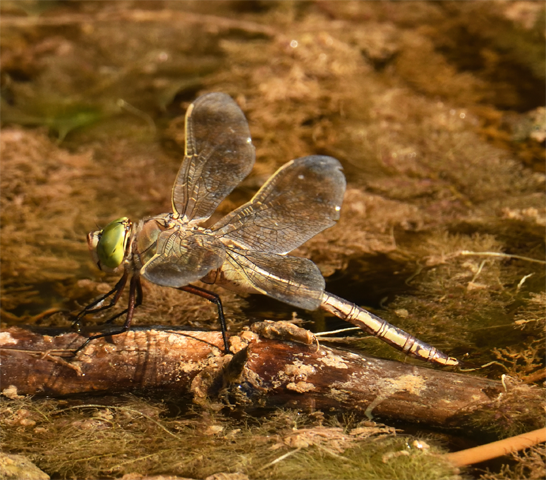
The Lesser Emperor dragonfly is active at dusk and is smaller and less colourful than the emperor dragonfly (Anax imperator). It patrols ponds, lakes and other still waters across southern and central Europe, Mediterranean islands, North Africa, West Asia and into East Asia. Eggs are laid in plants or mud, hatch after about two months and the larvae develop for two years before emerging as adults.
Source: Wikipedia
How to recognize it
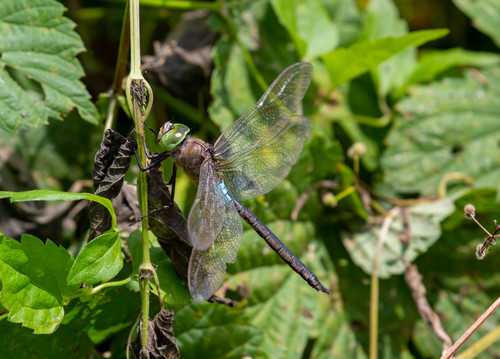
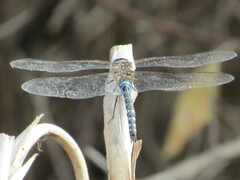
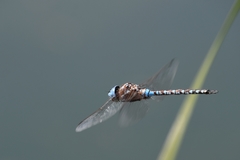
The upper surface of the frons is multicoloured, and the anal appendages have a distinctive shape and length. Its labium and labrum are golden-yellow, the face and frons are greenish-yellow, and the eyes are green, turning bluish with age.
Source: Wikipedia
Size
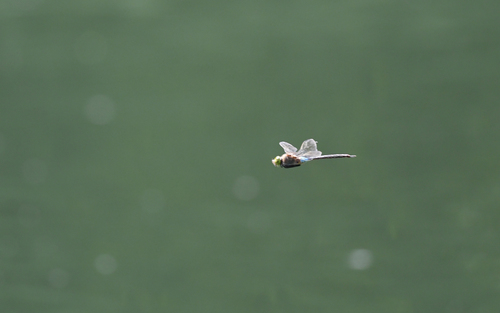
It is a crepuscular dragonfly, most active at dusk. Compared with Anax imperator, it is smaller and less colourful.
Source: Wikipedia
Where it lives
It occurs together with Anax imperator but is usually less abundant.
Source: Wikipedia
What it eats
Larvae develop in water for about two years before emerging as adults.
Source: Wikipedia
Life cycle
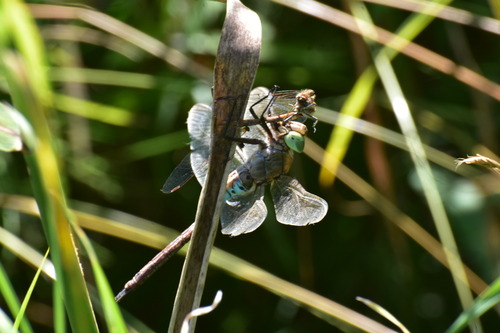
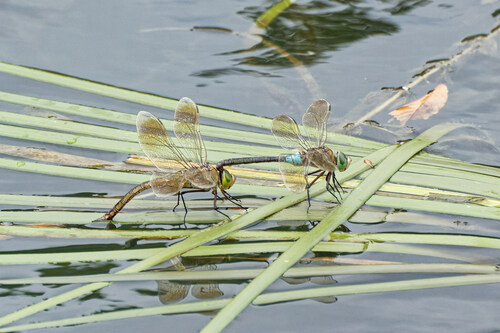
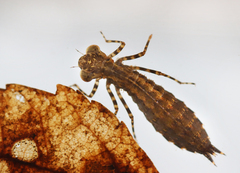
Males and females mate in the usual dragonfly fashion and often lay eggs while still in tandem. Eggs are inserted into plants or mud, hatch after roughly two months, and the larval stage lasts two years.
Source: Wikipedia
When you see it
In the southern part of its range it can be on the wing as early as March.
Source: Wikipedia
Lookalikes
It resembles Anax imperator but is smaller and less colourful. It is also similar to Anax ephippiger, which is slightly smaller, more slender and has a blue saddle that does not wrap around segment S2.
Source: Wikipedia
Where it is found in the US
Recorded in 1 of 51 states and DC. Most records: Illinois.
Darker = more records. Counts are museum and citizen-science records, not population size.
Source: GBIF
More photos
Questions people ask
When can I see the Lesser Emperor?
In the south it may appear as early as March, but it is most common from June to September and can still be seen in November.
Source: Wikipedia
Where does the Lesser Emperor live?
It occurs across southern and central Europe, many Mediterranean islands, North Africa, West Asia and extends east to Japan, Korea and China.
Source: Wikipedia
What is the life cycle of the Lesser Emperor?
After mating, the pair often lay eggs while still in tandem; eggs are deposited in plants or mud, hatch after about two months, and the larvae develop for two years before emerging as adults.
Source: Wikipedia
Same family (Aeshnidae)
Sources
- Wikipedia: https://en.wikipedia.org/wiki/Anax_parthenope
Look it up elsewhere: GBIF · iNaturalist · BugGuide · Wikipedia
Text written 2026-10-22 from the sources above and checked sentence by sentence against them. Data fetched 2026-10-22.