 Bug FAQ
Leptotarsus albistigma
Leptotarsus albistigma · Order: Diptera · Family: Tipulidae
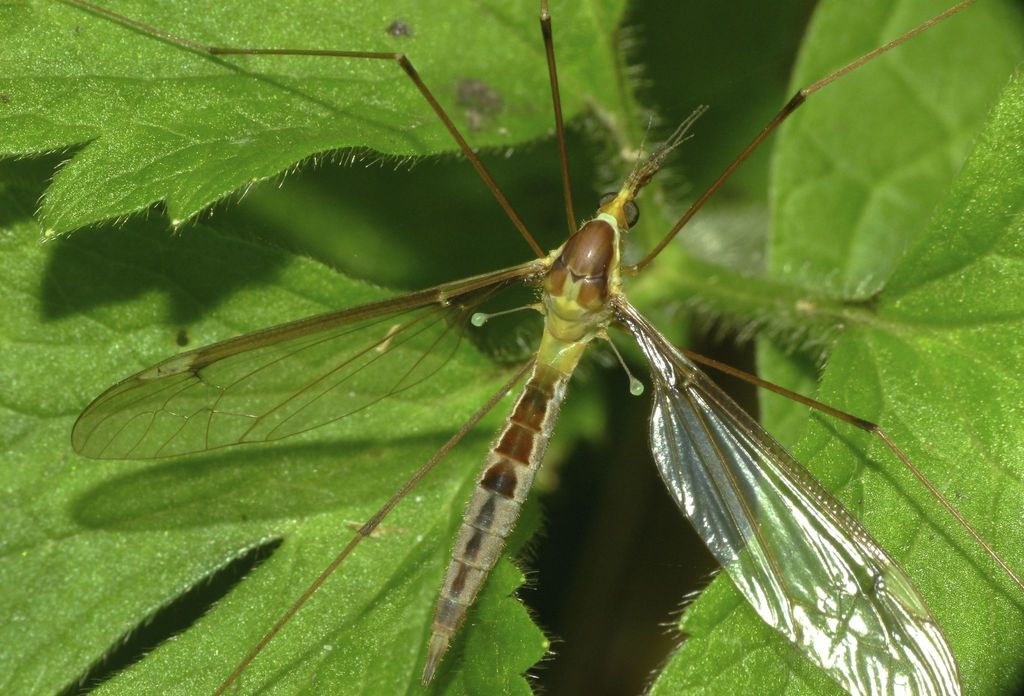
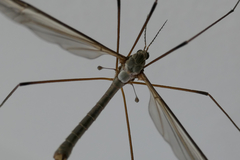
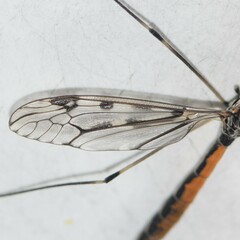
Leptotarsus albistigma is a pale-green crane fly that lives only in New Zealand. Adults are about 16 to 20 mm long, with wings 18 to 23 mm and hind legs up to 50 mm; larvae are 16.5 to 20 mm long and bore into fungus-softened wood. It is usually found on damp, rotting logs of exotic trees such as Pinus radiata and willow in the South Island.
Source: Wikipedia
How to recognize it
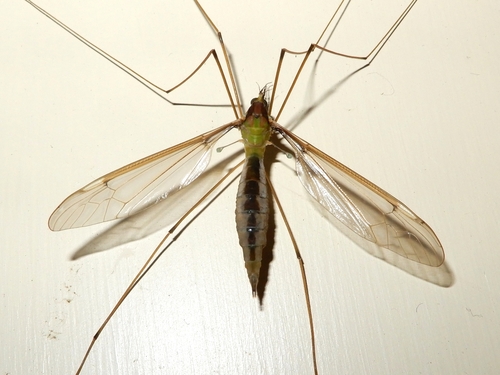
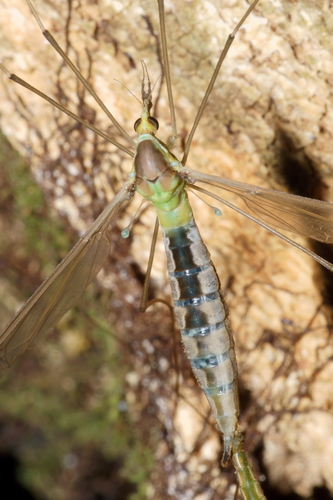
The insect is pale green and its middle praescutal stripe is missing, while the lateral pair of stripes are noticeably darker.
Source: Wikipedia
Size
Female hind legs can reach 45 to 50 mm, and larvae grow to 16.5 to 20 mm in length.
Source: Wikipedia
Where it lives
It is common on damp, decaying logs of exotic trees, especially rotting Pinus radiata and willow, in New Zealand’s South Island.
Source: Wikipedia
Life cycle
The species was first described in 1923 as Macromastix albistigma by F. W. Edwards.
Source: Wikipedia
Where it comes from
Leptotarsus albistigma is endemic to New Zealand.
Source: Wikipedia
Lookalikes
It differs from M. viridis by lacking the middle praescutal stripe and having darker lateral stripes. Its larvae are sometimes found together with larvae of the crane-fly Austrolimnophila argus.
Source: Wikipedia
More photos
Questions people ask
What does Leptotarsus albistigma look like?
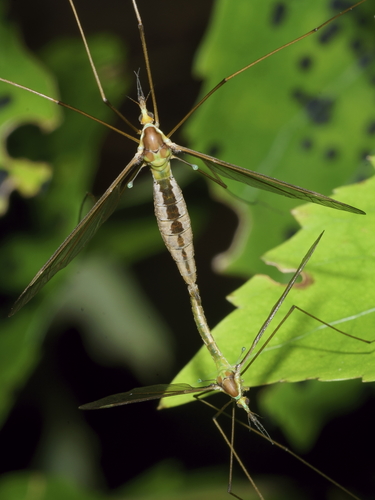
It is a pale-green crane fly with no middle praescutal stripe and darker lateral stripes; adults are about 16 to 20 mm long with wings up to 23 mm.
Source: Wikipedia
Where is this crane fly found?
It lives only in New Zealand, especially on damp, rotting logs of exotic trees in the South Island.
Source: Wikipedia
Same family (Tipulidae)



Sources
- Wikipedia: https://en.wikipedia.org/wiki/Leptotarsus_albistigma
Look it up elsewhere: GBIF · iNaturalist · BugGuide · Wikipedia
Text written 2026-10-23 from the sources above and checked sentence by sentence against them. Data fetched 2026-10-23.