 Bug FAQ
Leaden Hairtail
Anthene amarah · Order: Lepidoptera · Family: Lycaenidae
Also called: Black-striped Hairtail, Leaden Ciliate Blue
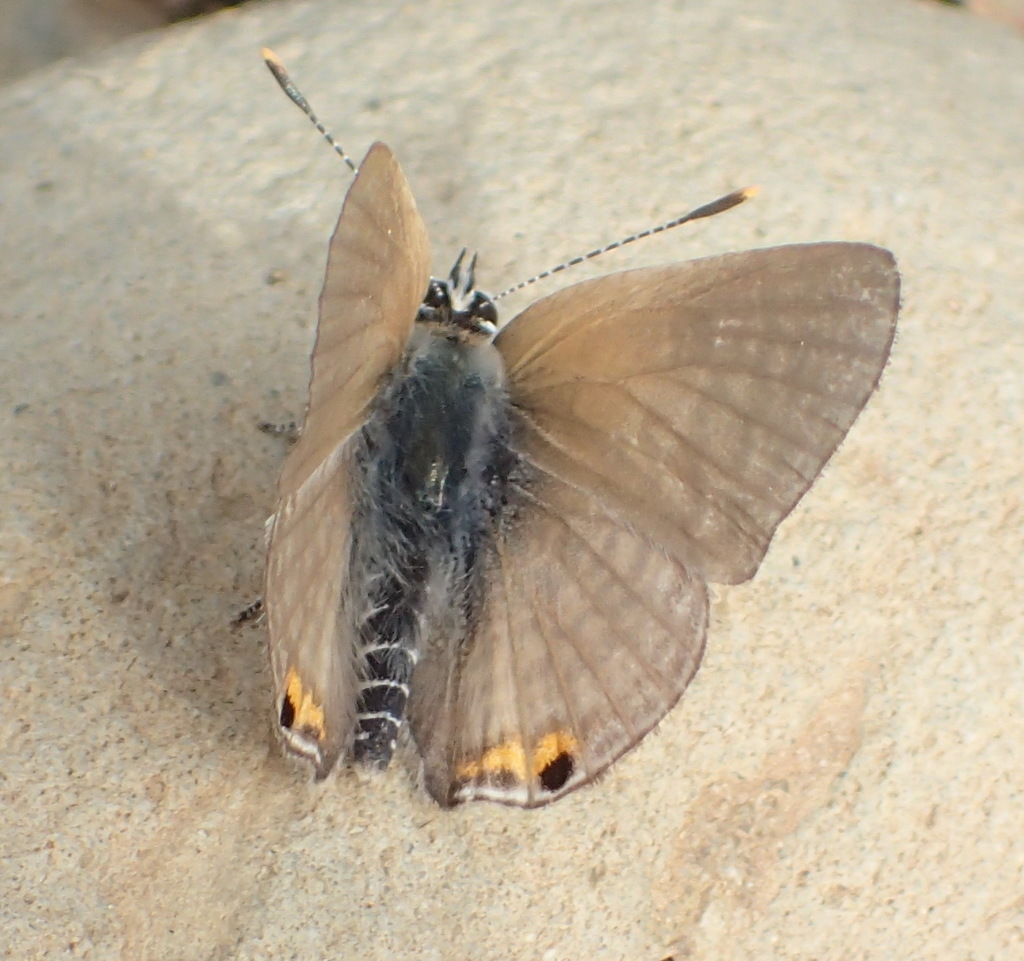
It lives in savanna and sometimes open forest areas across tropical Africa and Arabia, and its caterpillars eat various Acacia species.
Source: Wikipedia
How to recognize it
Anthene amarah is also called the black-striped hairtail or leaden ciliate blue and belongs to the Lycaenidae family.
Source: Wikipedia
Size
Males have a wingspan of 21 to 26 mm, while females are slightly larger at 23 to 29 mm.
Source: Wikipedia
Where it lives
It inhabits savanna and occasionally open areas within forest zones.
Source: Wikipedia
What it eats
Larvae feed on Acacia plants such as A. karroo, A. sieberana and Vachellia gerrardi.
Source: Wikipedia
Life cycle
Adults are active all year, with numbers peaking in summer.
Source: Wikipedia
When you see it
The butterfly can be seen throughout the year, especially during the summer months.
Source: Wikipedia
Where it comes from
The species is found throughout tropical Africa and reaches into Arabia as far as Aqaba.
Source: Wikipedia
Questions people ask
What do the caterpillars of the leaden hairtail eat?
They feed on several Acacia species, including A. karroo, A. sieberana and Vachellia gerrardi.
Source: Wikipedia
When can I see adult leaden hairtails?
Adults are on the wing all year, with the highest numbers in summer.
Source: Wikipedia
Where does the leaden hairtail live?
It lives in savanna and open forest areas across tropical Africa and into Arabia.
Source: Wikipedia
Same family (Lycaenidae)





Sources
- Wikipedia: https://en.wikipedia.org/wiki/Anthene_amarah
Look it up elsewhere: GBIF · iNaturalist · BugGuide · Wikipedia
Text written 2026-10-23 from the sources above and checked sentence by sentence against them. Data fetched 2026-10-23.