 Bug FAQ
Large Wall Brown
Lasiommata maera · Order: Lepidoptera · Family: Nymphalidae
Also called: Large Wall

Large Wall Brown butterflies have a wingspan of about 44 to 56 mm and orange forewings with brown hindwings. They live on forest edges, clearings, rocky dry areas and stony slopes up to 2,000 m elevation across much of Europe and parts of Asia. Adults fly from April to September and may have one or two generations per year depending on latitude.
Source: Wikipedia
How to recognize it
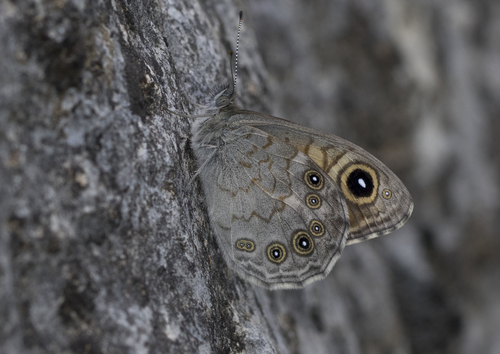
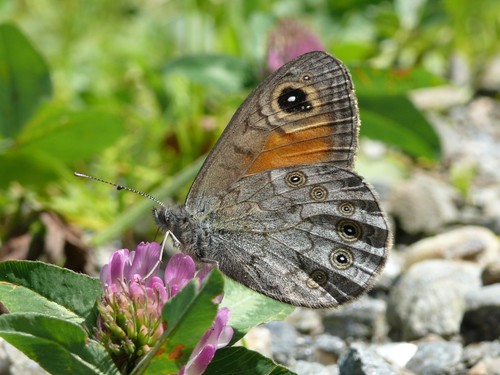
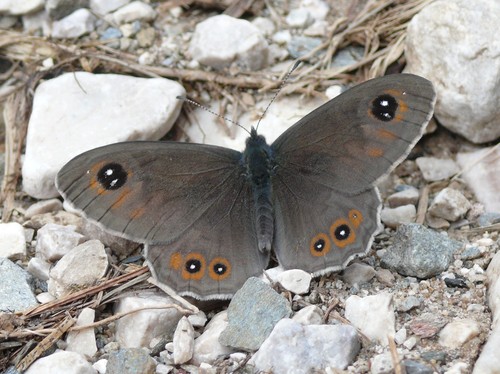
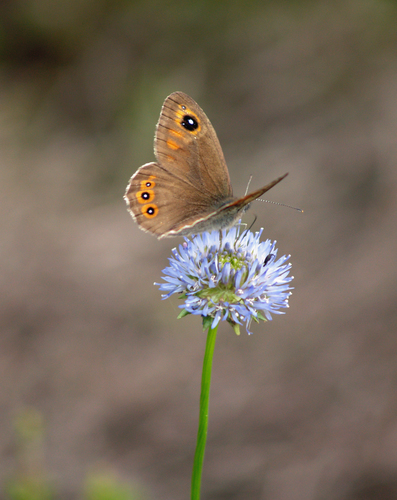
The upper side of the forewings is orange and the hindwings are mostly brown. Each forewing shows a single eye-spot, while the hindwings have two or three eye-spots.
Source: Wikipedia
Size
Wingspan ranges from 44 to 56 mm (1.7 to 2.2 in).
Source: Wikipedia
Where it lives
Found on forest edges, unmanaged clearings, dry rocky areas and stony slopes up to 2,000 m elevation.
Source: Wikipedia
What it eats
Larvae feed on a variety of mature grasses such as Poa, Festuca, Calamagrostis, Deschampsia, Agrostis, Nardus, Dactylis, Lolium and Hordeum species.
Source: Wikipedia
Life cycle
In northern regions there are two broods per year; in southern regions there is typically one brood. Adults are on the wing from April through September.
Source: Wikipedia
When you see it
Adults fly from April to September.
Source: Wikipedia
More photos
Questions people ask
Are they a garden pest?
The evidence only mentions larvae feeding on grasses; no damage to crops or garden plants is recorded.
Source: Wikipedia
How can I tell them apart from similar species?
Look for orange forewings with a single eye-spot and brown hindwings with two or three eye-spots; they are larger than Lasiommata megera, which has paler forewings.
Source: Wikipedia
Same family (Nymphalidae)


Sources
- Wikipedia: https://en.wikipedia.org/wiki/Lasiommata_maera
Look it up elsewhere: GBIF · iNaturalist · BugGuide · Wikipedia
Text written 2026-10-22 from the sources above and checked sentence by sentence against them. Data fetched 2026-10-22.