 Bug FAQ
Large Heath
Coenonympha tullia · Order: Lepidoptera · Family: Nymphalidae
Also called: Common Ringlet, Large Heath Butterfly
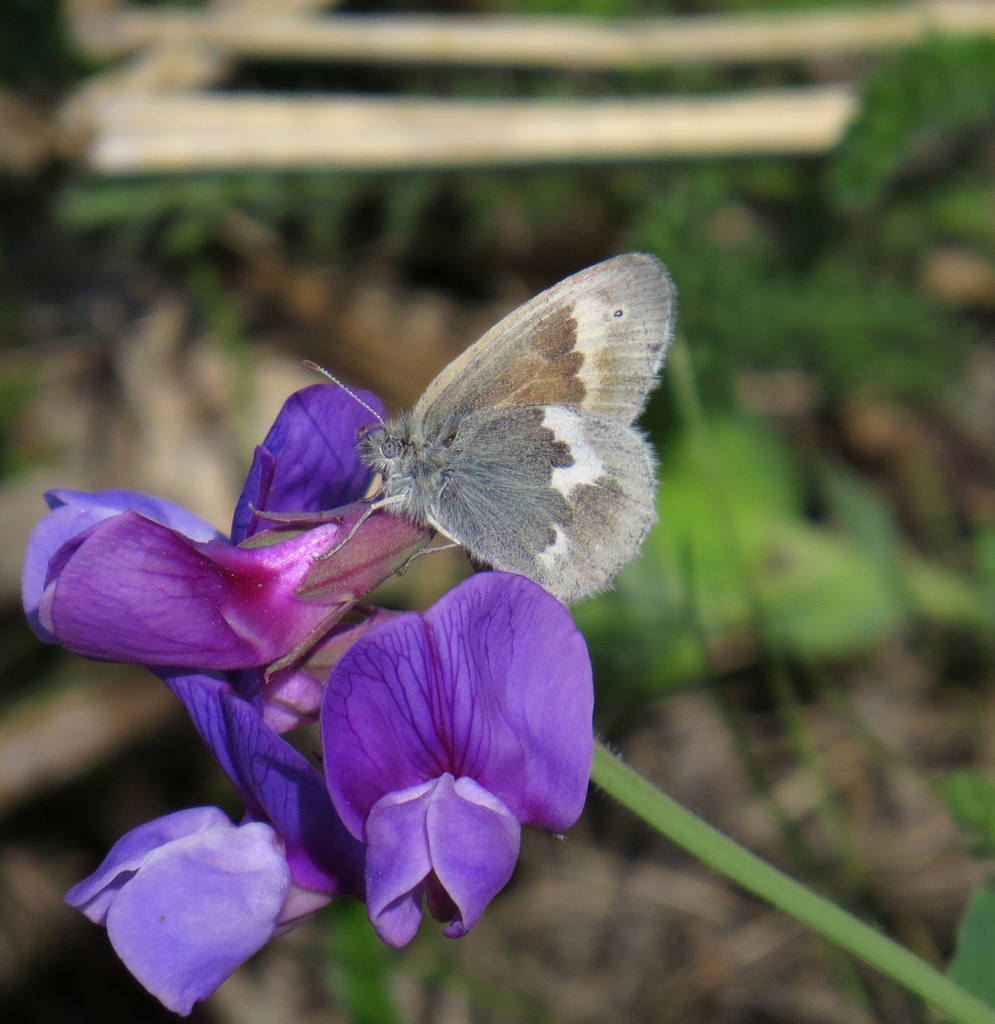
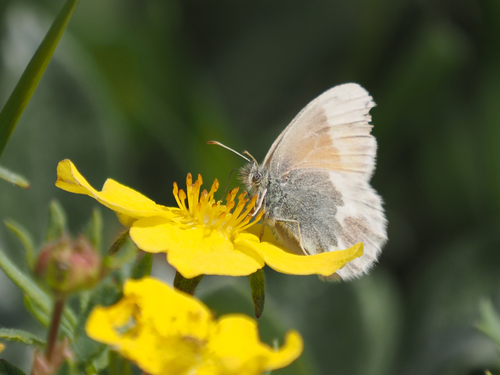
The upperside of the butterfly is a dull sandy yellow; males have no markings while females show faint eye spots through the wings. It lives in many grassy places such as roadsides, meadow edges, bogs and tundra, often where cotton-grass grows. Adults are on the wing singly in June and July, but they are not common at most sites.
Source: Wikipedia
How to recognize it
The butterfly’s upper side is a muted sandy yellow; males lack any spots and females have faint ocelli that can be seen through the wing membrane.
Source: Wikipedia
Where it lives
It frequents a range of grassy habitats including roadsides, woodland edges, clearings, prairies, bogs and alpine tundra. Typical flight places are peat bogs and meadows that are periodically flooded, especially those with Eriophorum (cotton-grass).
Source: Wikipedia
Life cycle
The caterpillars are green with a reddish anal fork and later pupate as a pale green pupa with a whitish abdomen.
Source: Wikipedia
When you see it
Adults fly in June and July, usually seen alone and are not abundant at most locations.
Source: Wikipedia
Where it comes from
The species is Holarctic, occurring across northern Europe, the Palearctic and North America.
Source: Wikipedia
Lookalikes
It looks similar to Coenonympha symphita, though its coloration is duller, and it also resembles Coenonympha pamphilus.
Source: Wikipedia
Where it is found in the US
Recorded in 33 of 51 states and DC. Most records: Alaska, California, Idaho, Vermont, Colorado, Connecticut, Washington, Utah.
Darker = more records. Counts are museum and citizen-science records, not population size.
Source: GBIF
Status: native in North America; native in Canada. Source: iNaturalist
Months it is reported in the US
Source: GBIF
More photos
Questions people ask
How can I tell a Large Heath from similar butterflies?
Look for a dull sandy-yellow upperside; males have no spots while females show faint eye spots that shine through the wing.
Source: Wikipedia
When are Large Heath butterflies active?
Adults are on the wing singly in June and July.
Source: Wikipedia
What habitats does the Large Heath prefer?
It lives in grassy areas like roadsides, meadow edges, bogs and tundra, especially peat bogs with cotton-grass.
Source: Wikipedia
Same family (Nymphalidae)






Sources
- Wikipedia: https://en.wikipedia.org/wiki/Coenonympha_tullia
Look it up elsewhere: GBIF · iNaturalist · BugGuide · ITIS · Wikipedia
Text written 2026-10-23 from the sources above and checked sentence by sentence against them. Data fetched 2026-10-23.