 Bug FAQ
Lang's Short-tailed Blue
Leptotes pirithous · Order: Lepidoptera · Family: Lycaenidae
Also called: Common Zebra Blue
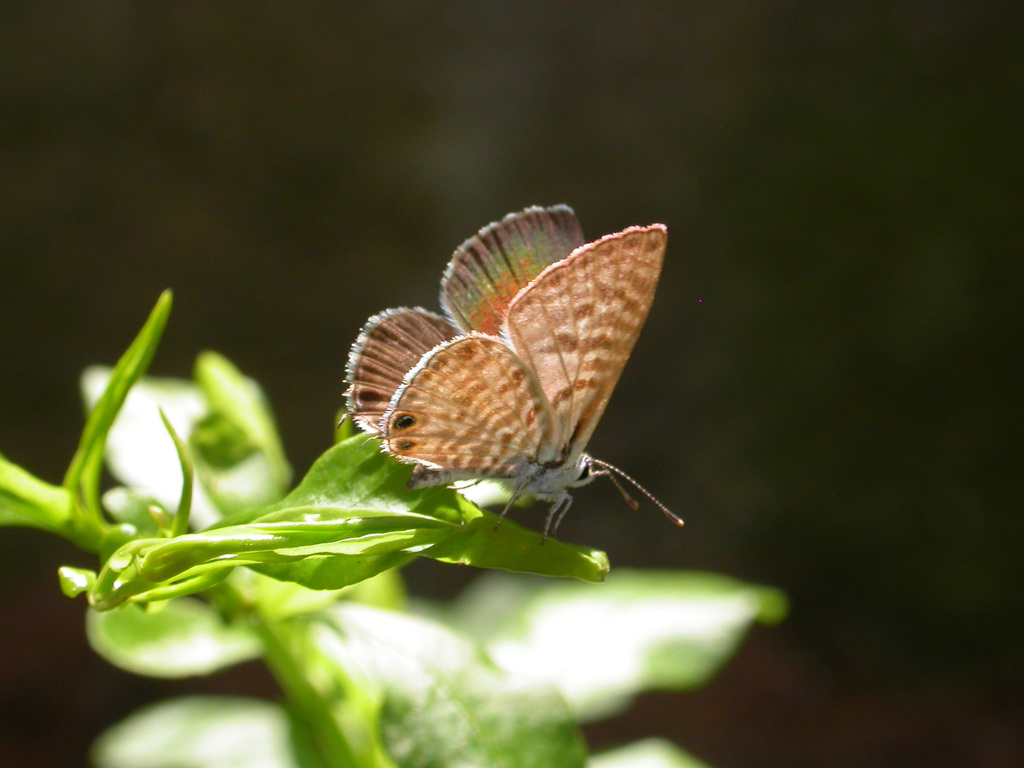
It lives in a variety of natural and cultivated habitats across southern Europe, North Africa, Asia Minor to the Himalayas, and Madagascar. The caterpillars feed on flowers and fruits of Fabaceae, Rosaceae, Plumbaginaceae and sometimes on Calluna vulgaris, and the butterfly flies from February to November depending on location.
Source: Wikipedia
How to recognize it
Males have purple-bluish upper wing surfaces; females show a bluish-brown color, and both sexes have dark beige undersides with white stripes.
Source: Wikipedia
Size
Wingspan ranges from 21 to 29 mm in males and 24 to 30 mm in females.
Source: Wikipedia
Where it lives
Found in varied natural habitats, cultivated areas and gardens.
Source: Wikipedia
Life cycle
The life cycle lasts four to eight weeks depending on temperature, and the pupa is yellowish-brown with dark markings.
Source: Wikipedia
When you see it
Adults are on the wing from February through November, resting on thyme clusters and flying quickly; occasional northward migrations have been recorded.
Source: Wikipedia
Where it comes from
Native to southern Europe, the Mediterranean coast, North Africa, Asia Minor up to the Himalayas, and Madagascar.
Source: Wikipedia
Where it is found in the US
Recorded in 4 of 51 states and DC. Most records: Montana, New Jersey, California, Colorado.
Darker = more records. Counts are museum and citizen-science records, not population size.
Source: GBIF
Same family (Lycaenidae)

Sources
- Wikipedia: https://en.wikipedia.org/wiki/Leptotes_pirithous
Look it up elsewhere: GBIF · iNaturalist · BugGuide · Wikipedia
Text written 2026-10-22 from the sources above and checked sentence by sentence against them. Data fetched 2026-10-22.