 Bug FAQ
Lake Darner
Aeshna eremita · Order: Odonata · Family: Aeshnidae

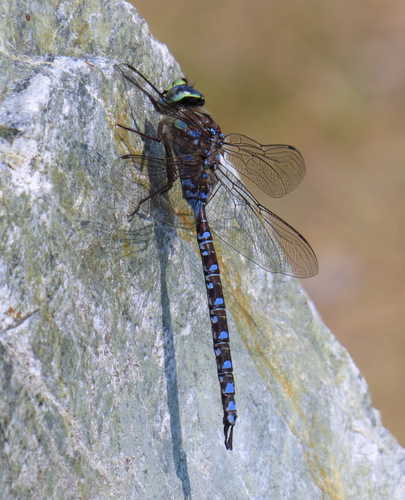
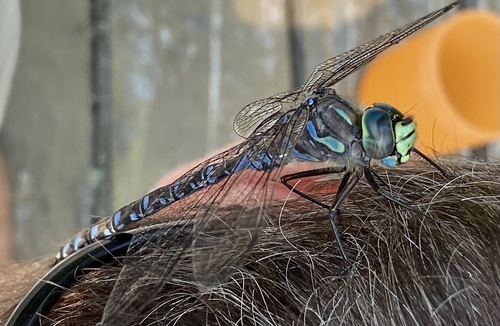
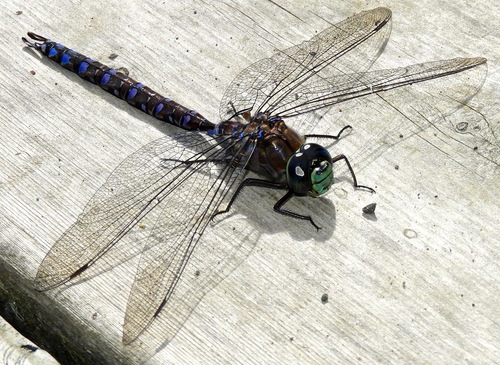
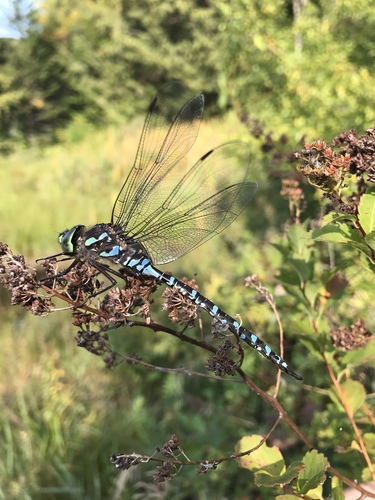
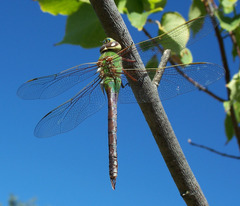
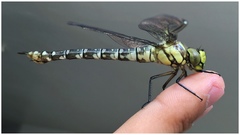
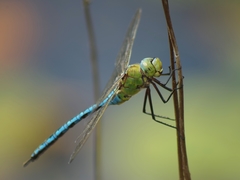
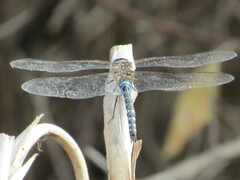
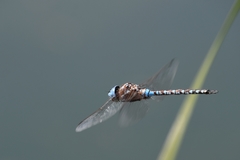
Lake darner is one of the biggest darners, reaching up to eight centimeters in length. Males are usually blue-green on the thorax, females can look like males or be yellow-green, and both sexes have large cerci and a black facial stripe. They are often seen flying over large lakes and are found across Alaska, Canada and the northern United States.
Source: Wikipedia
How to recognize it
They lack pale spots on the underside of the abdomen, unlike Canada darner and green-striped darner.
Source: Wikipedia
Size
It can grow up to eight centimeters, making it the largest darner in much of its range.
Source: Wikipedia
Where it lives
Lake darner is commonly seen flying continuously over larger lakes.
Source: Wikipedia
Lookalikes
It resembles Canada darner in size and markings but can be told apart by the black facial line. It differs from Canada darner and green-striped darner by lacking pale abdominal spots.
Source: Wikipedia
Where it is found in the US
Recorded in 25 of 51 states and DC. Most records: Alaska, Vermont, Michigan, New Hampshire, Maine, Minnesota, Montana, New York.
Darker = more records. Counts are museum and citizen-science records, not population size.
Source: GBIF
Status: native in North America; native in Canada; native in United States. Source: iNaturalist
Months it is reported in the US
Source: GBIF
More photos
Same family (Aeshnidae)
Sources
- Wikipedia: https://en.wikipedia.org/wiki/Aeshna_eremita
Look it up elsewhere: GBIF · iNaturalist · BugGuide · ITIS · Wikipedia
Text written 2026-10-23 from the sources above and checked sentence by sentence against them. Data fetched 2026-10-22.