 Bug FAQ
Lacey's Scrub-Hairstreak
Strymon alea · Order: Lepidoptera · Family: Lycaenidae
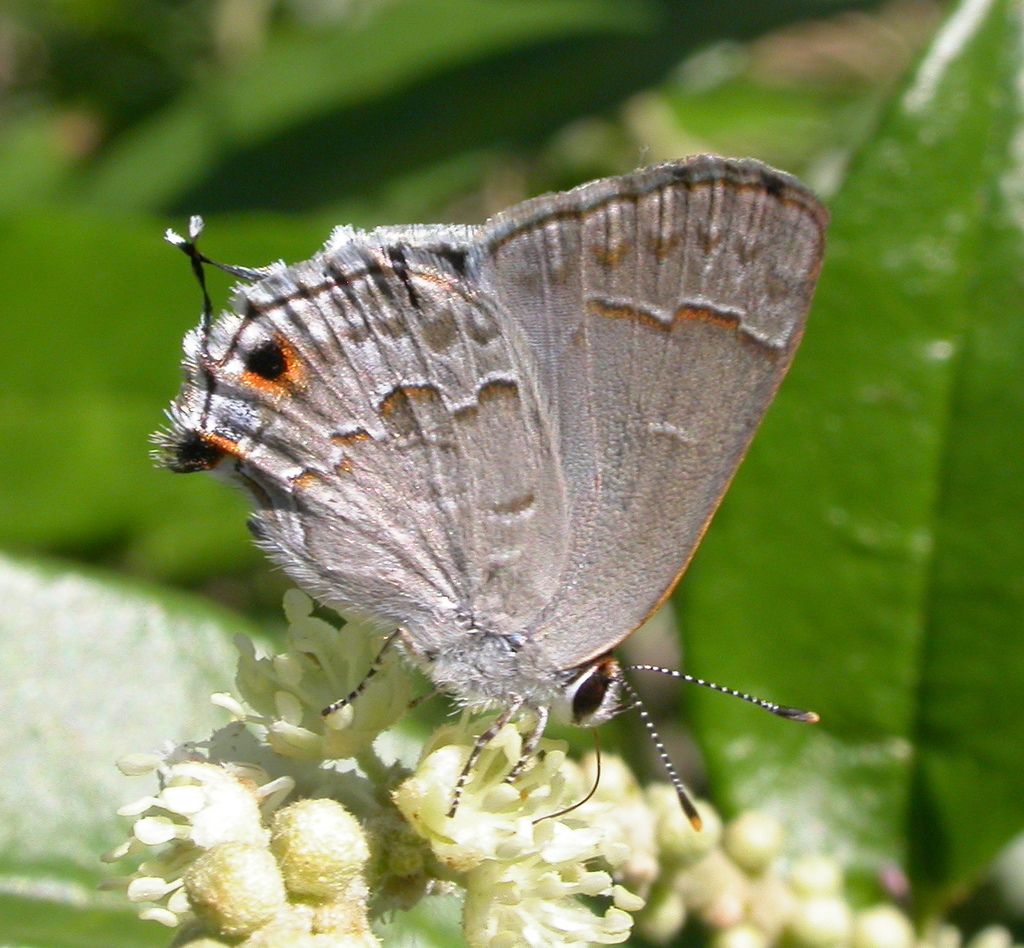
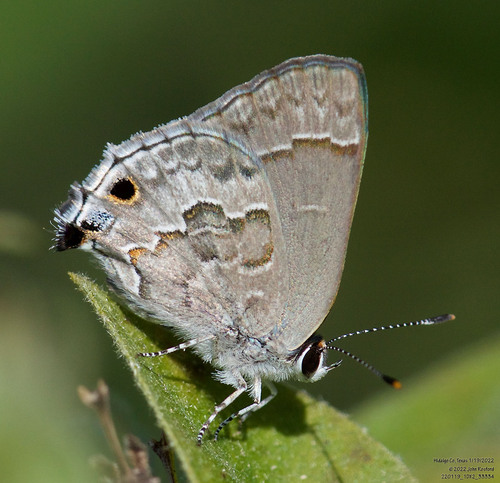
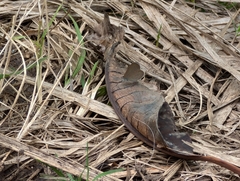
The Alea hairstreak, also known as Lacey's scrub-hairstreak, is a small butterfly in the Lycaenidae family. It measures 19 to 29 mm across the wings and lives in subtropical thorn scrub. Adults sip nectar from flowers, while the caterpillars eat buds, flowers, and the plant Bernardia myricaefolia.
Source: Wikipedia
How to recognize it
The Alea hairstreak, also called Lacey's scrub-hairstreak, belongs to the butterfly family Lycaenidae.
Source: Wikipedia
Size
Its wingspan ranges from about 19 to 29 mm.
Source: Wikipedia
Where it lives
It inhabits subtropical thorn scrub environments.
Source: Wikipedia
What it eats
Adult butterflies feed on flower nectar. Larvae feed on buds, flowers, and the plant Bernardia myricaefolia.
Source: Wikipedia
Where it comes from
In the United States it occurs in central and southern Texas, and its range continues through Mexico to north-western Costa Rica.
Source: Wikipedia
Where it is found in the US
Recorded in 1 of 51 states and DC. Most records: Texas.
Darker = more records. Counts are museum and citizen-science records, not population size.
Source: GBIF
Months it is reported in the US
Source: GBIF
More photos
Same family (Lycaenidae)


Sources
- Wikipedia: https://en.wikipedia.org/wiki/Strymon_alea
Look it up elsewhere: GBIF · iNaturalist · BugGuide · ITIS · Wikipedia
Text written 2026-10-27 from the sources above and checked sentence by sentence against them. Data fetched 2026-10-27.