 Bug FAQ
Knapweed Fritillary
Melitaea phoebe · Order: Lepidoptera · Family: Nymphalidae
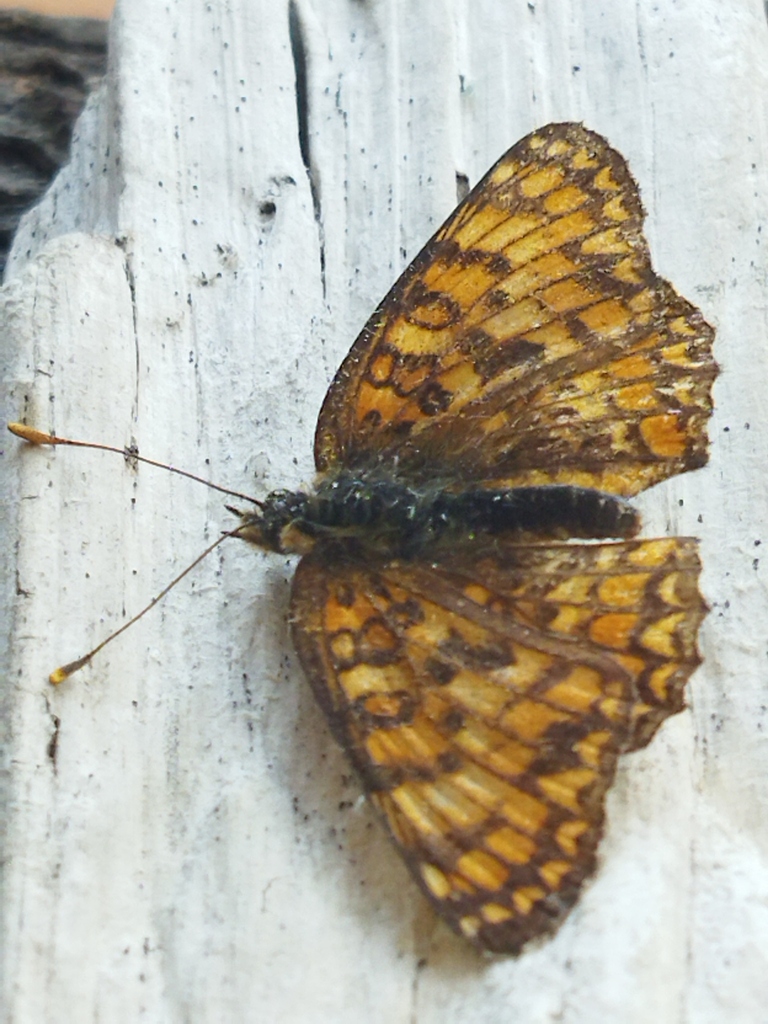
The knapweed fritillary has a wingspan of about 34 to 50 mm and lives in flowery meadows, plains, and sometimes rocky hills. It is found across most of Europe and North Africa but not in the United Kingdom, Scandinavia, or the northern parts of the continent.
Source: Wikipedia
How to recognize it
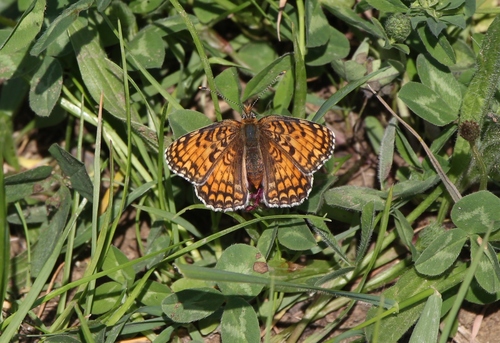
The forewings are pointed and show variable colors; black markings are often joined but can cover most or very little of the wing. A distinctive reddish-yellow crescent spot sits between the two middle veins and extends farther into the wing disc than other yellow spots.
Source: Wikipedia
Size
Wingspan ranges from 34 mm to 50 mm.
Source: Wikipedia
Where it lives
Lives in flowery meadows, plains, and occasionally on rocky hills.
Source: Wikipedia
What it eats
Caterpillars feed on Plantago and Centaurea plants, including Centaurea jacea.
Source: Wikipedia
Life cycle
Pupae are dull yellow-brown with dark yellow and black markings. Larvae are grey with a black head, red-brown branched thorns, dark dorsal lines, and many tiny white dots.
Source: Wikipedia
When you see it
Adults are on the wing from April through September, depending on location.
Source: Wikipedia
Where it comes from
Occurs throughout most of Europe and North Africa, but is absent from the UK, Scandinavia, and northern European regions.
Source: Wikipedia
Lookalikes
They resemble the eastern knapweed fritillary but have more pointed forewings and similarly variable markings.
Source: Wikipedia
Where it is found in the US
Recorded in 1 of 51 states and DC. Most records: Colorado.
Darker = more records. Counts are museum and citizen-science records, not population size.
Source: GBIF
More photos
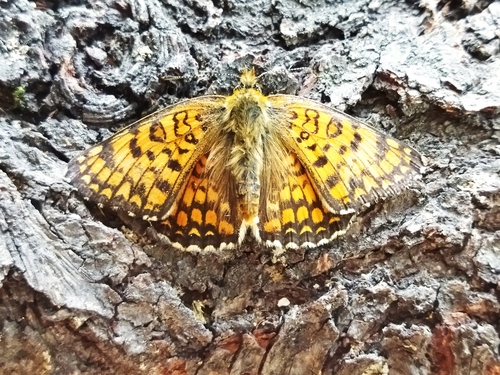
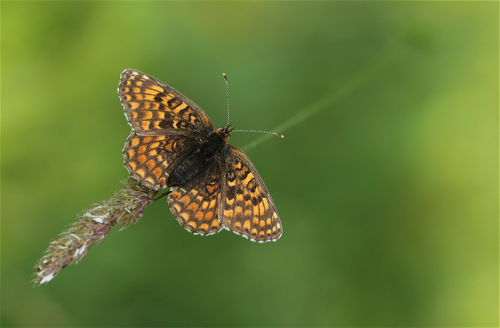
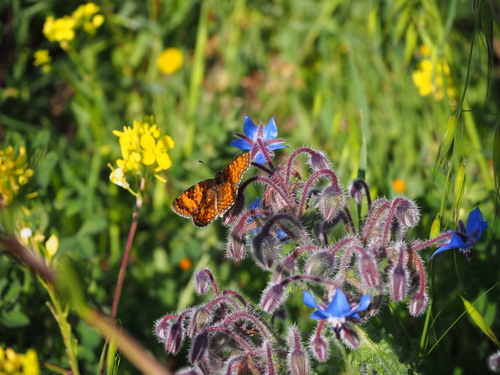
Questions people ask
What plants do the larvae eat?
The caterpillars feed on Plantago and various Centaurea species, such as Centaurea jacea.
Source: Wikipedia
When can I see adult knapweed fritillaries?
Adults fly from April to September, with exact timing depending on the local climate.
Source: Wikipedia
Where is this butterfly found in Europe?
It occurs across most of Europe and North Africa but is missing from the UK, Scandinavia, and the northern parts of the continent.
Source: Wikipedia
How can I tell this butterfly apart from the eastern knapweed fritillary?
Look for a more pointed forewing and a distinctive reddish-yellow crescent spot that reaches farther into the wing disc.
Source: Wikipedia
Same family (Nymphalidae)






Sources
- Wikipedia: https://en.wikipedia.org/wiki/Melitaea_phoebe
Look it up elsewhere: GBIF · iNaturalist · BugGuide · Wikipedia
Text written 2026-10-22 from the sources above and checked sentence by sentence against them. Data fetched 2026-10-22.