 Bug FAQ
Keyhole Wasp
Pachodynerus nasidens · Order: Hymenoptera · Family: Eumenidae
Also called: Key hole wasp
Source: Wikipedia
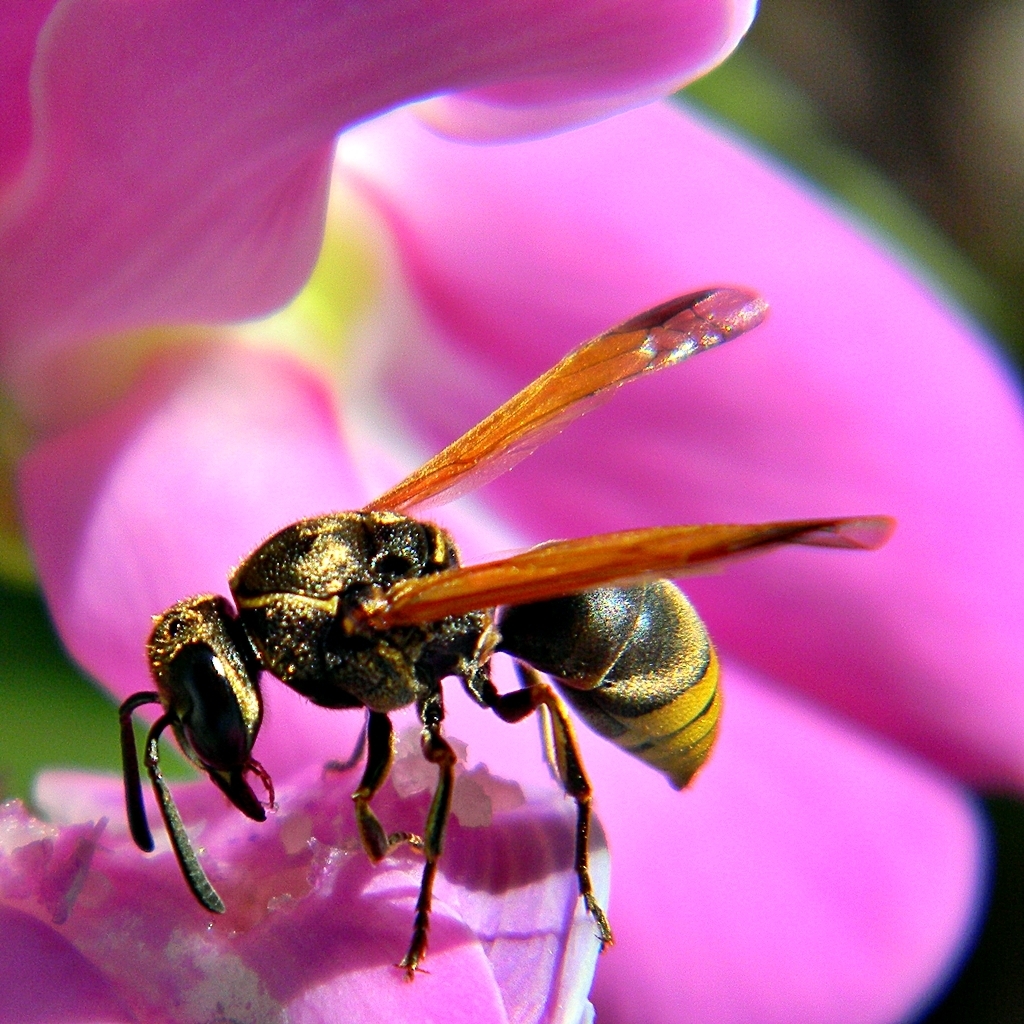
The keyhole wasp is a stinging wasp in the Vespidae family. It originates from the Neotropics and has spread to the northern United States, parts of the Pacific, and recently to Brisbane, Australia. In Brisbane it nests in aircraft pitot tubes, creating a safety risk for planes.
Source: Wikipedia
How to recognize it
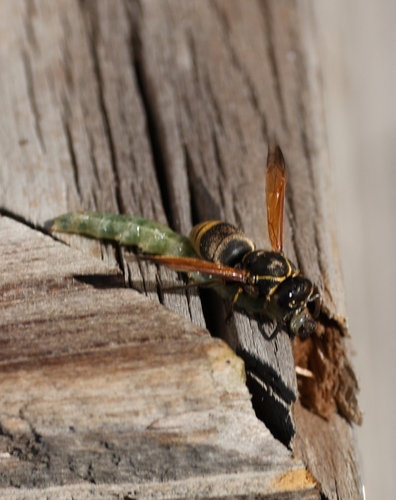
Keyhole wasp (Pachodynerus nasidens) is a stinging wasp in the family Vespidae.
Source: Wikipedia
Is it a pest in the house?
In Brisbane it nests in aircraft pitot tubes, posing a risk to air safety.
Source: Wikipedia
Does it bite or sting?
As a stinging wasp, it can deliver a sting to people.
Source: Wikipedia
Where it lives
In Brisbane, Australia it has recently become established.
Source: Wikipedia
Where it comes from
Its original range is the Neotropics.
Source: Wikipedia
Where it is found in the US
Recorded in 4 of 51 states and DC. Most records: Florida, Texas, Hawaii, Arizona.
Darker = more records. Counts are museum and citizen-science records, not population size.
Source: GBIF
Months it is reported in the US
Source: GBIF
More photos
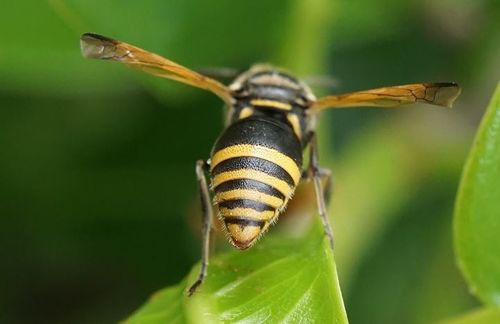
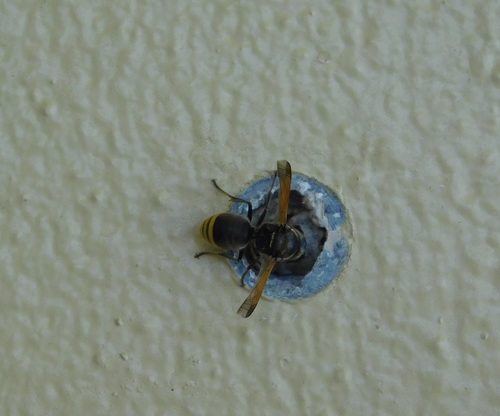
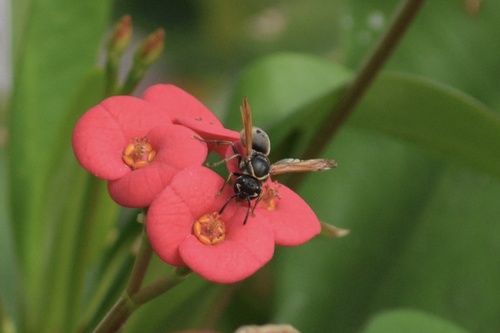
Questions people ask
Can the keyhole wasp sting people?
Yes, it can sting, causing the usual wasp sting reaction.
Source: Wikipedia
Why are they a problem for aircraft?
They like to nest in pitot tubes, which can interfere with aircraft instruments.
Source: Wikipedia
Same family (Eumenidae)

Sources
- Wikipedia: https://en.wikipedia.org/wiki/Pachodynerus_nasidens
Look it up elsewhere: GBIF · iNaturalist · BugGuide · ITIS · Wikipedia
Text written 2026-10-23 from the sources above and checked sentence by sentence against them. Data fetched 2026-10-23.