 Bug FAQ
Keyhole Ambrosia Beetle
Xyleborinus saxesenii · Order: Coleoptera · Family: Curculionidae
Source: Wikipedia
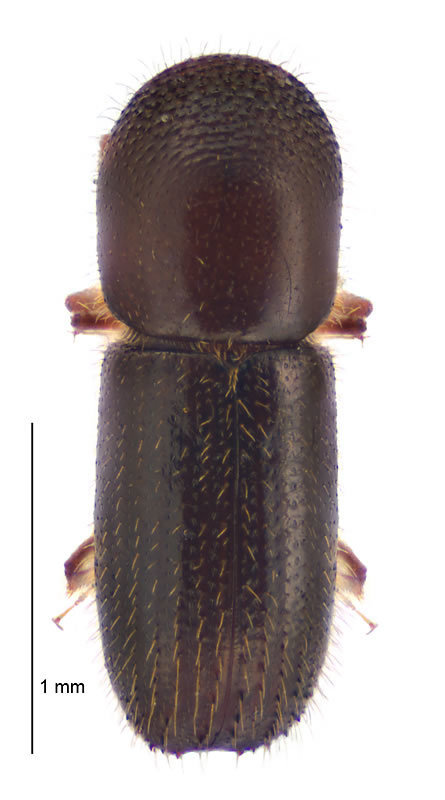
The keyhole ambrosia beetle lives in dead wood but will also attack living trees, where it can cause economic loss. Females farm a symbiotic fungus inside their galleries and lay a small number of eggs after the fungus is established.
Source: Wikipedia
How to recognize it
Specimens from Uruguay have a forward-pointing conical scutellum and dense hairs that set them apart from other American beetles.
Source: Wikipedia
Is it a pest in the house?
Attacks on live trees can cause economic damage. When they nest in living trees, they become pests in nurseries.
Source: Wikipedia
How to get rid of it
Effective control requires knowing when the beetles emerge. They are generally hard to manage with pesticides.
Source: Wikipedia
Where it lives
They are usually found in freshly dead wood, though they sometimes infest living trees.
Source: Wikipedia
What it eats
Adults inoculate the wood they occupy with a fungus and then farm it as their food source.
Source: Wikipedia
Life cycle
The beetle is haplodiploid and produces many more females than males. After the fungal garden is established (about 4 to 51 days), a female will lay between five and fifteen eggs.
Source: Wikipedia
When you see it
Adults are most commonly trapped from late March through late September, peaking in July and August. These peak trapping times match the period when trees are most often attacked.
Source: Wikipedia
Where it comes from
The species originates from the Palaearctic region.
Source: Wikipedia
Lookalikes
Uruguay specimens differ from other American beetles by their conical scutellum and dense setae.
Source: Wikipedia
Where it is found in the US
Recorded in 26 of 51 states and DC. Most records: Delaware, Pennsylvania, California, Kansas, Illinois, Texas, Massachusetts, Florida.
Darker = more records. Counts are museum and citizen-science records, not population size.
Source: GBIF
Months it is reported in the US
Source: GBIF
More photos
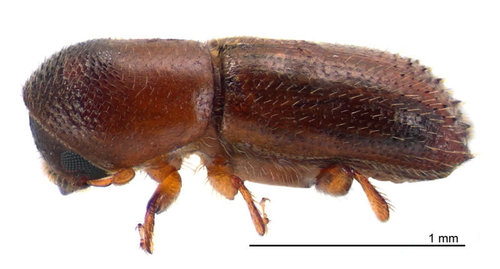
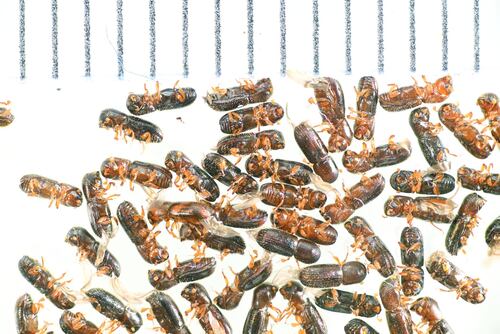

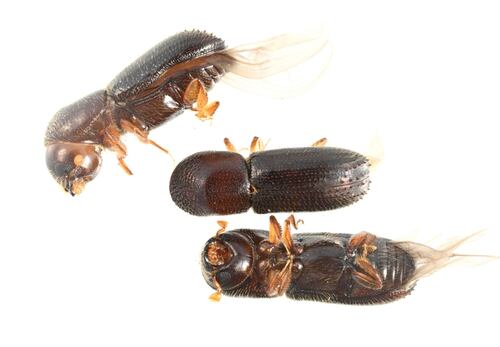
Questions people ask
How can I control keyhole ambrosia beetles?
Control is difficult with chemicals, so focus on timing treatments to the beetles' emergence period.
Source: Wikipedia
When are keyhole ambrosia beetles most active?
They are most frequently trapped from late March to late September, especially in July and August.
Source: Wikipedia
Same family (Curculionidae)
 Green Immigrant Leaf WeevilPolydrusus formosusDamages trees, gardens or crops
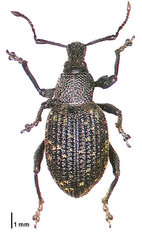 Black Vine WeevilOtiorhynchus sulcatusDamages trees, gardens or crops
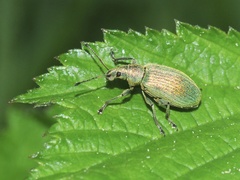 Nettle weevilPhyllobius pomaceusDamages trees, gardens or crops
 Asian Oak WeevilCyrtepistomus castaneusDamages trees, gardens or crops
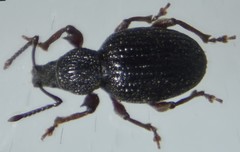 Strawberry Root WeevilOtiorhynchus ovatusDamages trees, gardens or crops
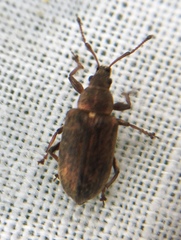 Common Leaf WeevilPhyllobius pyriDamages trees, gardens or crops
Sources
- Wikipedia: https://en.wikipedia.org/wiki/Xyleborinus_saxesenii
Look it up elsewhere: GBIF · iNaturalist · BugGuide · ITIS · Wikipedia
Text written 2026-10-23 from the sources above and checked sentence by sentence against them. Data fetched 2026-10-23.