 Bug FAQ
Keeled Skimmer
Orthetrum coerulescens · Order: Odonata · Family: Libellulidae
Also called: Keeled Orthetrum, Keeled Skimmer Dragonfly, Keeled Skipper
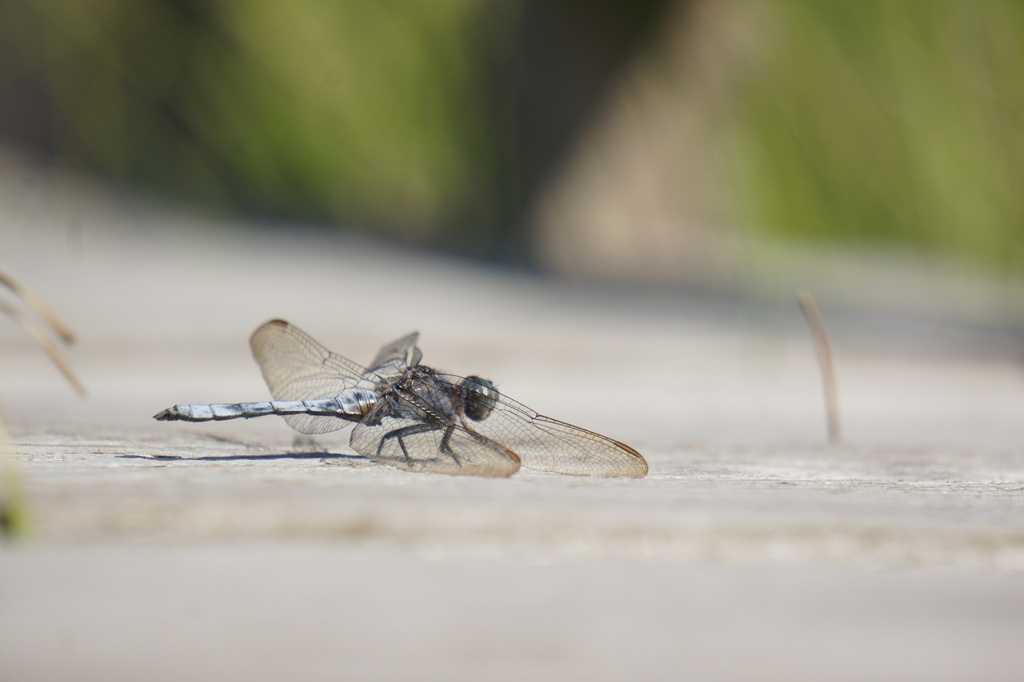
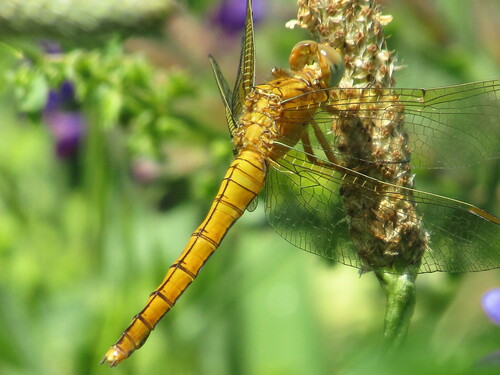
The keeled skimmer is a dragonfly about 40 to 44 mm long. Males show blue-grey eyes and develop a blue powdery coating on the abdomen as they age, while the thorax has pale yellow stripes. It lives near acidic pools and streams in wet heathland, often alongside golden-ringed dragonflies, and flies from June to September in the UK.
Source: Wikipedia
How to recognize it
The thorax bears pale yellow ante-humeral stripes.
Source: Wikipedia
Size
Body length ranges from 40 to 44 mm (1.6 to 1.7 in).
Source: Wikipedia
Where it lives
Typical habitats are pools and streams in acidic heathland, especially wet heathland sites.
Source: Wikipedia
Life cycle
Larvae hatch after five to six weeks and the whole development takes about two years.
Source: Wikipedia
When you see it
Adults are on the wing from June through September in the UK.
Source: Wikipedia
Where it comes from
It is common in central and southern Europe, reaches marginally into Russia, and occurs in North Africa.
Source: Wikipedia
More photos
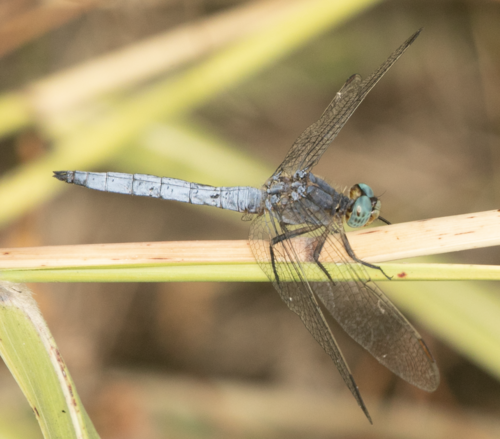
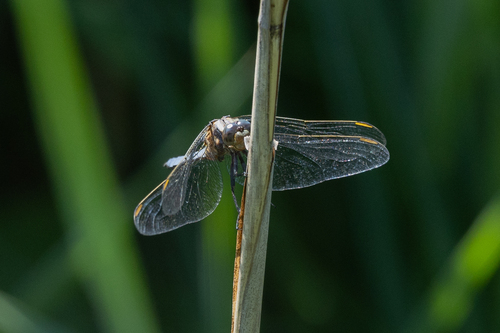
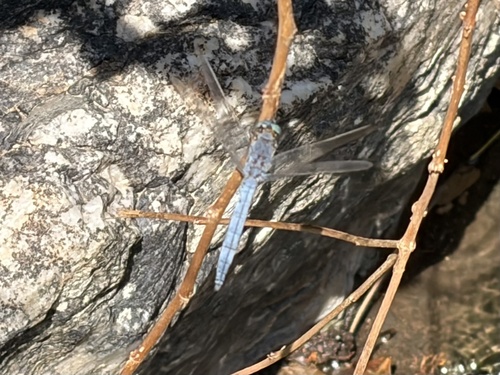
Same family (Libellulidae)

Sources
- Wikipedia: https://en.wikipedia.org/wiki/Keeled_skimmer
Look it up elsewhere: GBIF · iNaturalist · BugGuide · Wikipedia
Text written 2026-10-22 from the sources above and checked sentence by sentence against them. Data fetched 2026-10-22.