 Bug FAQ
Kaibab Paper Wasp
Polistes kaibabensis · Order: Hymenoptera · Family: Eumenidae
Also called: Kaibab Plateau Paper Wasp
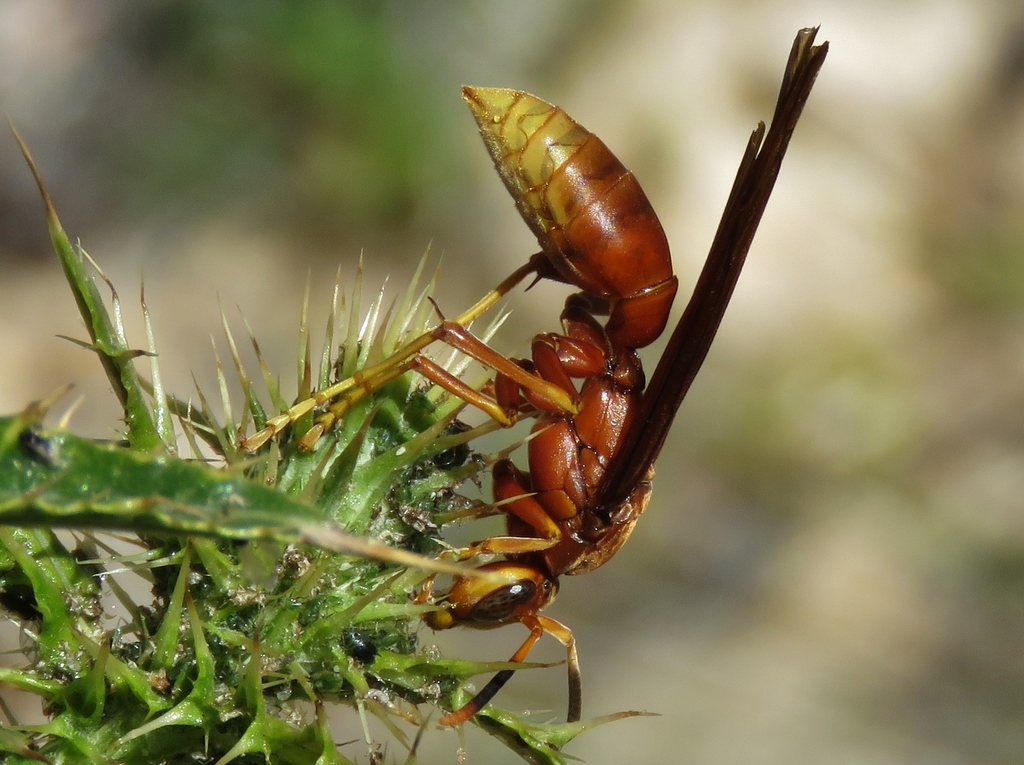
Adults measure about 13 to 25 mm in length. They are found on high-elevation meadows and open forests of the Kaibab Plateau in north-central Arizona. Larvae hunt caterpillars, while adults sip nectar and other sugary secretions.
Source: Wikipedia
How to recognize it
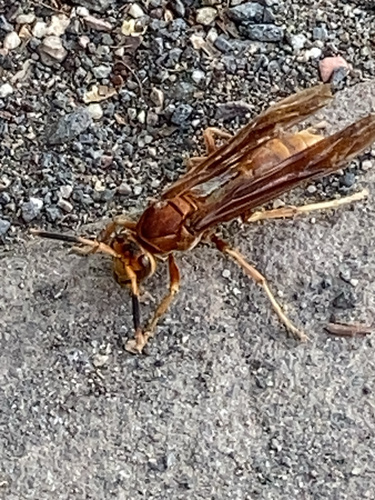
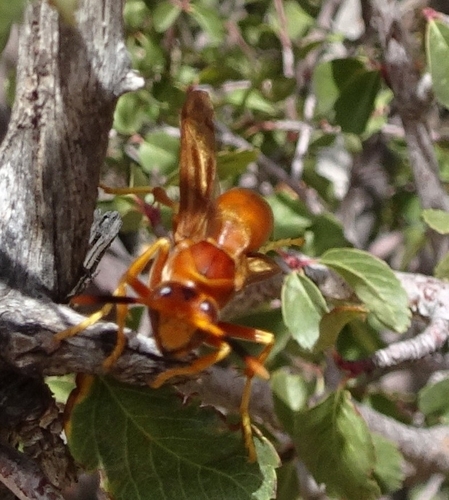
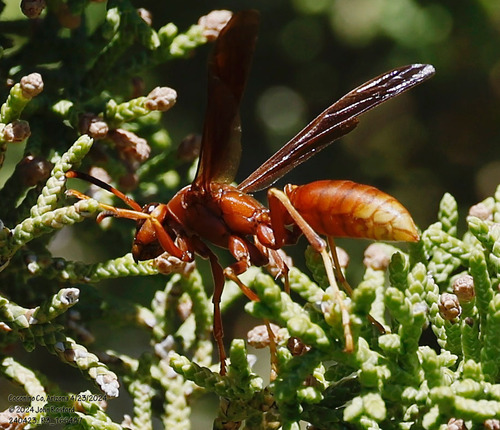
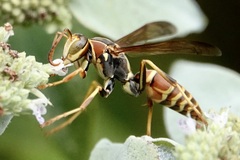
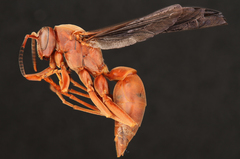
It has a yellow to brown slender body.
Source: Wikipedia
Size
Adults are about 13 to 25 mm long.
Source: Wikipedia
Where it lives
It lives on high-elevation meadows and open forests of the Kaibab Plateau in north-central Arizona.
Source: Wikipedia
What it eats
The larvae feed on caterpillars, while adults take nectar and sugary secretions.
Source: Wikipedia
Where it comes from
The species is endemic to north-central Arizona, especially the Kaibab Plateau near the Grand Canyon.
Source: Wikipedia
Where it is found in the US
Recorded in 2 of 51 states and DC. Most records: Arizona, Utah.
Darker = more records. Counts are museum and citizen-science records, not population size.
Source: GBIF
Status: native in North America; native in United States. Source: iNaturalist
Months it is reported in the US
Source: GBIF
More photos
Questions people ask
What do adult Kaibab paper wasps eat?
Adults feed on nectar and other sugary secretions.
Source: Wikipedia
Same family (Eumenidae)

Sources
- Wikipedia: https://en.wikipedia.org/wiki/Kaibab_paper_wasp
Look it up elsewhere: GBIF · iNaturalist · BugGuide · Wikipedia
Text written 2026-10-27 from the sources above and checked sentence by sentence against them. Data fetched 2026-10-27.