 Bug FAQ
Jumping Gall Wasp
Neuroterus saltatorius · Order: Hymenoptera · Family: Cynipidae
Source: Wikipedia
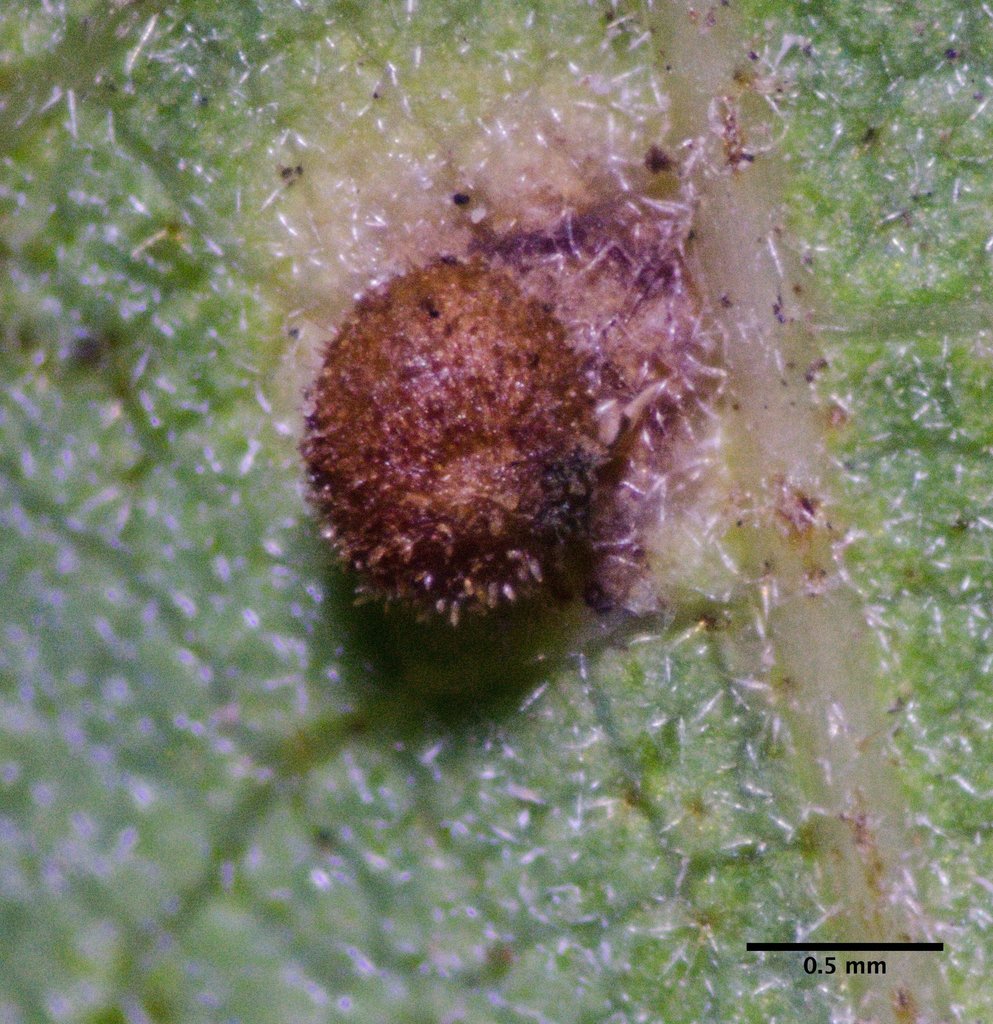
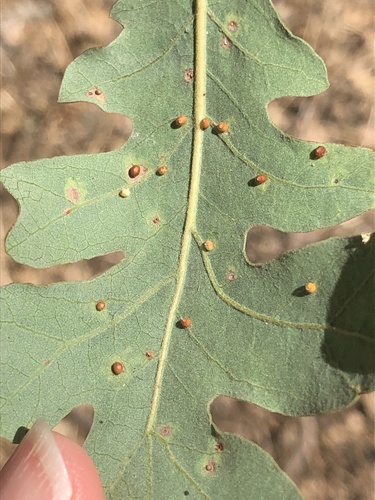
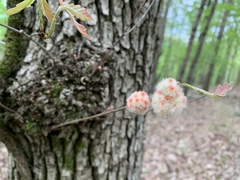
Adult jumping gall wasps are tiny, about 0.75 mm long, and are brown or black with reddish legs. They live on oak trees in North America and have two generations, with the all-female galls appearing in late spring and adults emerging the following spring. While they usually cause little harm, a high number of galls can damage oak leaves.
Source: Wikipedia
How to recognize it
They are brown or black and have reddish legs.
Source: Wikipedia
Size
Adults measure about 0.75 mm (0.030 in) in length.
Source: Wikipedia
Is it a pest in the house?
Normally they do not cause significant damage to host trees, but many galls can damage oak leaves.
Source: Wikipedia
Where it lives
They are found on various oak trees across North America.
Source: Wikipedia
Life cycle
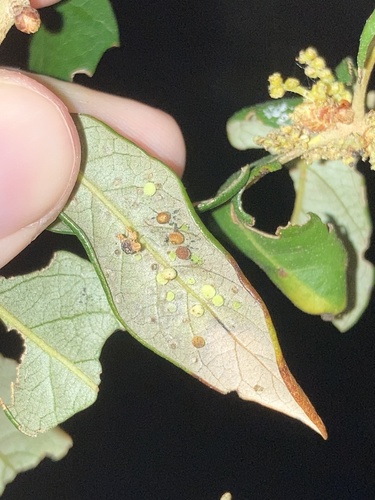
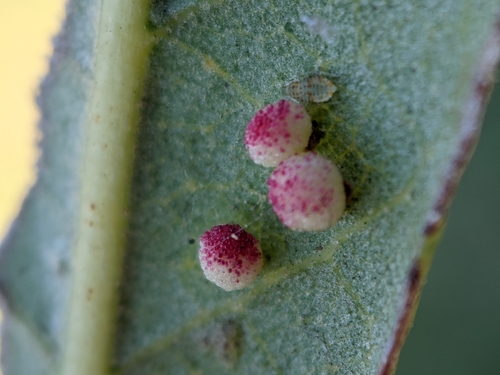
The species alternates between a bisexual generation and an all-female generation. All-female galls appear in late spring, and adults emerge the next spring to lay eggs for the bisexual generation.
Source: Wikipedia
When you see it
All-female galls show up in late spring, and adults emerge early the following spring.
Source: Wikipedia
Where it comes from
Their native range is North America.
Source: Wikipedia
Where it is found in the US
Recorded in 27 of 51 states and DC. Most records: California, Oregon, Illinois, Minnesota, Ohio, Wisconsin, Texas, Michigan.
Darker = more records. Counts are museum and citizen-science records, not population size.
Source: GBIF
Status: introduced in Canada. Source: iNaturalist
Months it is reported in the US
Source: GBIF
More photos
Questions people ask
Do jumping gall wasps damage oak trees?
When many galls are present, they can damage oak leaves.
Source: Wikipedia
When do the adults emerge?
Adults emerge early the following spring to lay eggs for the bisexual generation.
Source: Wikipedia
Same family (Cynipidae)


Sources
- Wikipedia: https://en.wikipedia.org/wiki/Neuroterus_saltatorius
Look it up elsewhere: GBIF · iNaturalist · BugGuide · Wikipedia
Text written 2026-10-23 from the sources above and checked sentence by sentence against them. Data fetched 2026-10-22.