 Bug FAQ
Julia Heliconian
Dryas iulia · Order: Lepidoptera · Family: Nymphalidae
Also called: Flambeau Butterfly, Flame Butterfly, Julia Butterfly, Julia Longwing
Source: Wikipedia
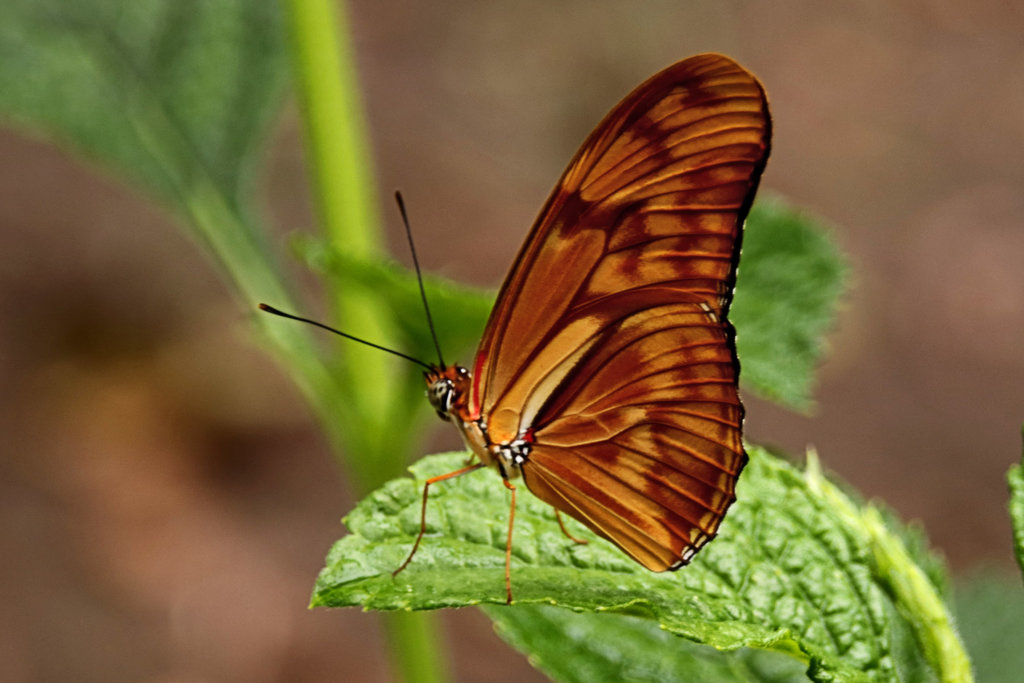
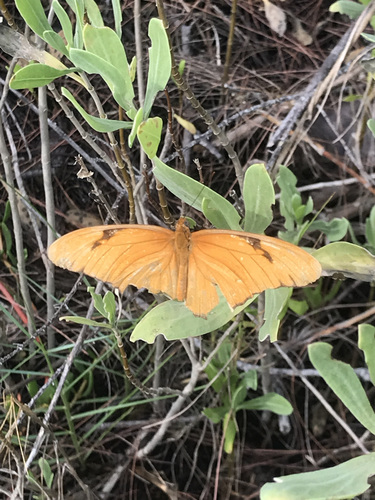
Julia Heliconian butterflies have orange wings with black markings and a wingspan of about 8 to 9 cm. They live in sunny forest clearings from Brazil up to southern Texas and Florida, feeding on flower nectar and sometimes on caiman tears. The caterpillars eat passion-vine leaves and their spines may cause a skin rash.
Source: Wikipedia
How to recognize it
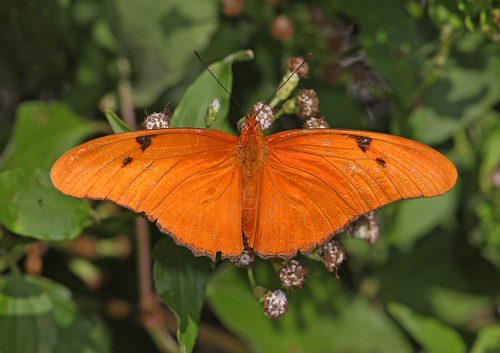
The butterfly is orange with black wing markings that differ among subspecies.
Source: Wikipedia
Is it a pest in the house?
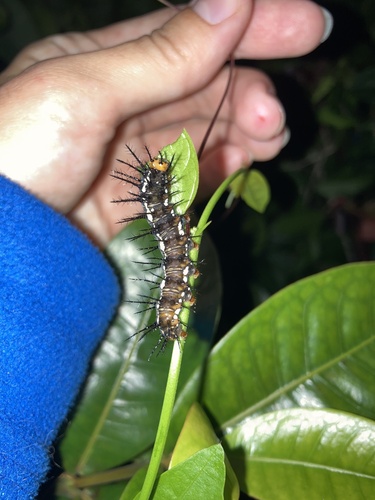
The spiky caterpillars can cause a skin rash if touched.
Source: Wikipedia
Where it lives
It flies fast and is found in clearings, paths, and forest edges that get plenty of sun.
Source: Wikipedia
What it eats
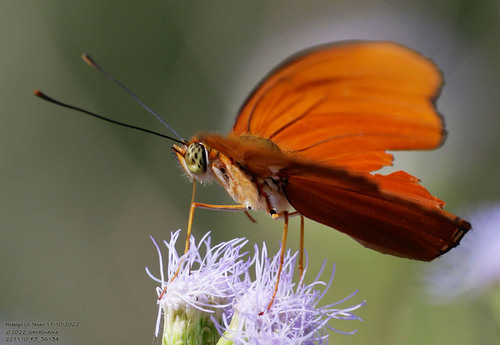
Adults sip nectar from flowers such as lantana and shepherd’s-needle, and may drink tears from irritated caiman eyes. Caterpillars feed on leaves of passion vines like Passiflora affinis and yellow passionflower.
Source: Wikipedia
Life cycle
Mating can start within two weeks after the butterfly emerges from the chrysalis. Females may mate up to four times in their lives, which is unusual for related species.
Source: Wikipedia
When you see it
They are active all day and can live a long time, sometimes being seen as far north as eastern Nebraska in summer.
Source: Wikipedia
Where it comes from
It is native from Brazil through Central America to southern Texas and Florida, and is common in tropical and subtropical parts of the Americas.
Source: Wikipedia
Lookalikes
They are part of an orange Müllerian mimicry group and may compete with Gulf fritillaries where their ranges overlap.
Source: Wikipedia
Where it is found in the US
Recorded in 13 of 51 states and DC. Most records: Florida, Texas, Kansas, Oklahoma, Alabama, Nebraska, New York, Missouri.
Darker = more records. Counts are museum and citizen-science records, not population size.
Source: GBIF
Months it is reported in the US
Source: GBIF
More photos
Questions people ask
Do the caterpillars bite or sting?
The caterpillars are spiky and may cause a skin rash.
Source: Wikipedia
What plants do the larvae eat?
The larvae feed on passion-vine leaves such as Passiflora affinis and yellow passionflower.
Source: Wikipedia
Where might I see a Julia Heliconian?
In sunny clearings and forest edges from Brazil up to southern Texas and Florida, sometimes as far north as eastern Nebraska in summer.
Source: Wikipedia
Same family (Nymphalidae)






Sources
- Wikipedia: https://en.wikipedia.org/wiki/Dryas_iulia
Look it up elsewhere: GBIF · iNaturalist · BugGuide · ITIS · Wikipedia
Text written 2026-10-22 from the sources above and checked sentence by sentence against them. Data fetched 2026-10-22.