 Bug FAQ
Jeweled Flower Mantis
Creobroter gemmatus · Order: Mantodea · Family: Hymenopodidae
Also called: Indian Flower Mantis
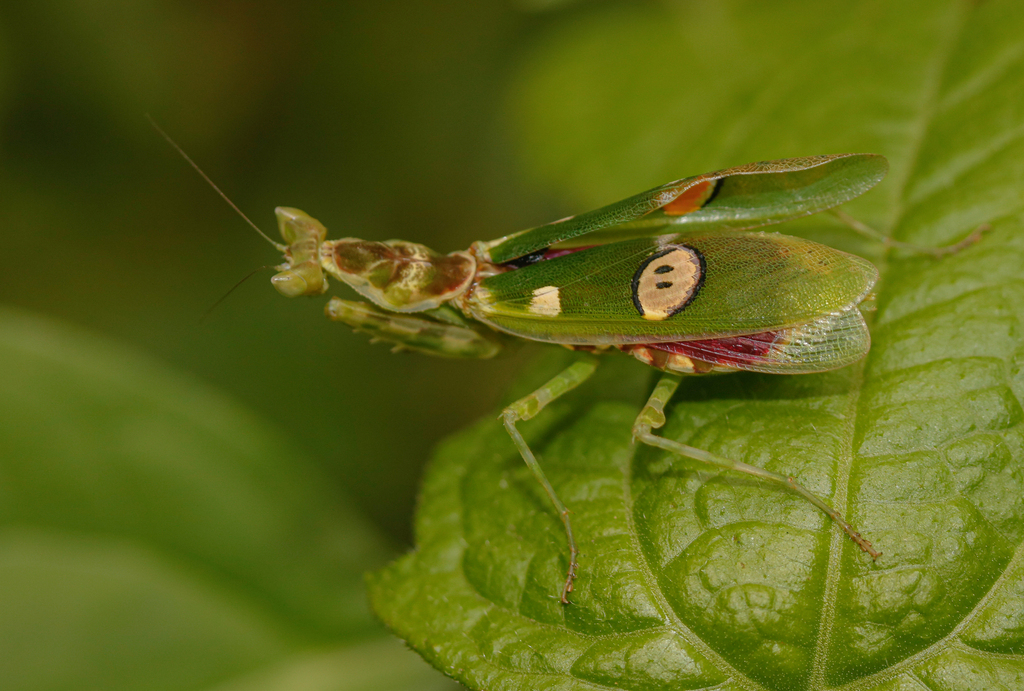
They like humid conditions and can live about nine months when kept in captivity. In the wild they are native to Asia.
Source: Wikipedia
Where it lives
They prefer a humid environment.
Source: Wikipedia
Life cycle
They molt eight times before reaching adulthood, taking 2 to 5 months depending on food and temperature. Each ootheca may hold up to 50 eggs, and under good conditions the hatchlings emerge after about five weeks.
Source: Wikipedia
Where it comes from
The jeweled flower mantis is native to Asia.
Source: Wikipedia
Lookalikes
It is the smallest yet most widespread species in the Creobroter genus.
Source: Wikipedia
More photos
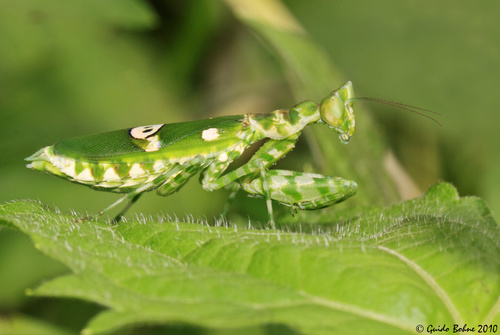
Questions people ask
How large do jeweled flower mantises get?
Males are about 1.5 inches (3.8 cm) long, and females are a little larger.
Source: Wikipedia
How many times do they molt before becoming adults?
They molt eight times, taking 2 to 5 months depending on food and temperature.
Source: Wikipedia
Same family (Hymenopodidae)


Sources
- Wikipedia: https://en.wikipedia.org/wiki/Creobroter_gemmatus
Look it up elsewhere: GBIF · iNaturalist · BugGuide · Wikipedia
Text written 2026-10-23 from the sources above and checked sentence by sentence against them. Data fetched 2026-10-23.