 Bug FAQ
Cryptic Mantis
Sibylla pretiosa · Order: Mantodea · Family: Hymenopodidae

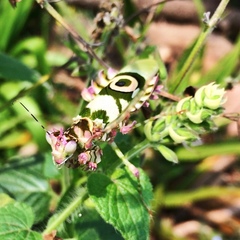
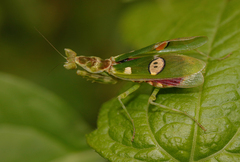
Adult females are about 5 to 6 cm long, while males are roughly 1 cm shorter. They have leaf-like projections on their femurs and green, leaf-shaped wings that stand out against a brown, mottled body. Cryptic mantises live on tree bark in woodlands of southern Africa and mainly eat flying insects such as fruit flies, house flies, bees and moths.
Source: Wikipedia
How to recognize it
Their four walking legs have leaf-like projections near the joints. The wings are leaf-shaped and are the only green part of an otherwise brown, mottled exoskeleton.
Source: Wikipedia
Size
Females reach 5 to 6 cm in length; males are about 1 cm shorter.
Source: Wikipedia
Where it lives
They live on tree bark in woodland habitats.
Source: Wikipedia
Life cycle
In captivity they can live up to nine months; wild individuals likely live a bit longer.
Source: Wikipedia
Where it comes from
The species is native to southern Africa.
Source: Wikipedia
More photos

Questions people ask
Where are cryptic mantises found?
They are native to southern Africa and live on tree bark in woodlands.
Source: Wikipedia
Same family (Hymenopodidae)


Sources
- Wikipedia: https://en.wikipedia.org/wiki/Sibylla_pretiosa
Look it up elsewhere: GBIF · iNaturalist · BugGuide · Wikipedia
Text written 2026-10-23 from the sources above and checked sentence by sentence against them. Data fetched 2026-10-23.