 Bug FAQ
Jewel Oak Gall Wasp
Acraspis quercushirta · Order: Hymenoptera · Family: Cynipidae
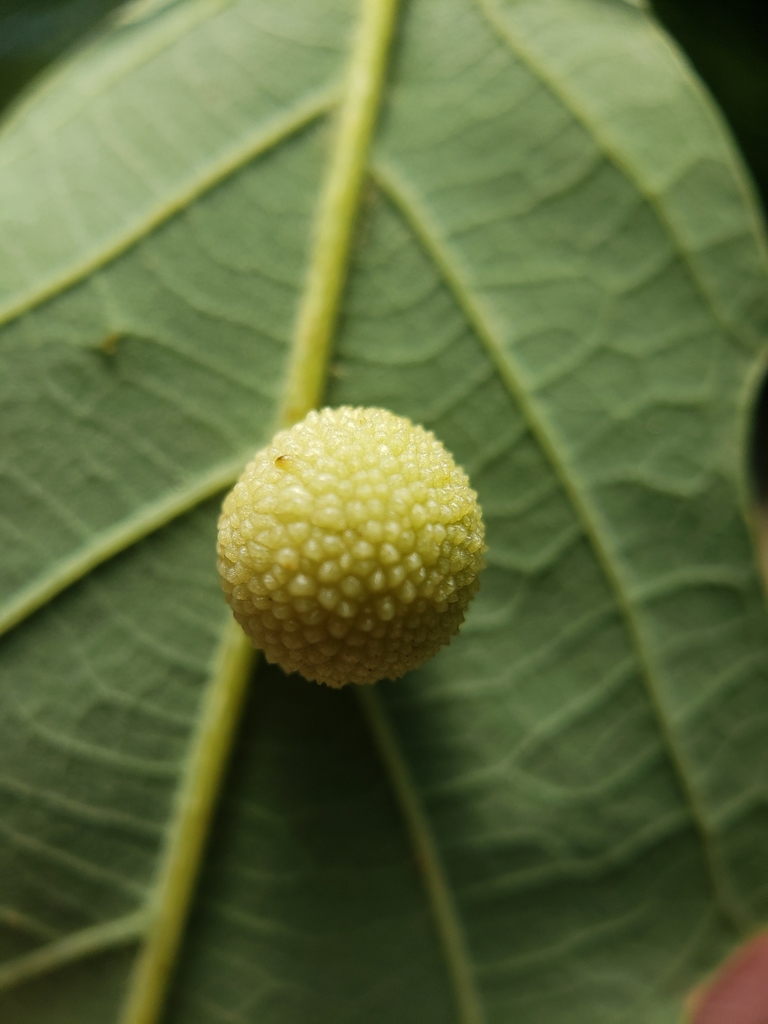
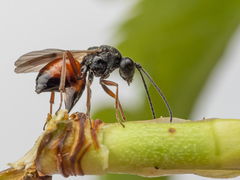
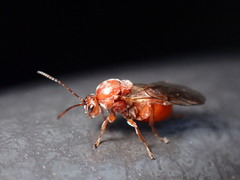
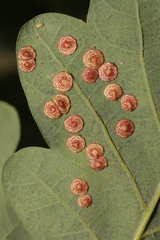
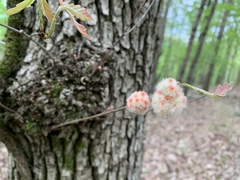
The jewel oak gall wasp makes small, faceted galls that look like tiny pieces of jewelry on oak leaves. It lives on several white oak species across North America and has two generations each year, one asexual and one sexual. Adults emerge in late May to early June, and the galls drop with the leaves in autumn.
Source: Wikipedia
What it eats
Wingless asexual females emerge in fall, climb oak trunks, and lay eggs in bud scales, causing galls to form. Sexual-generation females lay eggs on the veins of the underside of oak leaves.
Source: Wikipedia
Life cycle
The species has two generations each year to an asexual generation and a sexual generation to each producing its own type of gall. The galls and larvae overwinter, resume development in spring, and the adults emerge in late May to early June.
Source: Wikipedia
When you see it
Adults appear in late May and early June. Galls fall with the leaves in autumn, and asexual females emerge shortly after.
Source: Wikipedia
Where it comes from
Its native range is North America.
Source: Wikipedia
Where it is found in the US
Recorded in 34 of 51 states and DC. Most records: Colorado, Minnesota, Illinois, Ohio, Utah, Virginia, Pennsylvania, Wisconsin.
Darker = more records. Counts are museum and citizen-science records, not population size.
Source: GBIF
Status: native in North America; native in United States. Source: iNaturalist
Months it is reported in the US
Source: GBIF
More photos
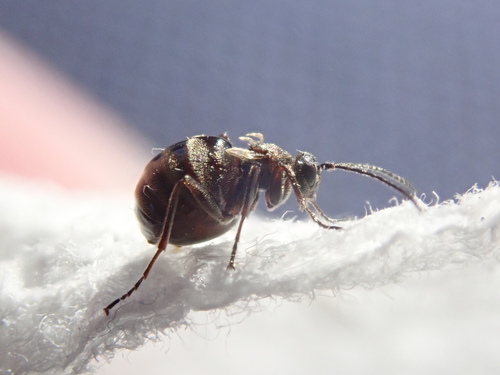
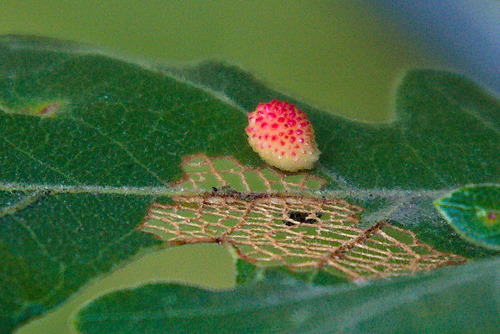
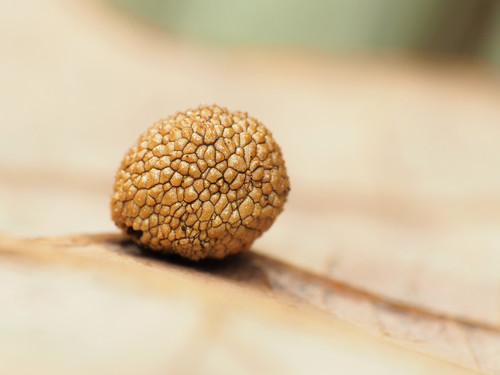

Questions people ask
How many generations does this wasp have each year?
It has two generations per year to one asexual and one sexual.
Source: Wikipedia
How do the females lay their eggs?
Asexual females lay eggs in bud scales in the fall, while sexual females lay eggs on leaf veins.
Source: Wikipedia
Same family (Cynipidae)


Sources
- Wikipedia: https://en.wikipedia.org/wiki/Acraspis_quercushirta
Look it up elsewhere: GBIF · iNaturalist · BugGuide · Wikipedia
Text written 2026-10-23 from the sources above and checked sentence by sentence against them. Data fetched 2026-10-22.