 Bug FAQ
Jade Clubtail
Arigomphus submedianus · Order: Odonata · Family: Gomphidae
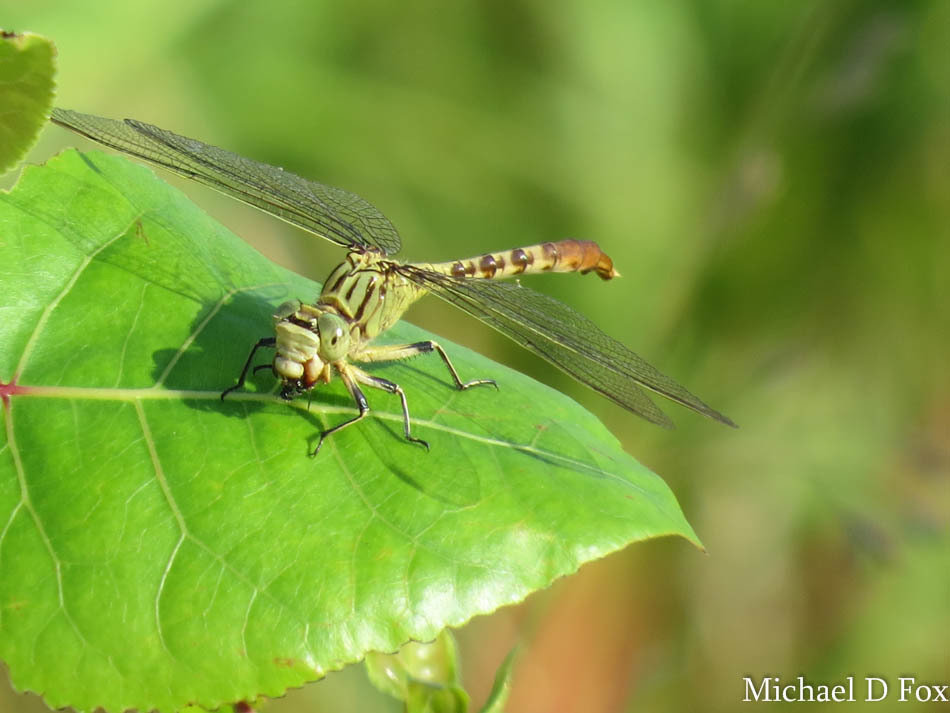
The jade clubtail is a dragonfly in the Gomphidae family. Adults are 51 to 55 mm long and are seen from April through July. They live around ponds, lakes, muddy areas and canals.
Source: Wikipedia
How to recognize it
It belongs to the dragonfly family Gomphidae.
Source: Wikipedia
Size
Its total length ranges from 51 to 55 mm (about 2.0 to 2.2 in).
Source: Wikipedia
Where it lives
It is found near ponds, lakes, muddy environments and canals.
Source: Wikipedia
When you see it
Adults are active in spring and summer, from April to July.
Source: Wikipedia
Where it is found in the US
Recorded in 17 of 51 states and DC. Most records: Texas, Illinois, Oklahoma, Kansas, Tennessee, Ohio, Mississippi, Arkansas.
Darker = more records. Counts are museum and citizen-science records, not population size.
Source: GBIF
Status: native in United States. Source: iNaturalist
Months it is reported in the US
Source: GBIF
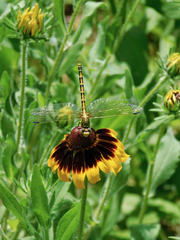
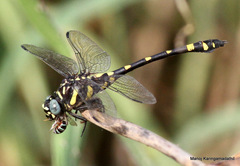
More photos
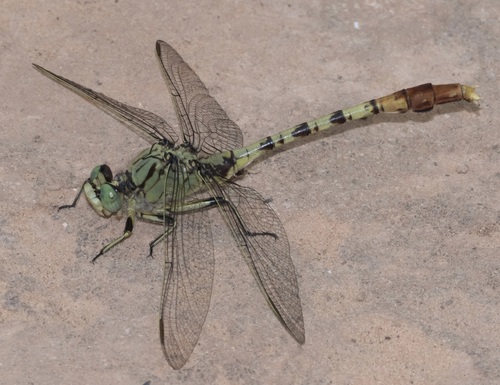
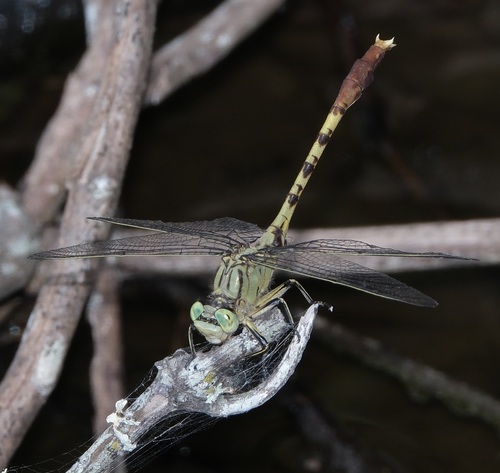
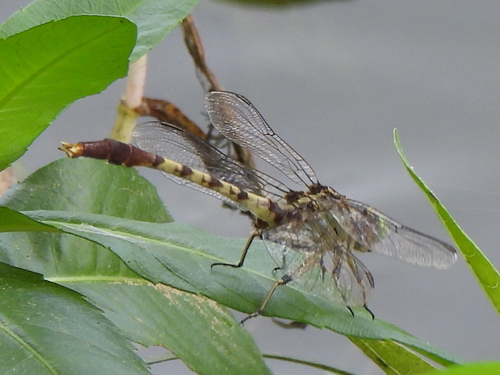
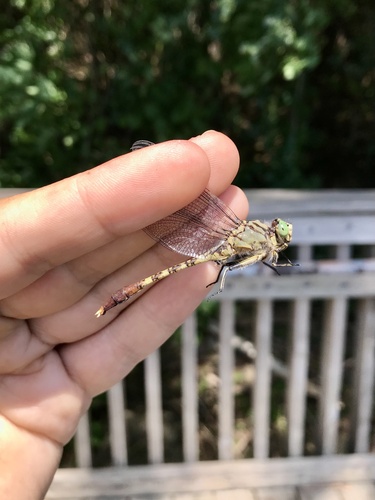
Same family (Gomphidae)

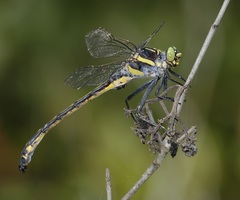
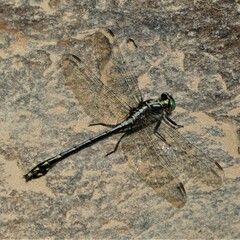
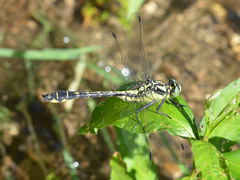
Sources
- Wikipedia: https://en.wikipedia.org/wiki/Jade_clubtail
Look it up elsewhere: GBIF · iNaturalist · BugGuide · ITIS · Wikipedia
Text written 2026-10-23 from the sources above and checked sentence by sentence against them. Data fetched 2026-10-23.