 Bug FAQ
Iron Cross Blister Beetle
Tegrodera aloga · Order: Coleoptera · Family: Meloidae
Source: Wikipedia
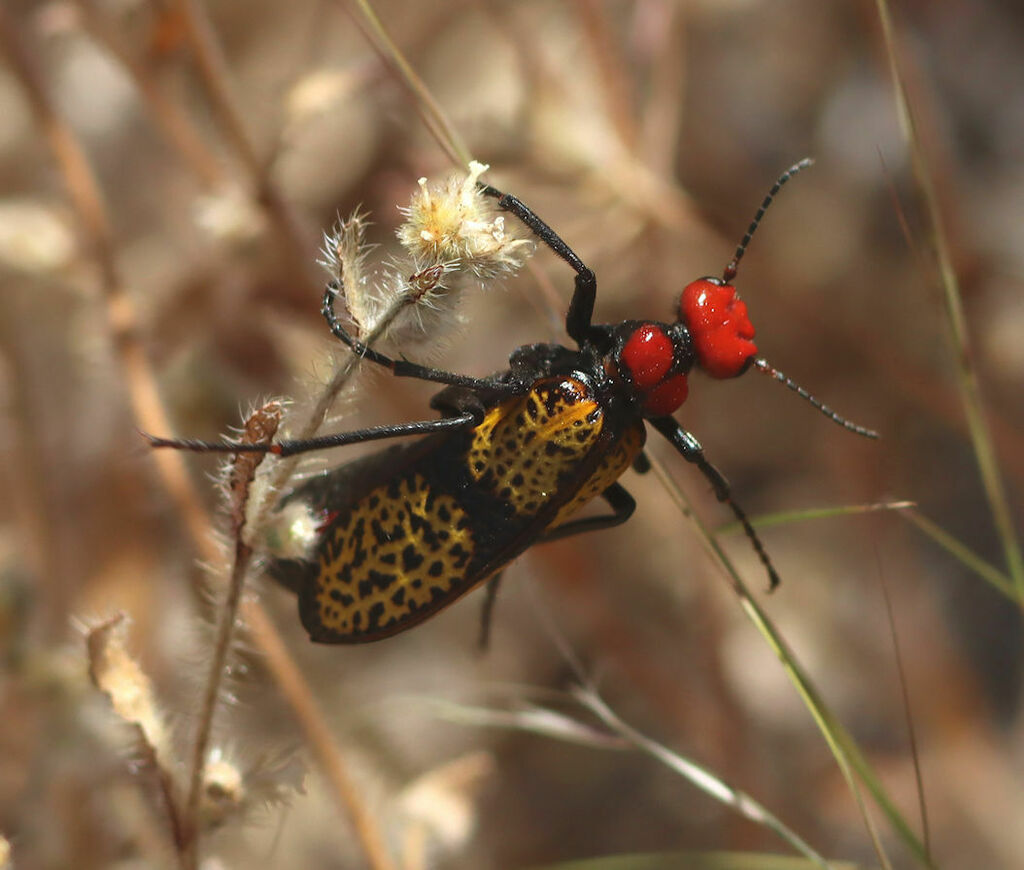
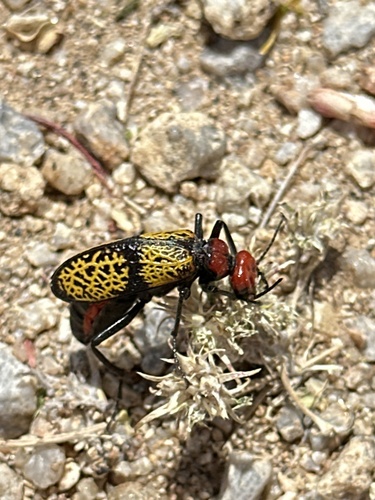
The iron cross blister beetle is about 2 cm long with a long, narrow, cylindrical body, a wide head, and distinctive black wing covers marked with a black cross and yellow-red spots. It lives in Arizona, California and Sonora, where adults feed on spring blossoms of desert plants such as Nama hispida, Eriastrum and alfalfa, and they also drink nectar. The beetles can become a problem for farmers because they end up in harvested alfalfa and hay, and crushing them releases the poisonous cantharidin that can harm livestock and humans.
Source: Wikipedia
How to recognize it
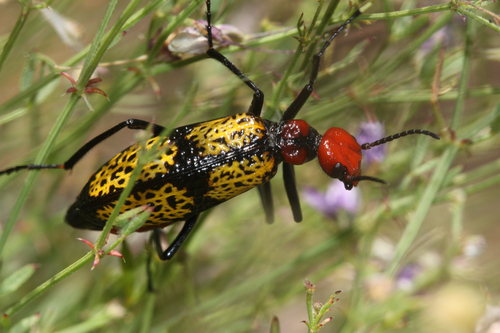
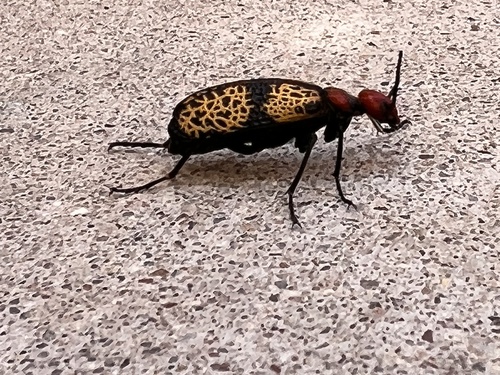
Its black wing covers bear a cross shape and the body shows contrasting yellow and red spots on a black background.
Source: Wikipedia
Size
Adults are roughly 2 cm long with a long, narrow, cylindrical shape and a relatively wide head.
Source: Wikipedia
Is it a pest in the house?
These beetles are often found in horse feed, especially alfalfa, and can become a problem for California farmers when they are killed during harvest and end up in baled hay, contaminating forage with their hemolymph.
Source: Wikipedia
Does it bite or sting?
Cantharidin is released from the leg joints and antennal pores, making the beetle toxic to humans and capable of causing painful or even fatal injury to livestock.
Source: Wikipedia
How to get rid of it
Crushing the beetle releases cantharidin, a poisonous substance that can be fatal if ingested.
Source: Wikipedia
Where it lives
It is found in the desert regions of Arizona, California and Sonora.
Source: Wikipedia
What it eats
Adults feed on the spring blossoms of Nama hispida, Eriastrum, alfalfa and other desert plants, and they also sip nectar.
Source: Wikipedia
Life cycle
The larvae are parasitic, but the exact host species are unknown; they are thought to develop in ground-nesting bees.
Source: Wikipedia
Where it comes from
Its native range includes Arizona, California and the Mexican state of Sonora.
Source: Wikipedia
Where it is found in the US
Recorded in 3 of 51 states and DC. Most records: Arizona, California, Alaska.
Darker = more records. Counts are museum and citizen-science records, not population size.
Source: GBIF
Months it is reported in the US
Source: GBIF
More photos
Questions people ask
Are they dangerous to people?
Yes, they excrete cantharidin that is toxic to humans and can cause painful or fatal effects.
Source: Wikipedia
How can I prevent them from contaminating my hay?
Avoid crushing the beetles, because crushing releases the poisonous cantharidin that can contaminate forage.
Source: Wikipedia
Same family (Meloidae)




Sources
- Wikipedia: https://en.wikipedia.org/wiki/Tegrodera_aloga
Look it up elsewhere: GBIF · iNaturalist · BugGuide · ITIS · Wikipedia
Text written 2026-10-24 from the sources above and checked sentence by sentence against them. Data fetched 2026-10-24.