 Bug FAQ
Inspector
Chalcostephia flavifrons · Order: Odonata · Family: Libellulidae
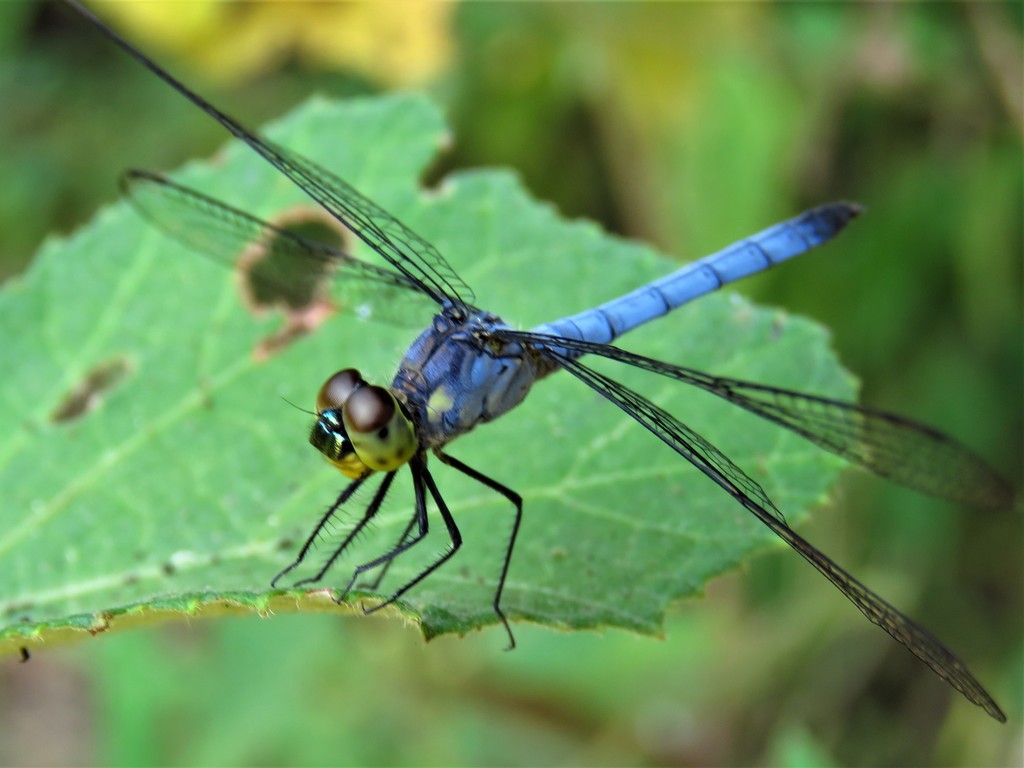
The Inspector dragonfly is a small species with hind-wing lengths of about 24 to 29 mm. Males turn bluish-grey and dusty when mature, while females and young males are dark with bold yellow bands. It lives in swampy areas, preferring pools, streams, marshes and open savannah or forest clearings across central Africa.
Source: Wikipedia
How to recognize it
Mature males are bluish-grey and pruinose; females and newly emerged males are dark with striking yellow banding. Both sexes have a yellow face that stands out against a flattened, metallic-green frons.
Source: Wikipedia
Size
The hind wing measures 24 to 29 mm (about 0.9 to 1.1 in).
Source: Wikipedia
Where it lives
Found in swampy habitats such as temporary and permanent pools with vegetation, streams, rivers, marsh channels, gallery forests, forest clearings, savannah and shrubby areas.
Source: Wikipedia
Where it comes from
Native to central Africa with a widespread distribution across many countries including Angola, Kenya, South Africa and Zambia.
Source: Wikipedia
Lookalikes
It can be told apart from similar species by its yellow face contrasting with a flattened, metallic-green frons.
Source: Wikipedia
More photos

Same family (Libellulidae)

Sources
- Wikipedia: https://en.wikipedia.org/wiki/Chalcostephia
Look it up elsewhere: GBIF · iNaturalist · BugGuide · Wikipedia
Text written 2026-10-23 from the sources above and checked sentence by sentence against them. Data fetched 2026-10-23.