 Bug FAQ
Hyperalonia morio
Hyperalonia morio · Order: Diptera · Family: Bombyliidae
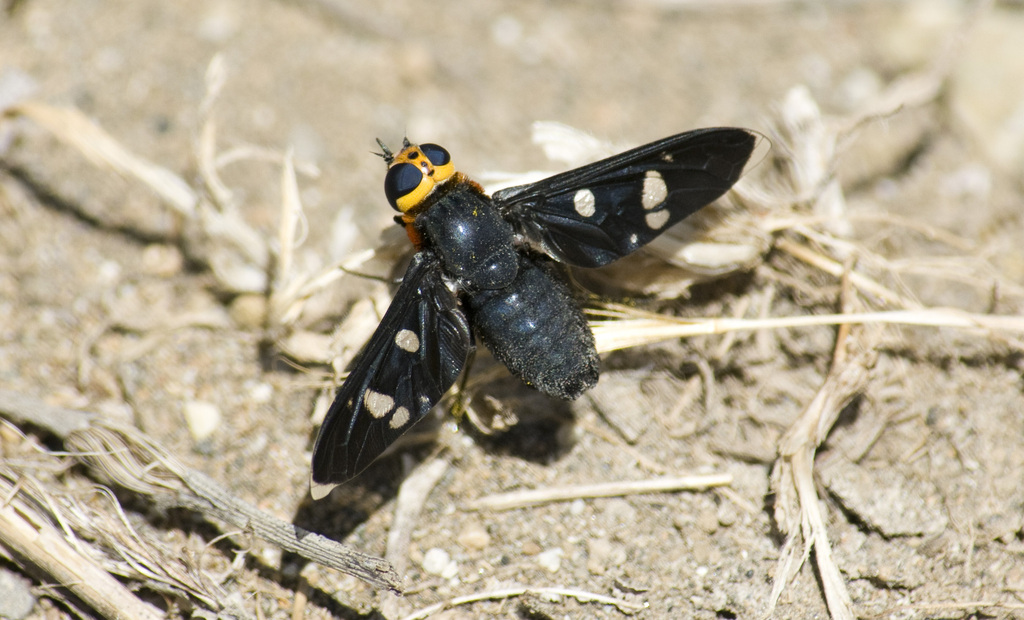
It feeds on flower nectar and pollen, while its first-instar larvae eat the larvae of other insects during winter.
Source: Wikipedia
How to recognize it
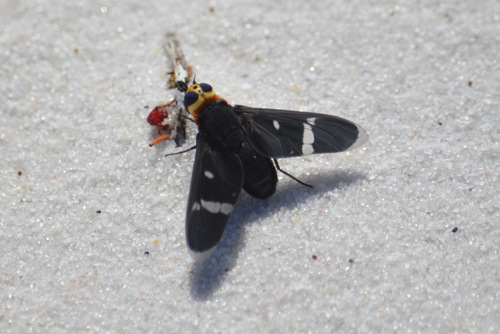
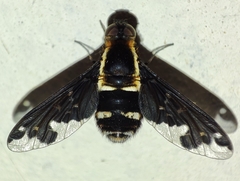
The wings are dark bluish with clear (hyaline) patches.
Source: Wikipedia
Where it lives
Adults visit flowers to drink nectar and collect pollen.
Source: Wikipedia
What it eats
Adults feed on flower nectar and pollen. First-instar larvae overwinter by feeding on the larvae of their hosts.
Source: Wikipedia
Life cycle
The first larval stage lives through the winter, consuming host larvae until spring.
Source: Wikipedia
More photos
Questions people ask
What do adult Hyperalonia morio eat?
Adults sip nectar and gather pollen from flowers.
Source: Wikipedia
Where is Hyperalonia morio found?
It occurs throughout South America, including Argentina, Bolivia, Brazil, Chile, Paraguay and Uruguay.
Source: Wikipedia
What do the larvae feed on?
First-instar larvae feed on the larvae of other insects while overwintering.
Source: Wikipedia
Same family (Bombyliidae)


Sources
- Wikipedia: https://en.wikipedia.org/wiki/Hyperalonia_morio
Look it up elsewhere: GBIF · iNaturalist · BugGuide · Wikipedia
Text written 2026-10-23 from the sources above and checked sentence by sentence against them. Data fetched 2026-10-23.