 Bug FAQ
Hydaspes Eighty-Eight
Callicore hydaspes · Order: Lepidoptera · Family: Nymphalidae
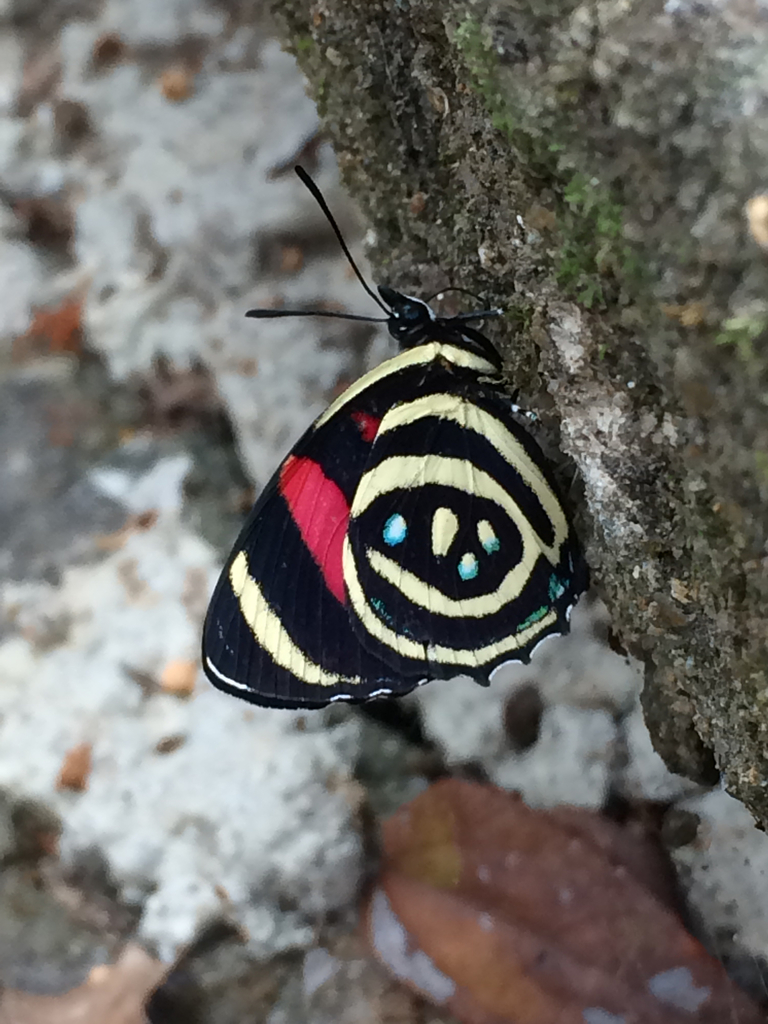
The Hydaspes Eighty-Eight has a wingspan of about 30 to 35 mm. Its forewings are black with a wide red band and a blue base, while the hindwings are black with a larger electric-blue area that reaches the edges. It lives in humid forest interiors and edges across parts of Brazil, Paraguay, Peru and Argentina.
Source: Wikipedia
How to recognize it
Hindwings are black with an extensive electric-blue area that extends to the margins.
Source: Wikipedia
Size
Wingspan ranges from 30 to 35 mm (about 1.2 to 1.4 in).
Source: Wikipedia
Where it lives
Found mainly in humid forests and at their edges.
Source: Wikipedia
Where it comes from
Native to Brazil (several states), Paraguay, Peru and Argentina.
Source: Wikipedia
More photos

Questions people ask
What does the Hydaspes Eighty-Eight look like?
It has black forewings with a wide red band and blue base, and black hindwings with a large electric-blue area that reaches the edges.
Source: Wikipedia
How big is this butterfly?
Its wingspan is roughly 30 to 35 mm, about 1.2 to 1.4 inches.
Source: Wikipedia
Where can I find the Hydaspes Eighty-Eight?
It lives in humid forest interiors and edges in Brazil, Paraguay, Peru and Argentina.
Source: Wikipedia
Same family (Nymphalidae)






Sources
- Wikipedia: https://en.wikipedia.org/wiki/Callicore_hydaspes
Look it up elsewhere: GBIF · iNaturalist · BugGuide · Wikipedia
Text written 2026-10-23 from the sources above and checked sentence by sentence against them. Data fetched 2026-10-23.