 Bug FAQ
Human Flea
Pulex irritans · Order: Siphonaptera · Family: Pulicidae
Also called: flea
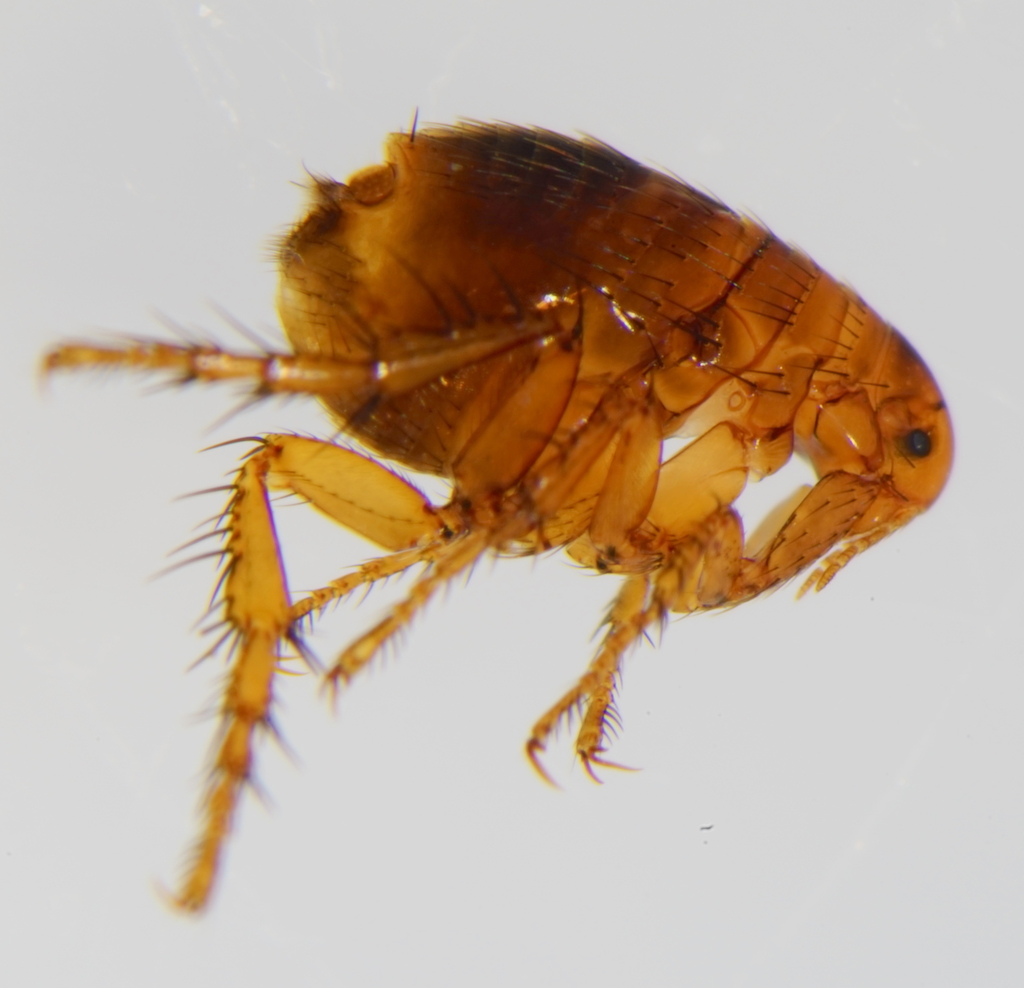
Adult human fleas are 1.5 to 4 mm long, dark brown, wing-less, and have a rounded head with a single bristle under the eye; they lack the genal and pronotal combs found on many other fleas. They live worldwide in close association with humans and domestic animals, feeding on the blood of dogs, cats, rodents, birds and other mammals. It can carry the plague and murine typhus germs, but experts call it only a possible carrier, and a poor one for plague. A child who swallows an infected flea can get a tapeworm.
How to recognize it
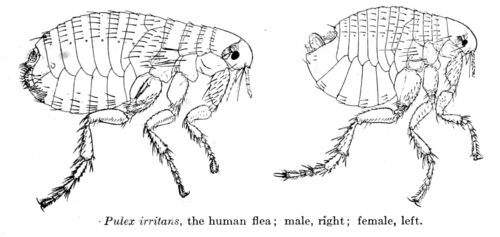
Adults are dark brown, lack wings, and have piercing-sucking mouthparts for blood feeding. They do not have the genal or pronotal combs that many other fleas possess. Key identification features include a rounded head, a single ocular bristle, and absence of a mesopleural ridge.
Size
Adults measure about 2 to 3 mm on average, with males slightly smaller than females. Flea eggs are roughly 0.5 mm long.
Is it a pest in the house?
Human fleas are commonly found in homes and on pets, moving quickly between areas such as eyebrows, eyelashes and pubic regions.
Does it bite or sting?
Flea bites cause itching and discomfort, leading to scratching at the bite site. Although they can carry plague bacteria, they are a very poor vector for transmitting the disease to people.
Source: Wikipedia
How to get rid of it
Effective control requires treating both the host animal and the environment, including regular shampooing and vacuuming of carpets and floors. The egg-to-adult development period averages 63 to 77 days, so interrupting the cycle can reduce infestations.
Where it lives
The human flea is one of six Pulex species, the others being restricted to the Nearctic and Neotropical regions.
Source: Wikipedia
What it eats
Adults feed on the blood of many mammals and birds, including dogs, cats, rodents, chickens and bats.
Source: Wikipedia
Life cycle
The flea undergoes a complete metamorphosis: egg, larva, pupa, then adult. Eggs are deposited in the environment and hatch in 3 to 4 days.
Source: Wikipedia
Lookalikes
It has historically been confused with the closely related Pulex simulans, but male genital differences can separate them.
Source: UF/IFAS
Where it is found in the US
Recorded in 31 of 51 states and DC. Most records: Montana, Washington, Texas, Utah, Colorado, California, Idaho, Oklahoma.
Darker = more records. Counts are museum and citizen-science records, not population size.
Source: GBIF
Status: native in North America; native in Canada. Source: iNaturalist
Months it is reported in the US
Source: GBIF
More photos


Questions people ask
How can I identify a human flea?
Look for a small (2 to 3 mm), dark brown, wing-less flea with a rounded head, a single bristle under the eye, and no genal or pronotal combs.
Do human fleas bite people?
Yes, they bite and cause itching and irritation at the bite site.
Source: Wikipedia
Can human fleas spread disease?
Rarely. It can carry plague and murine typhus germs, but it is a very poor spreader of plague. A child who swallows an infected flea can get a dog tapeworm.
How do I get rid of them?
Treat pets with appropriate flea products and regularly clean and vacuum the home, especially carpets and floor coverings.
Source: Wikipedia
Same family (Pulicidae)



Sources
- UF/IFAS: https://edis.ifas.ufl.edu/publication/IN1383
- Wikipedia: https://en.wikipedia.org/wiki/Human_flea
Look it up elsewhere: GBIF · iNaturalist · BugGuide · ITIS · Wikipedia
Text written 2026-10-23 from the sources above and checked sentence by sentence against them. Data fetched 2026-10-23.