 Bug FAQ
Cat Flea
Ctenocephalides felis · Order: Siphonaptera · Family: Pulicidae
Source: Wikipedia, CDC, Penn State Extension

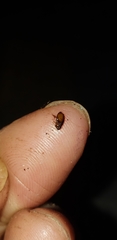
Cat fleas are small reddish-brown insects about 1 to 2 mm long that feed on the blood of cats, dogs, and people. Their bites cause itching and can transmit flea-borne diseases like plague and flea-bite dermatitis.
Source: Wikipedia, Penn State Extension, CDC
How to recognize it
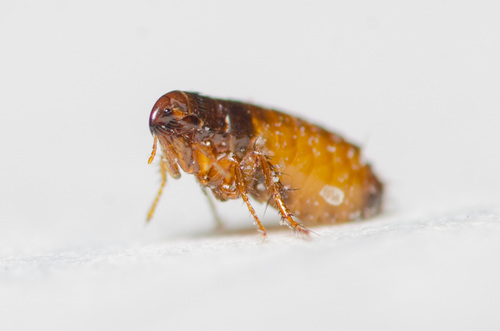
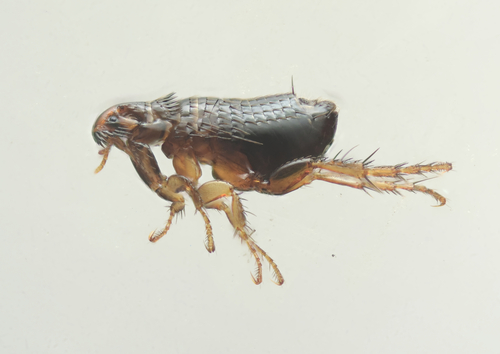
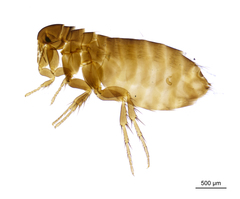
Adults are reddish-brown and gravid females look banded with cream and dark brown. They have a longer head than the dog flea and many spines and hairs on the body.
Source: Wikipedia, Penn State Extension
Size
Adults measure 1 to 2 mm in length.
Source: Wikipedia
Is it a pest in the house?
They can transmit diseases to humans, including bubonic plague.
Source: Wikipedia, Penn State Extension
Does it bite or sting?
Flea bites cause discomfort, itchiness, and irritation, especially on ankles and lower legs. Bites can lead to flea-bite dermatitis and may transmit diseases such as plague and typhus.
Source: CDC, Penn State Extension, Wikipedia
How to get rid of it
Thorough vacuuming, hot-water laundering, and treating all pets are essential for eradication. Pet-safe insecticides, soaps, and systemic oral treatments can be used on animals. Insecticide sprays labeled for indoor use can be applied to carpets and cracks.
Source: Wikipedia, Penn State Extension
Where it lives
Cat fleas affect both cats and dogs worldwide.
Source: Wikipedia
What it eats
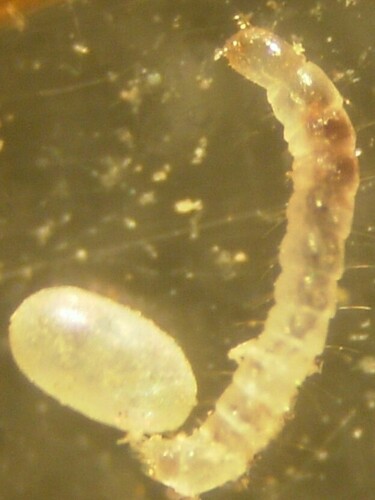
Larvae feed on organic debris, especially dried blood flakes left in the host’s haircoat.
Source: Wikipedia
Life cycle
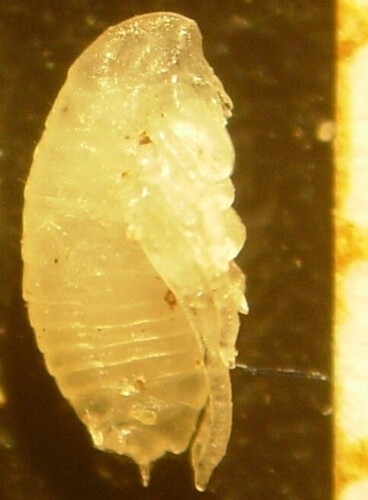
They undergo complete metamorphosis: egg, larva, pupa, adult. An adult flea can live up to two years.
Source: Wikipedia
Where it comes from
They originated in Africa but are now found globally.
Source: Wikipedia
Lookalikes
The cat flea is the most common flea submitted for identification and is distinct from the dog flea C. canis. It can also bite humans and other animals.
Source: Wikipedia, Penn State Extension
Where it is found in the US
Recorded in 45 of 51 states and DC. Most records: Oklahoma, Georgia, Texas, Iowa, California, Arkansas, Hawaii, Florida.
Darker = more records. Counts are museum and citizen-science records, not population size.
Source: GBIF
Status: introduced in Canada. Source: iNaturalist
Months it is reported in the US
Source: GBIF
More photos
Questions people ask
How do I get rid of cat fleas?
Vacuum thoroughly, wash bedding in hot water, treat all pets with a pet-safe insecticide or systemic oral medication, and spray the home with a labeled indoor flea spray.
Source: Wikipedia, Penn State Extension
Do cat fleas bite people?
Yes, their bites cause itching and irritation, especially on the ankles and lower legs.
Source: CDC, Penn State Extension
Can cat fleas spread disease?
They can transmit diseases such as plague and flea-bite dermatitis to humans.
Source: Wikipedia, Penn State Extension
What do cat flea larvae eat?
Larvae feed on organic debris, mainly dried blood flakes left in the host’s haircoat.
Source: Wikipedia
Same family (Pulicidae)



Sources
- Wikipedia: https://en.wikipedia.org/wiki/Cat_flea
- CDC: https://www.cdc.gov/fleas/
- Penn State Extension: https://extension.psu.edu/cat-fleas
Look it up elsewhere: GBIF · iNaturalist · BugGuide · Wikipedia
Text written 2026-10-22 from the sources above and checked sentence by sentence against them. Data fetched 2026-10-22.