 Bug FAQ
European Rabbit Flea
Spilopsyllus cuniculi · Order: Siphonaptera · Family: Pulicidae
Also called: Rabbit Flea
Source: Wikipedia
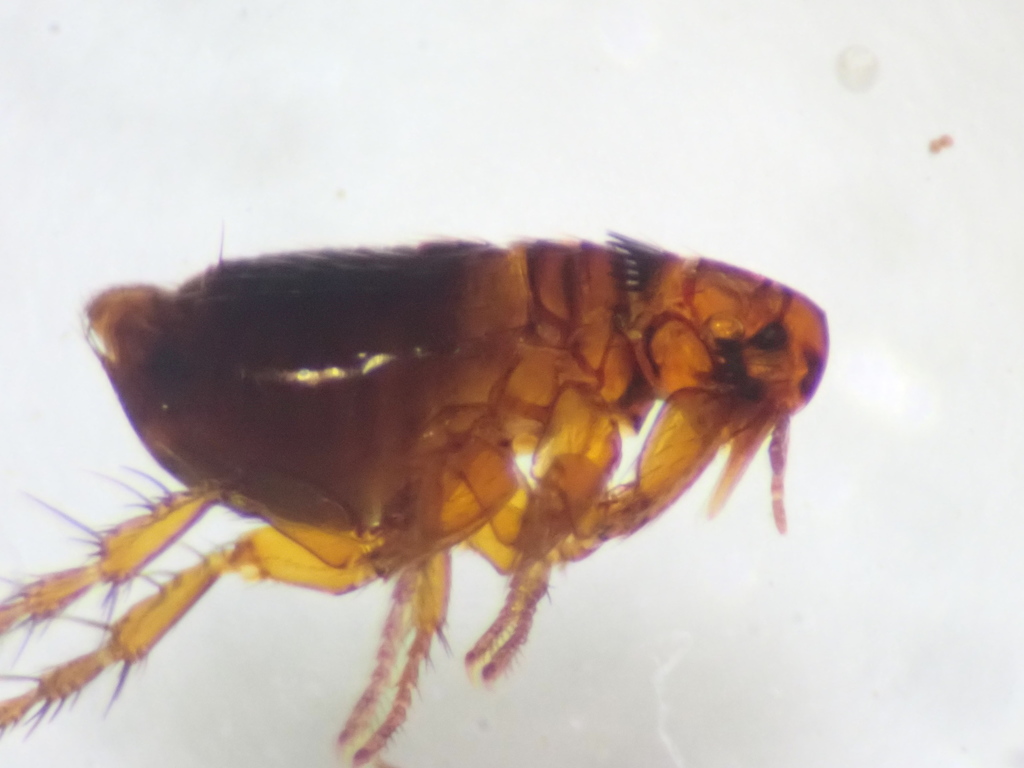
It is a dark-brown flea about one millimetre long that lives on rabbits, hares and sometimes cats, dogs, and burrow-nesting birds. It feeds by piercing the skin and sucking blood, especially from the ears of its host. It can carry the virus that causes myxomatosis and the bacterium Bartonella alsatica, which can affect animals and humans.
Source: Wikipedia
How to recognize it
A row of spines behind the head (pronotal comb) and another below the head (genal comb) help tell it apart from other fleas.
Source: Wikipedia
Size
The adult flea measures roughly one millimetre (0.04 in) in length.
Source: Wikipedia
Is it a pest in the house?
When on pets, the flea moves through the fur and often gathers in clusters at the base of the ears.
Source: Wikipedia
Where it lives
It is normally an external parasite of wild and domestic rabbits and hares, and can also be found on cats, dogs, and some seabirds that use rabbit burrows.
Source: Wikipedia
What it eats
Its mouthparts are built to pierce skin and draw blood from its host. It tends to stay in one spot on the host and feeds for long periods, especially around the ears where blood flow is rich.
Source: Wikipedia
Life cycle
Female fleas can sense hormonal changes in pregnant rabbits that signal upcoming birth. After feeding, they can survive for many months without another blood meal.
Source: Wikipedia
Where it comes from
The species originated in Europe with the European rabbit as its primary host. It has spread worldwide wherever European rabbits have been introduced.
Source: Wikipedia
Questions people ask
Can the European rabbit flea bite people?
It feeds on blood by piercing the skin of its host, which can include pets and occasionally humans.
Source: Wikipedia
Does this flea spread disease?
Yes, it can transmit the virus that causes myxomatosis and the bacterium Bartonella alsatica to animals and people.
Source: Wikipedia
What animals does it live on?
It mainly lives on rabbits and hares, but can also be found on cats, dogs, and some seabirds that occupy rabbit burrows.
Source: Wikipedia
Same family (Pulicidae)



Sources
- Wikipedia: https://en.wikipedia.org/wiki/Spilopsyllus_cuniculi
Look it up elsewhere: GBIF · iNaturalist · BugGuide · Wikipedia
Text written 2026-10-23 from the sources above and checked sentence by sentence against them. Data fetched 2026-10-23.