 Bug FAQ
Horned Clubtail
Arigomphus cornutus · Order: Odonata · Family: Gomphidae
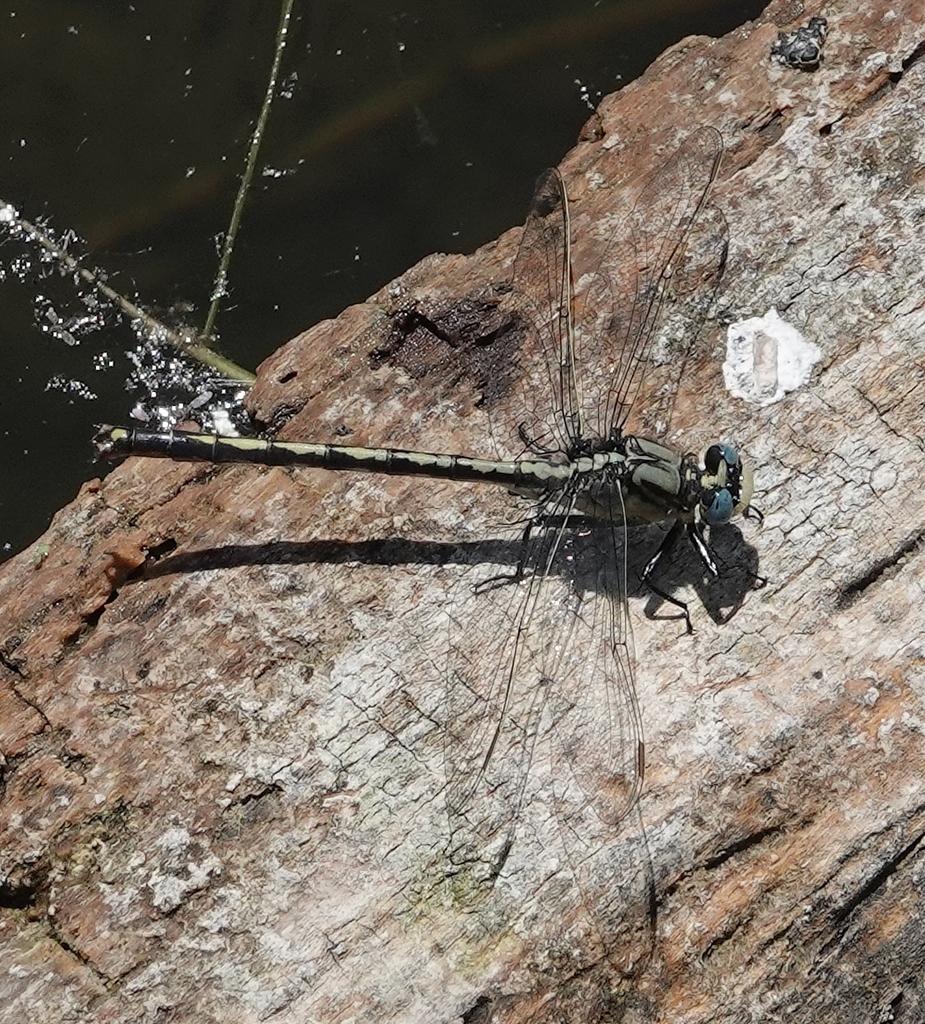
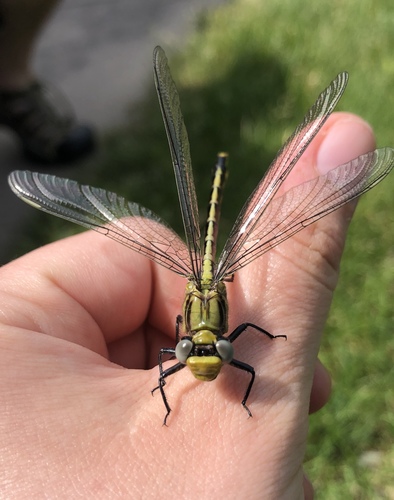
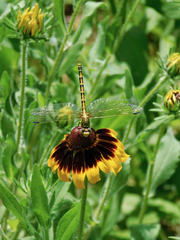
The horned clubtail has a greenish thorax with black stripes, a black abdomen with a light top stripe, blue eyes, black legs, and distinctive wide forked yellow claspers that look like cow horns, plus a large sloped bridge between the eyes. It measures about 2.2 inches (56 mm) long, lacks an abdominal club, lives near ponds and sluggish streams, and is native to Canada and the United States.
Source: Wikipedia
How to recognize it
The thorax is greenish with black stripes and the abdomen is black with a light stripe along the top. It has blue eyes and black legs. Its yellow claspers are wide, forked like cow horns, and it has a large sloped bridge between the eyes.
Source: Wikipedia
Size
The dragonfly is about 2.2 inches (56 mm) long and does not have an abdominal club.
Source: Wikipedia
Where it lives
It lives in ponds and sluggish streams.
Source: Wikipedia
Where it comes from
The horned clubtail is native to Canada and the United States.
Source: Wikipedia
Where it is found in the US
Recorded in 15 of 51 states and DC. Most records: Minnesota, Michigan, Wisconsin, Iowa, South Dakota, North Dakota, New York, Colorado.
Darker = more records. Counts are museum and citizen-science records, not population size.
Source: GBIF
Status: native in North America; native in United States; native in Canada. Source: iNaturalist
Months it is reported in the US
Source: GBIF
More photos
Questions people ask
Where is the horned clubtail found?
It lives near ponds and sluggish streams and is native to Canada and the United States.
Source: Wikipedia
Same family (Gomphidae)


Sources
- Wikipedia: https://en.wikipedia.org/wiki/Horned_clubtail
Look it up elsewhere: GBIF · iNaturalist · BugGuide · ITIS · Wikipedia
Text written 2026-10-24 from the sources above and checked sentence by sentence against them. Data fetched 2026-10-24.