 Bug FAQ
Hine's Emerald
Somatochlora hineana · Order: Odonata · Family: Corduliidae
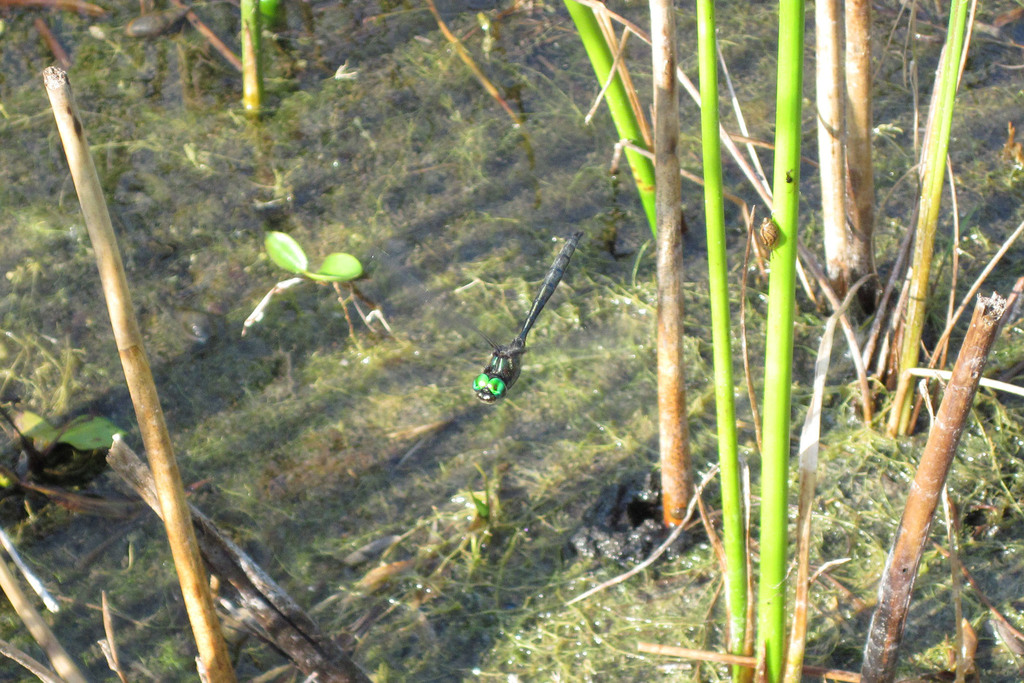
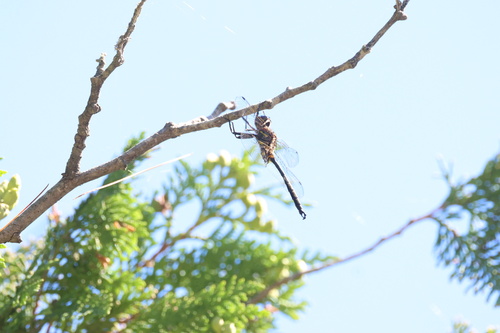
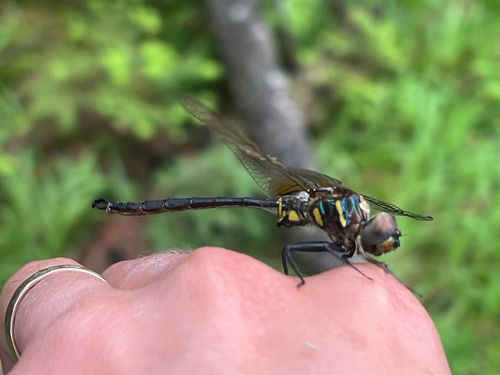
The Hine's emerald is an endangered dragonfly found in parts of the United States and Canada. Adults are about 2.5 inches long with a dark-green thorax marked by two yellow side stripes, and their wings turn smoky as they age.
Source: Wikipedia
How to recognize it
Their wings are clear with amber at the base when young and become smoky later in life.
Source: Wikipedia
Size
A mature nymph is roughly 0.9 inches (2.3 cm) long.
Source: Wikipedia
What it eats
Both larvae and adults are carnivorous.
Source: Wikipedia
Life cycle
Their life cycle includes egg, larval, and adult stages. The larval stage lasts 2 to 4 years, making up most of their lifespan.
Source: Wikipedia
When you see it
Reproduction occurs in June, July, and August. Nymphs typically emerge in June and July.
Source: Wikipedia
Where it comes from
The species is native to the United States and Canada. Populations occur in Illinois, Michigan, Missouri, Ontario, and Wisconsin.
Source: Wikipedia
Lookalikes
Nymphs lack distinguishing features from other dragonfly larvae. Males and females have uniquely shaped reproductive structures.
Source: Wikipedia
Where it is found in the US
Recorded in 6 of 51 states and DC. Most records: Wisconsin, Michigan, Missouri, Ohio, Illinois, Indiana.
Darker = more records. Counts are museum and citizen-science records, not population size.
Source: GBIF
Status: native in North America; native in Canada; native in United States. Source: iNaturalist
Months it is reported in the US
Source: GBIF
More photos
Questions people ask
Where are Hine's emeralds found?
They occur in Illinois, Michigan, Missouri, Ontario, and Wisconsin.
Source: Wikipedia
Same family (Corduliidae)


Sources
- Wikipedia: https://en.wikipedia.org/wiki/Hine%27s_emerald
Look it up elsewhere: GBIF · iNaturalist · BugGuide · ITIS · Wikipedia
Text written 2026-10-27 from the sources above and checked sentence by sentence against them. Data fetched 2026-10-27.