 Bug FAQ
Himalayan Giant Honey Bee
Apis laboriosa · Order: Hymenoptera · Family: Apidae
Also called: Himalayan honey bee
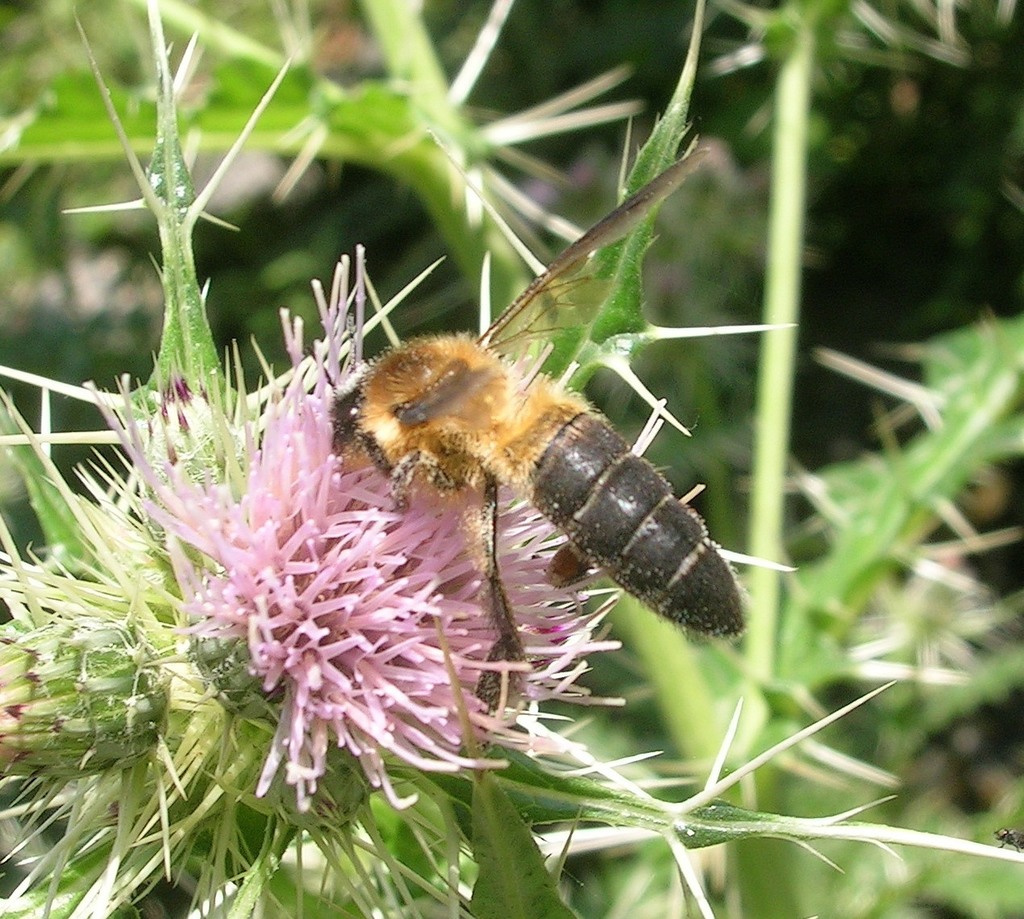
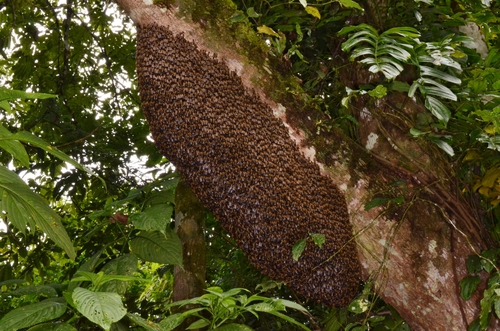
It nests on high-altitude cliffs (2,500-3,000 m) under overhangs and forages up to 4,100 m. Its range is limited to the Himalayas, including Bhutan, Yunnan (China), India, Nepal, Myanmar, Laos and Vietnam.
Source: Wikipedia
How to recognize it
It is specially adapted to life in highland environments.
Source: Wikipedia
Size
Adults can grow up to about 3 cm (1.2 in) long.
Source: Wikipedia
Where it lives
Foraging flights can reach heights of up to 4,100 m.
Source: Wikipedia
What it eats
It is one of four honey-bee species that occur in the Himalayan region.
Source: Wikipedia
Life cycle
The species follows a seasonal nesting cycle and migrates, with winter nests and brood rearing in the mountains.
Source: Wikipedia
When you see it
Its activity follows seasonal patterns in the high-altitude environment.
Source: Wikipedia
Where it comes from
It lives mainly in the Himalayas, found in Bhutan, Yunnan (China), India, Nepal, Myanmar, Laos and Vietnam.
Source: Wikipedia
Lookalikes
Before 1980 it was considered a subspecies of the giant honey bee Apis dorsata. The name “Himalayan honey bee” is sometimes used loosely for four different honey-bee species in the region.
Source: Wikipedia
More photos
Questions people ask
How big are Himalayan giant honey bees?
They can reach about 3 cm (1.2 in) in length.
Source: Wikipedia
Where do they build their nests?
They nest under overhangs on vertical cliffs at 2,500-3,000 m altitude.
Source: Wikipedia
What region are they native to?
They are native to the Himalayas, including Bhutan, Yunnan, India, Nepal, Myanmar, Laos and Vietnam.
Source: Wikipedia
Same family (Apidae)


Sources
- Wikipedia: https://en.wikipedia.org/wiki/Apis_laboriosa
Look it up elsewhere: GBIF · iNaturalist · BugGuide · ITIS · Wikipedia
Text written 2026-10-23 from the sources above and checked sentence by sentence against them. Data fetched 2026-10-23.