 Bug FAQ
Hill Cuckoo Bumble bee
Bombus rupestris · Order: Hymenoptera · Family: Apidae
Also called: Hill Cuckoo Bee, Red-tailed (Hill) Cuckoo Bee, Red-tailed Cuckoo Bee, Red-tailed Cuckoo Bumble Bee
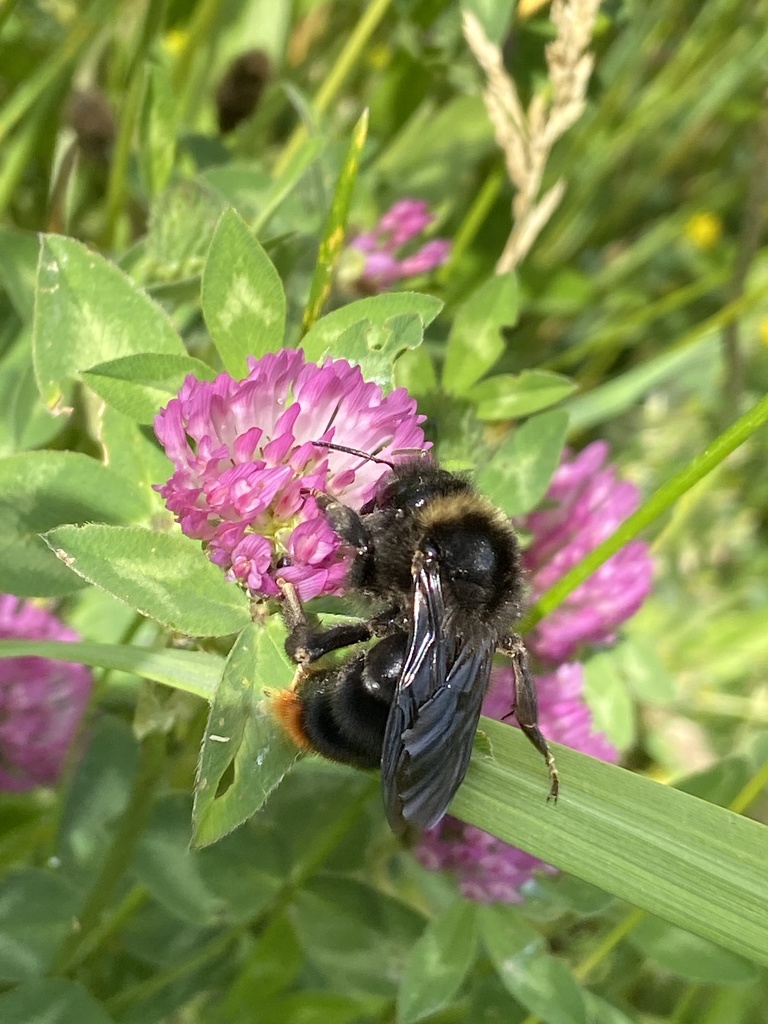
The female Hill Cuckoo Bumble bee is noticeably larger than the male, measuring about 20 to 25 mm, while males are up to 16 mm long. It is black with orange-red coloration on the last abdominal segments and lives in flower-rich places such as meadows and hedgerows. This cuckoo bumblebee occurs across most of Europe except Iceland and has no workers because it is parasitic, laying its eggs in nests of the red-tailed bumblebee.
Source: Wikipedia
How to recognize it
The bee is black with orange-red on the last abdominal segments.
Source: Wikipedia
Size
Females are 20 to 25 mm long; males are up to 16 mm.
Source: Wikipedia
Where it lives
Found in flower-rich habitats like meadows and hedgerows.
Source: Wikipedia
What it eats
No workers exist because the species is parasitic.
Source: Wikipedia
Life cycle
No workers exist due to its parasitic lifestyle.
Source: Wikipedia
Where it comes from
Present in most of Europe, but not in Iceland.
Source: Wikipedia
Questions people ask
How big are Hill Cuckoo Bumble bees?
Females are about 20 to 25 mm long, while males are up to 16 mm.
Source: Wikipedia
What colors does this bumblebee have?
It is black with orange-red on the last abdominal segments.
Source: Wikipedia
Same family (Apidae)





Sources
- Wikipedia: https://en.wikipedia.org/wiki/Bombus_rupestris
Look it up elsewhere: GBIF · iNaturalist · BugGuide · ITIS · Wikipedia
Text written 2026-10-22 from the sources above and checked sentence by sentence against them. Data fetched 2026-10-22.