 Bug FAQ
High Brown Fritillary
Argynnis adippe · Order: Lepidoptera · Family: Nymphalidae
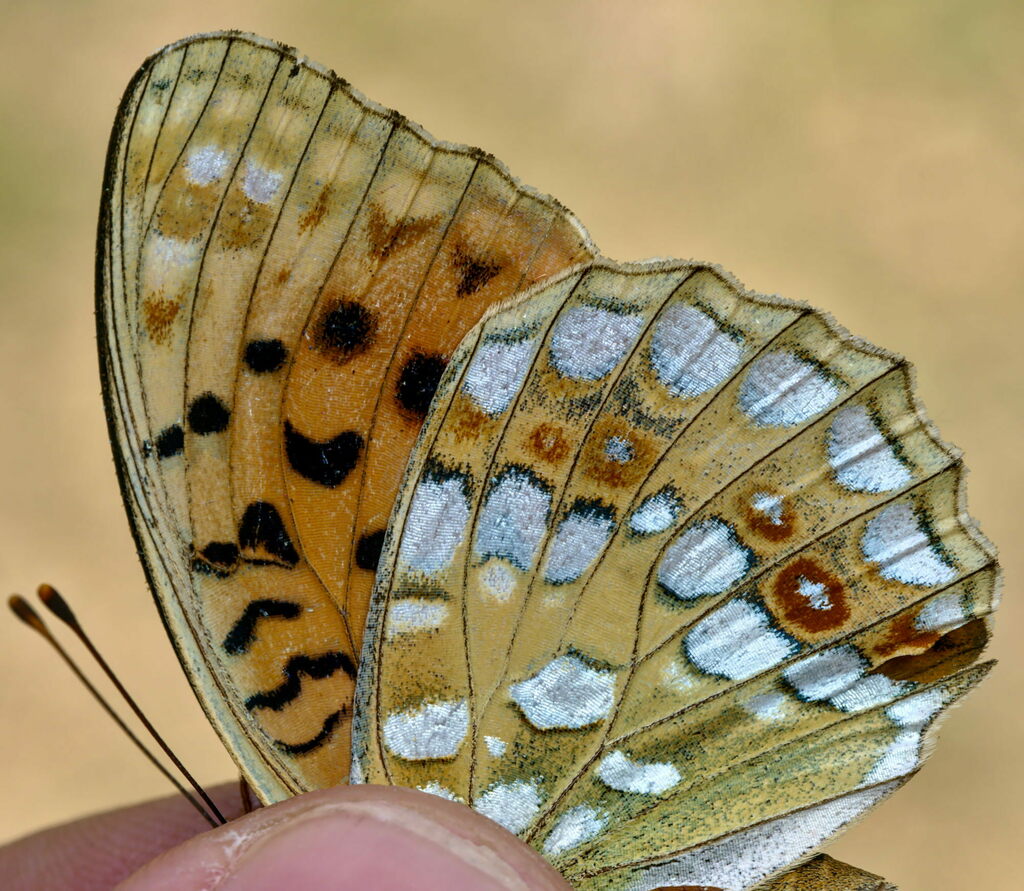
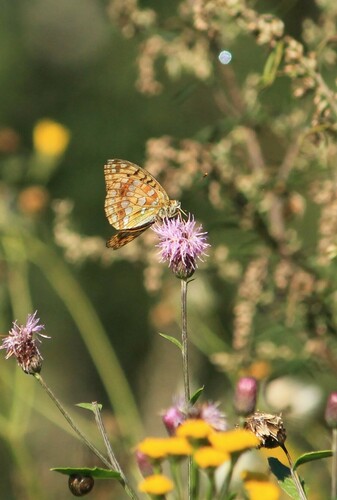
The high brown fritillary is a medium-sized butterfly with a wingspan of about 6.5 cm. Males have distinctive thick, hairy streaks on the forewing’s median vein, and the wings are orange with black markings above and a duller orange underside with white and brown spots. It lives in bracken areas and on limestone outcrops across temperate parts of Europe, Asia and Africa, flies from late June to late August (sometimes September), and its larvae feed on violet seedlings while adults sip nectar from thistles, betony and ragwort.
Source: Wikipedia
How to recognize it
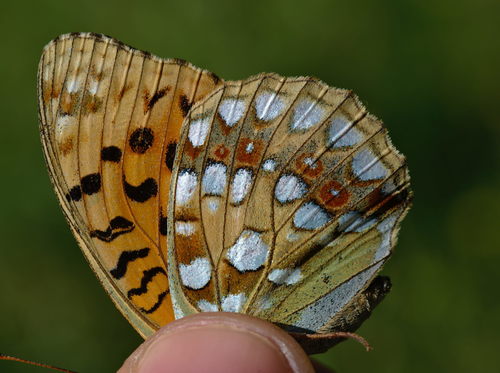
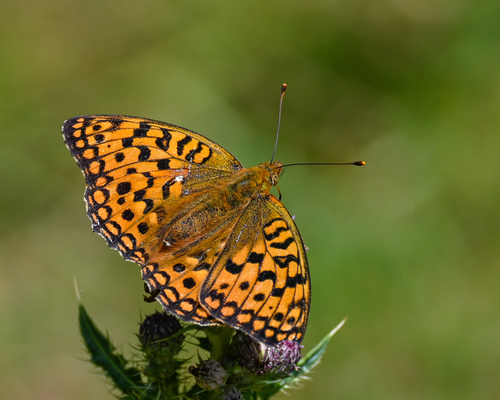
Upper wings are orange with black markings; the underside is a duller orange with white and brown spots. Males show thick, hairy streaks on the forewing’s median vein.
Source: Wikipedia
Size
Wingspan averages around 65 mm.
Source: Wikipedia
Where it lives
Found mainly in bracken habitats and on limestone outcrops.
Source: Wikipedia
What it eats
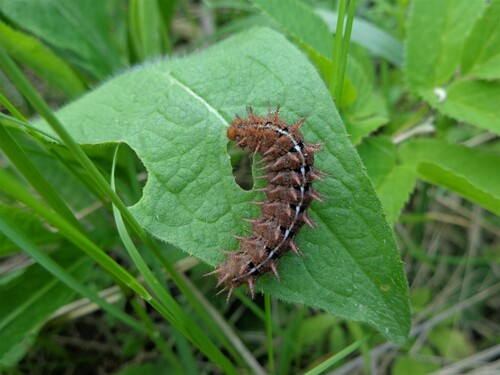
Adults feed on nectar from thistles, betony and ragwort. Caterpillars eat violet seedlings and do not use their egg shells for food.
Source: Wikipedia
Life cycle
The species has one generation per year. Eggs are laid singly from mid-July until winter, overwinter, and hatch in mid-March.
Source: Wikipedia
When you see it
Adults are on the wing from late June to late August, sometimes into September in limestone areas. They are most active in warm weather, flying low over bracken and other plants.
Source: Wikipedia
Where it comes from
Occurs throughout temperate Europe, Asia and Africa.
Source: Wikipedia
Lookalikes
In flight it can be hard to tell apart from the dark green fritillary, which has similar markings.
Source: Wikipedia
More photos
Questions people ask
When can I see high brown fritillaries?
They fly from late June through late August, and in some limestone areas they may be seen until September.
Source: Wikipedia
What do the caterpillars eat?
The larvae feed on violet seedlings and ignore their egg shells.
Source: Wikipedia
Where do they live?
They prefer bracken habitats and limestone outcrops across temperate Europe, Asia and Africa.
Source: Wikipedia
How can I tell a male from a female?
Males have thick, hairy streaks on the forewing’s median vein.
Source: Wikipedia
Same family (Nymphalidae)






Sources
- Wikipedia: https://en.wikipedia.org/wiki/High_brown_fritillary
Look it up elsewhere: GBIF · iNaturalist · BugGuide · Wikipedia
Text written 2026-10-22 from the sources above and checked sentence by sentence against them. Data fetched 2026-10-22.