 Bug FAQ
High Arctic Bumble Bee
Bombus natvigi · Order: Hymenoptera · Family: Apidae
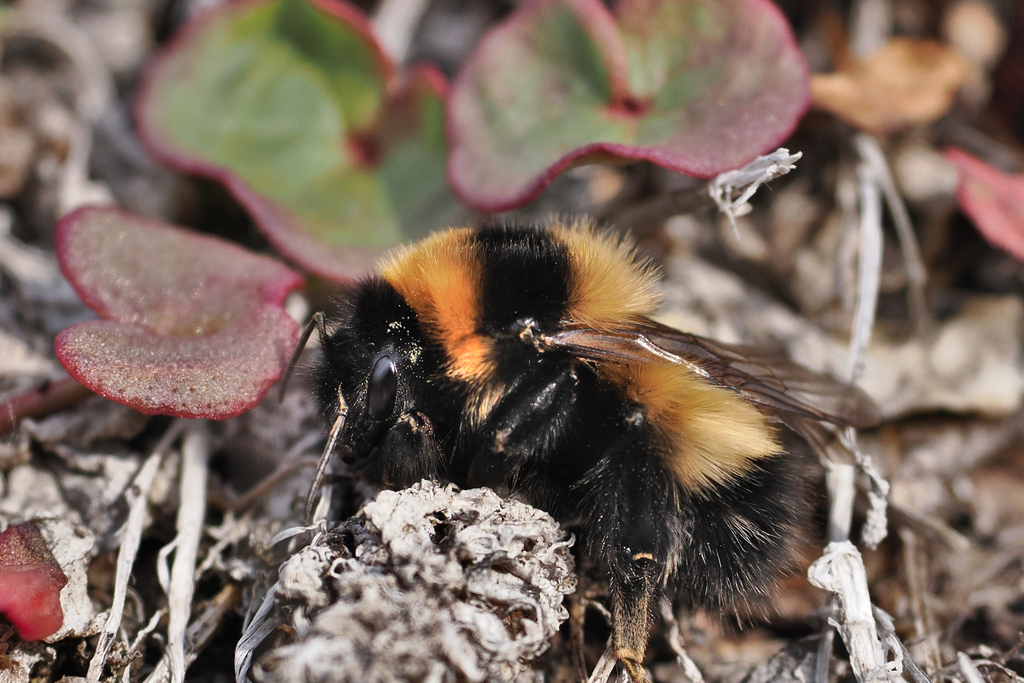
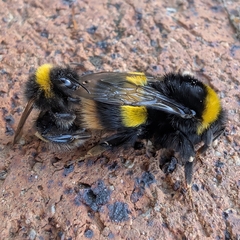
The High Arctic Bumble Bee has a plain black head, a thorax and abdomen with alternating yellow and black bands, and two yellow followed by four black segments on its metasoma. Females are brood parasites of Bombus polaris, using pheromones to infiltrate colonies and make workers care for their offspring. It was once thought to be the same species as Bombus hyperboreus but was recognized as distinct in 2015.
Source: Wikipedia
How to recognize it
It can be identified by a plain black head, a yellow-and-black banded thorax and abdomen, and a metasoma with two yellow segments followed by four black ones.
Source: Wikipedia
Life cycle
Its life cycle involves females parasitizing Bombus polaris colonies by releasing pheromones that cause host workers to care for the parasite’s larvae.
Source: Wikipedia
Lookalikes
It was formerly considered a synonym of Bombus hyperboreus but was reinstated as a valid species in 2015.
Source: Wikipedia
Where it is found in the US
Recorded in 2 of 51 states and DC. Most records: Alaska, Kansas.
Darker = more records. Counts are museum and citizen-science records, not population size.
Source: GBIF
Status: native in North America; native in Canada. Source: iNaturalist
Months it is reported in the US
Source: GBIF
More photos

Questions people ask
How can I tell the High Arctic Bumble Bee apart from similar species?
Look for the plain black head, the yellow-and-black banded thorax and abdomen, and the metasoma pattern of two yellow segments followed by four black ones; these features distinguish it from the formerly synonymous Bombus hyperboreus.
Source: Wikipedia
Same family (Apidae)


Sources
- Wikipedia: https://en.wikipedia.org/wiki/Bombus_natvigi
Look it up elsewhere: GBIF · iNaturalist · BugGuide · ITIS · Wikipedia
Text written 2026-10-28 from the sources above and checked sentence by sentence against them. Data fetched 2026-10-28.