 Bug FAQ
Hibiscus Turret Bee
Ptilothrix bombiformis · Order: Hymenoptera · Family: Apidae
Also called: Hibiscus Bee
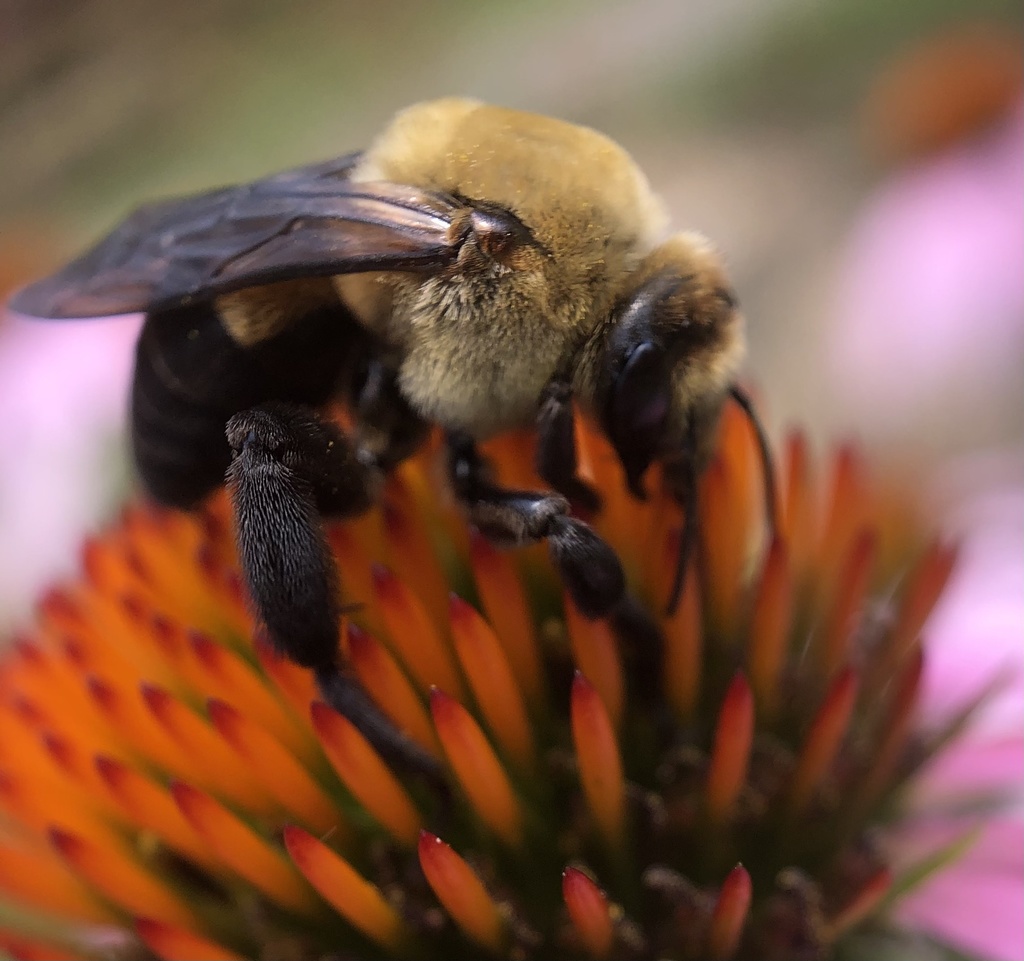
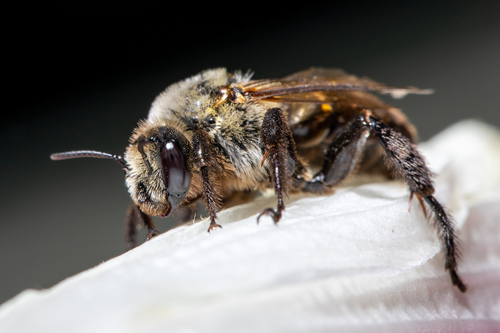
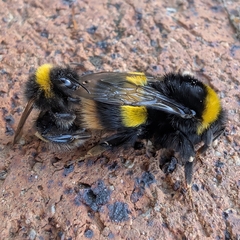
The hibiscus turret bee is a bumblebee-shaped bee with yellow hairs on its head, thorax and the first abdominal segment, while the rest of the abdomen is black. It lives where hibiscus flowers, water, and hard-packed dry mud are present, often in marshy areas or along dirt roads and sprinkler puddles. Adults feed on hibiscus pollen in spring and summer, lay eggs in mud nests, and the larvae overwinter in cocoons, producing one generation per year.
Source: Wikipedia
How to recognize it
Yellow hairs cover the head, mesosoma, and the first metasomal segment; the remaining metasomal segments are black. Both sexes have very long, hairy legs, with females having extra plumose hairs on the hind legs for carrying pollen and water.
Source: Wikipedia
Where it lives
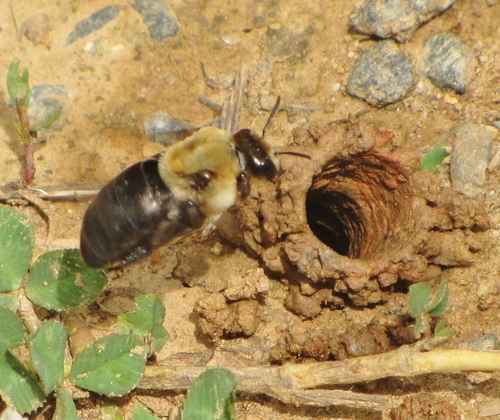
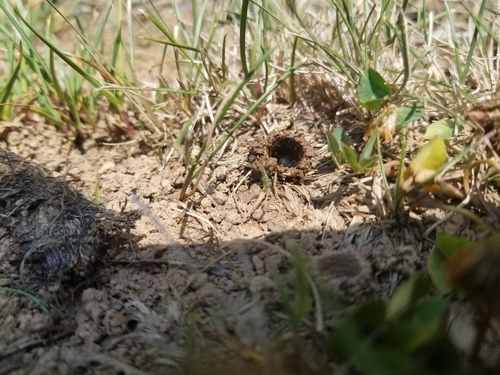
It requires hibiscus flowers, a water source, and hard-packed dried mud for nesting. These conditions are met in marshy hibiscus habitats and also in human-altered sites like dirt roads, levees, and sprinkler puddles.
Source: Wikipedia
What it eats
It specializes on hibiscus pollen, collecting it from native species such as H. moscheutos and H. laevis, as well as the introduced H. syriacus.
Source: Wikipedia
Life cycle
After feeding for a few weeks, the larva builds a cocoon to survive the winter. The species is univoltine, producing one generation per year with no adult overlap.
Source: Wikipedia
When you see it
Adults emerge when hibiscus plants are in bloom.
Source: Wikipedia
Where it is found in the US
Recorded in 31 of 51 states and DC. Most records: Maryland, Virginia, Pennsylvania, Mississippi, Texas, Missouri, District of Columbia, New Jersey.
Darker = more records. Counts are museum and citizen-science records, not population size.
Source: GBIF
Status: native in North America; native in United States. Source: iNaturalist
Months it is reported in the US
Source: GBIF
More photos
Questions people ask
Where can I find these bees?
Look for them near blooming hibiscus plants, water sources, and dry mud areas such as marsh edges, dirt roads, or sprinkler puddles.
Source: Wikipedia
Same family (Apidae)


Sources
- Wikipedia: https://en.wikipedia.org/wiki/Ptilothrix_bombiformis
Look it up elsewhere: GBIF · iNaturalist · BugGuide · ITIS · Wikipedia
Text written 2026-10-22 from the sources above and checked sentence by sentence against them. Data fetched 2026-10-22.