 Bug FAQ
Hermes Copper
Hermelycaena hermes · Order: Lepidoptera · Family: Lycaenidae
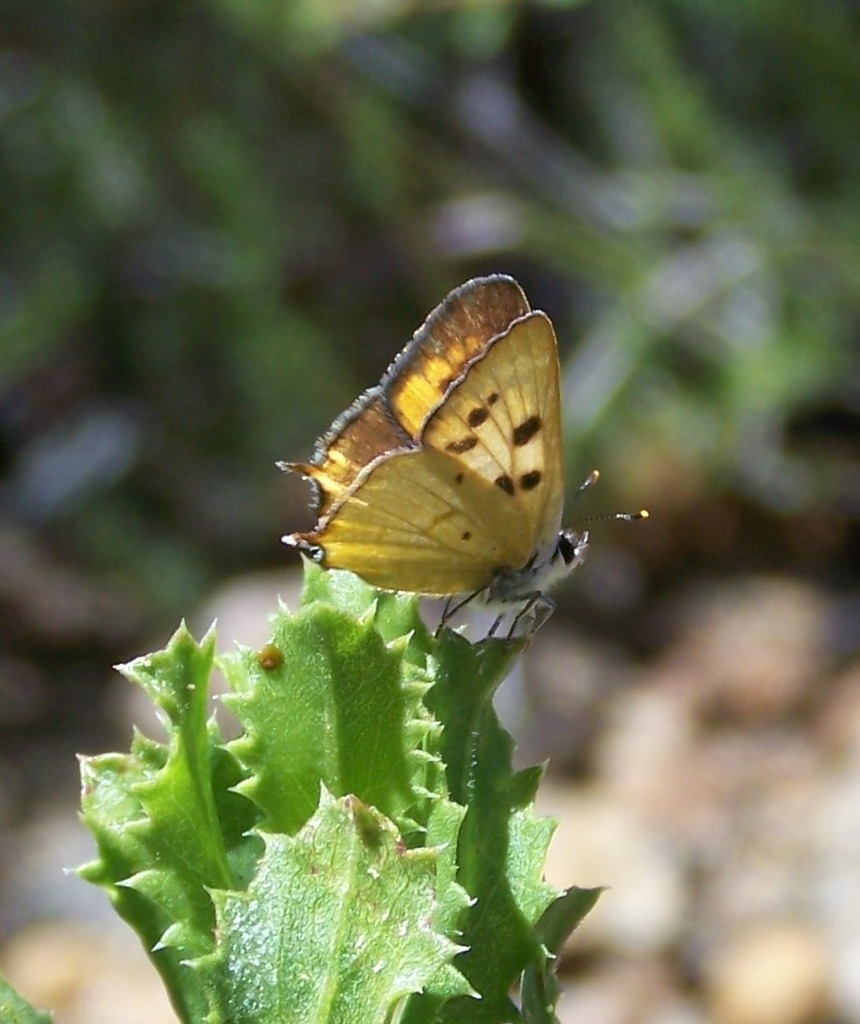
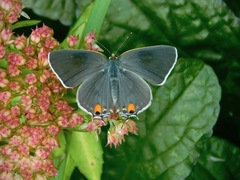
The Hermes copper is a small butterfly with a wingspan of about 25 to 32 mm and belongs to the Lycaenidae family. It lives in Mexico and southern California, where it feeds as a caterpillar on the plant Rhamnus crocea, and it has been listed as a threatened species.
Source: Wikipedia
How to recognize it
Lycaena hermes, called the Hermes copper, is a butterfly in the Lycaenidae family.
Source: Wikipedia
Size
Adults have a wingspan ranging from 25 to 32 mm.
Source: Wikipedia
How to get rid of it
Conservation efforts, including reconciliation actions, have been undertaken to prevent extinction and reduce inbreeding problems.
Source: Wikipedia
Where it lives
The species occurs in Mexico and the southern part of California, USA. Wildfires in San Diego in 2003 and 2007 disturbed its habitat and caused the butterflies to spread.
Source: Wikipedia
What it eats
Caterpillars feed on the plant Rhamnus crocea.
Source: Wikipedia
Where it is found in the US
Recorded in 1 of 51 states and DC. Most records: California.
Darker = more records. Counts are museum and citizen-science records, not population size.
Source: GBIF
Months it is reported in the US
Source: GBIF
More photos
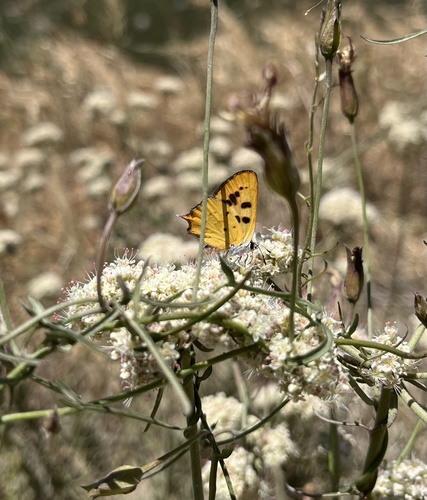
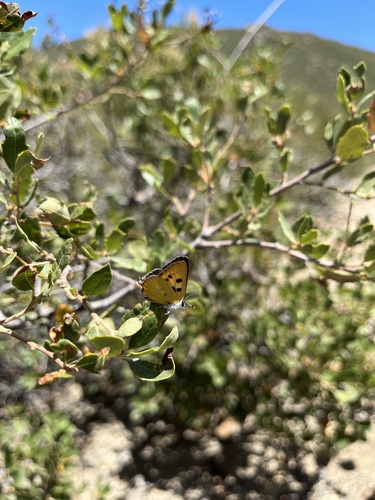
Questions people ask
Why is the Hermes copper considered threatened?
Habitat loss from wildfires and the risk of inbreeding have led to its threatened status, prompting conservation actions.
Source: Wikipedia
What plants do Hermes copper caterpillars eat?
The larvae feed on the shrub Rhamnus crocea.
Source: Wikipedia
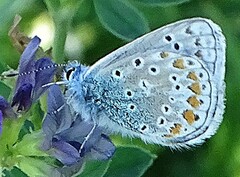
Same family (Lycaenidae)


Sources
- Wikipedia: https://en.wikipedia.org/wiki/Hermes_copper
Look it up elsewhere: GBIF · iNaturalist · BugGuide · ITIS · Wikipedia
Text written 2026-10-24 from the sources above and checked sentence by sentence against them. Data fetched 2026-10-24.