 Bug FAQ
Western Giant Swallowtail
Heraclides rumiko · Order: Lepidoptera · Family: Papilionidae

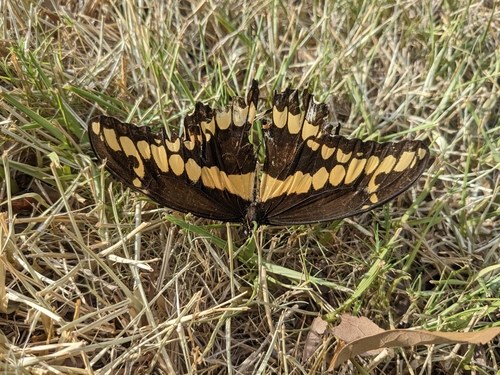
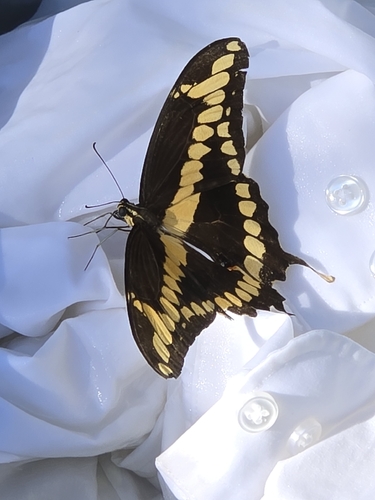
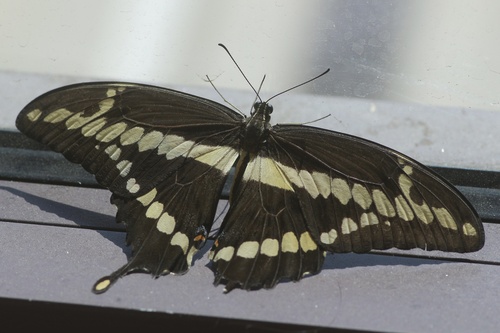
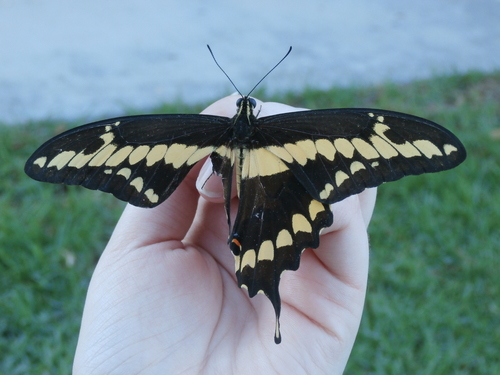
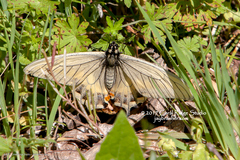
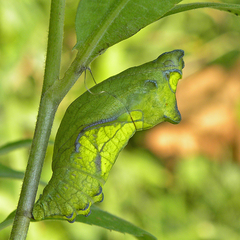
The Western Giant Swallowtail has forewings 50 to 58 mm long and distinctive maize-yellow bands on both fore- and hindwings, plus a red eyespot with a blue crescent near the tornus. It lives from the southwestern United States down through Central America, with the northernmost record in northeastern Colorado. Eggs are laid singly on young leaves of several native shrubs and citrus, and the larvae grow through five instars before pupating in a camouflaged chrysalis.
Source: Wikipedia
Size
Forewing length ranges from 50 to 58 mm.
Source: Wikipedia
What it eats
Eggs are laid on young leaves of Zanthoxylum fagara, Ptelea trifoliata, Amyris texana, Casimiroa greggii, Ruta graveolens, and Citrus species.
Source: Wikipedia
Life cycle
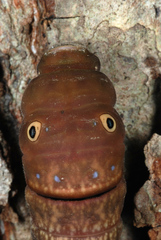
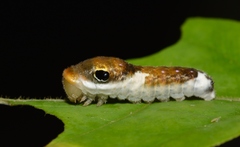
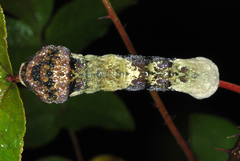
First-instar larvae are 3 to 5 mm long with a yellow-brown head; later instars grow to 30 to 50 mm before pupating.
Source: Wikipedia
Where it comes from
Its range extends from the southwestern United States to Panama, with the northernmost record in northeastern Colorado.
Source: Wikipedia
Where it is found in the US
Recorded in 13 of 51 states and DC. Most records: California, Texas, Arizona, New Mexico, Colorado, Nebraska, New York, Kansas.
Darker = more records. Counts are museum and citizen-science records, not population size.
Source: GBIF
Status: native in North America; native in United States. Source: iNaturalist
Months it is reported in the US
Source: GBIF
More photos
Same family (Papilionidae)

Sources
- Wikipedia: https://en.wikipedia.org/wiki/Papilio_rumiko
Look it up elsewhere: GBIF · iNaturalist · BugGuide · Wikipedia
Text written 2026-10-22 from the sources above and checked sentence by sentence against them. Data fetched 2026-10-22.