 Bug FAQ
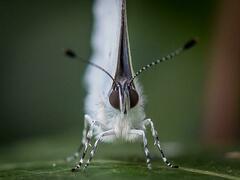
Hedgerow Hairstreak
Satyrium saepium (formerly Strymon saepium) · Order: Lepidoptera · Family: Lycaenidae
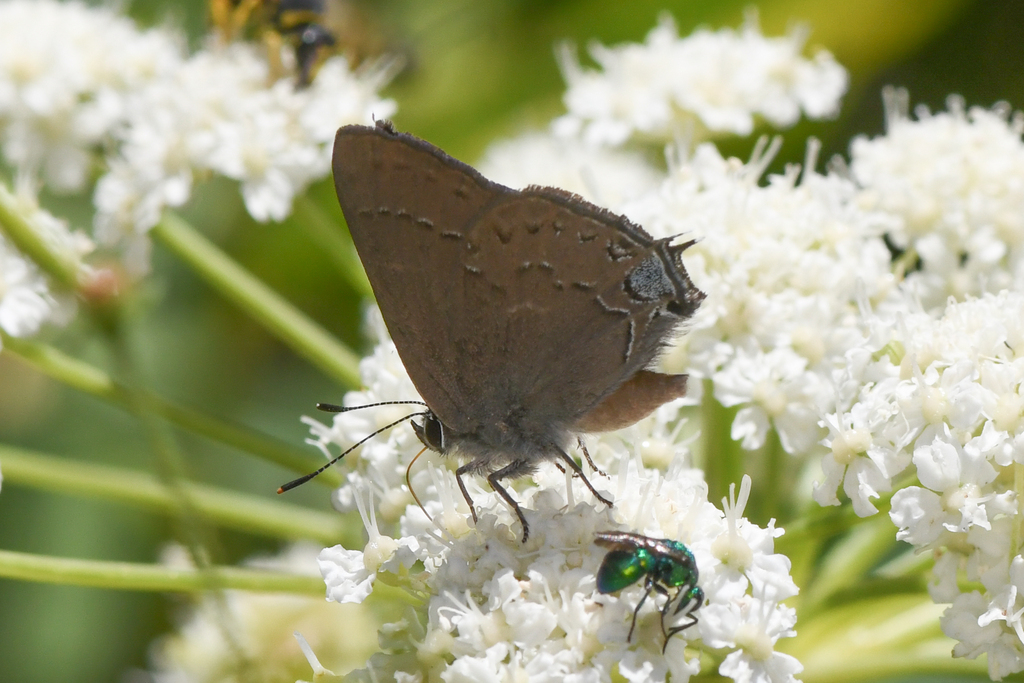
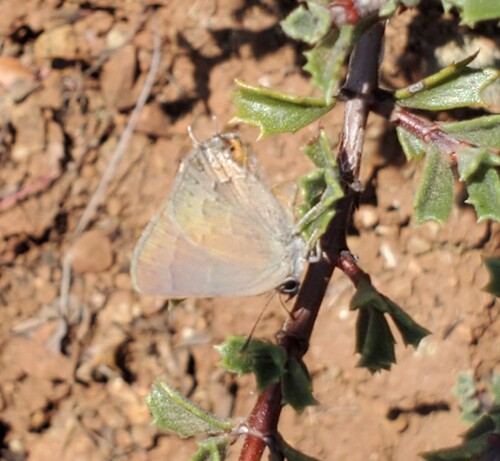
The hedgerow hairstreak has a wingspan of about 26 to 30 mm. It lives in western North America, from British Columbia through California and Baja California, and east to parts of Arizona, New Mexico, Colorado and Montana. Adults sip nectar from flowers such as yerba santa and wild buckwheats, while the caterpillars eat buckbrush (Ceanothus species). You can see them flying from April through September.
Source: Wikipedia
Size
Wingspan ranges from 26 mm to 30 mm.
Source: Wikipedia
What it eats
Adults feed on nectar from various flowers such as yerba santa and wild buckwheats. Larvae feed on buckbrush (Ceanothus species, family Rhamnaceae).
Source: Wikipedia
When you see it
Adults are on the wing from April to September.
Source: Wikipedia
Where it comes from
Native to western North America, including British Columbia, California, Baja California, Arizona, New Mexico, Colorado and Montana.
Source: Wikipedia
Where it is found in the US
Recorded in 12 of 51 states and DC. Most records: California, Colorado, Oregon, Washington, Idaho, Utah, Nevada, Arizona.
Darker = more records. Counts are museum and citizen-science records, not population size.
Source: GBIF
Status: native in North America; native in Canada; native in United States. Source: iNaturalist
Months it is reported in the US
Source: GBIF
More photos
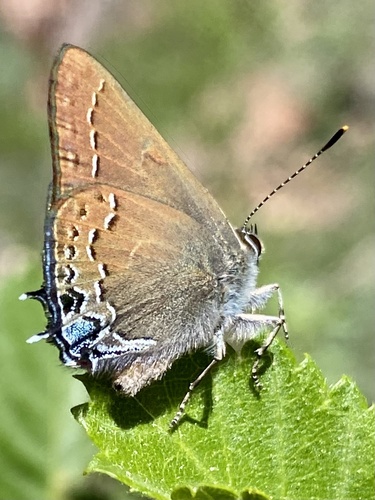
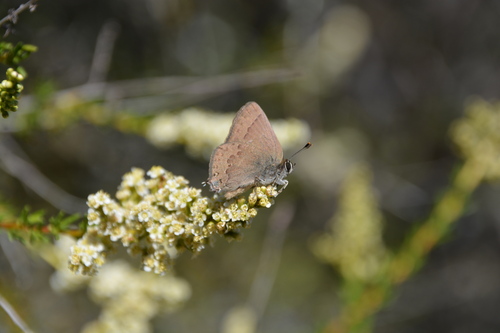
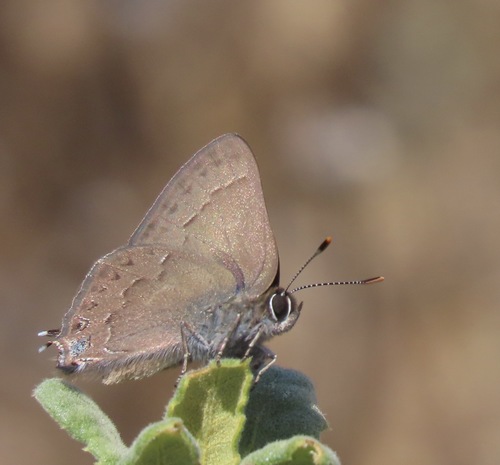
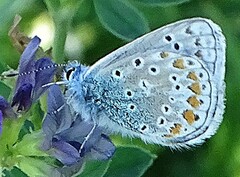
Same family (Lycaenidae)
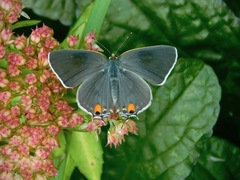
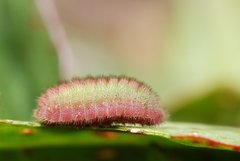

Sources
- Wikipedia: https://en.wikipedia.org/wiki/Satyrium_saepium
Look it up elsewhere: GBIF · iNaturalist · BugGuide · ITIS · Wikipedia
Text written 2026-10-24 from the sources above and checked sentence by sentence against them. Data fetched 2026-10-24.