 Bug FAQ
Heath Fritillary
Melitaea athalia · Order: Lepidoptera · Family: Nymphalidae
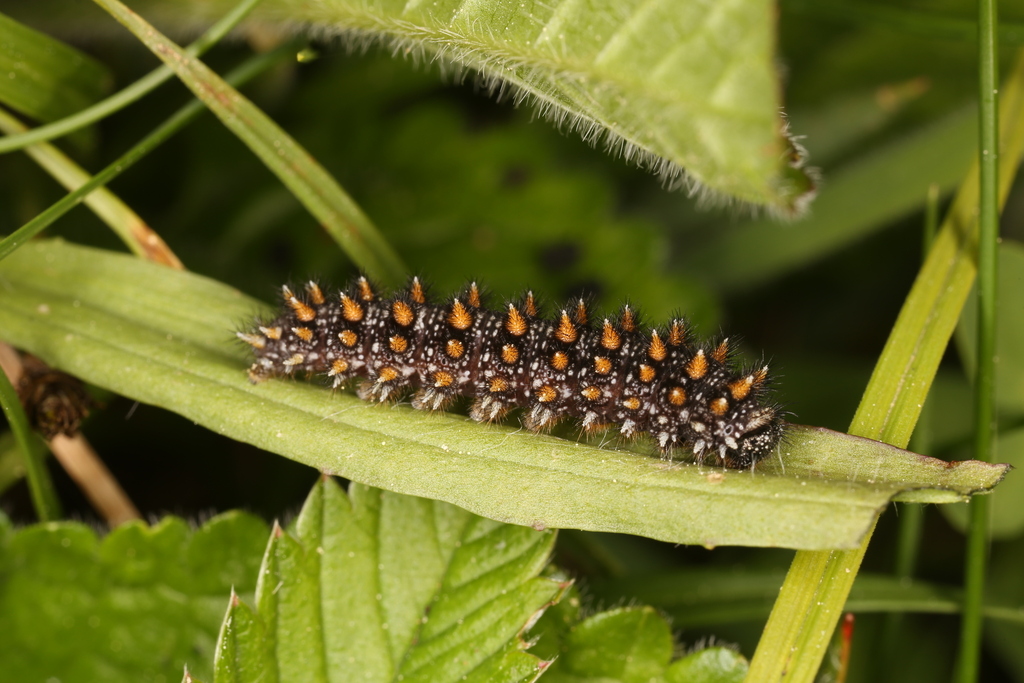
It lives in a wide range of grassy and heathland habitats across the Palaearctic from western Europe to Japan, but is absent from several southern European regions. Adults fly from late May to early August, females lay batches of 80-150 eggs on host plants, and the caterpillars spend much time basking before feeding in early spring.
Source: Wikipedia
How to recognize it
The upper wings are mainly dark brown and orange-brown with dark outlines around the orange spots, and a white fringe runs along the wing edges.
Source: Wikipedia
Size
Wingspan ranges from 39 to 47 mm.
Source: Wikipedia
Where it lives
Found in heathland, grassland, and coppiced woodland throughout its range. In Europe it occupies many grassy, flowery sites, from dry upland to damp lowland areas, with or without shrubs or trees.
Source: Wikipedia
What it eats
Females lay eggs in batches of about 80-150 on the underside of host-plant leaves or nearby plants. Caterpillars emerge in early spring, spend much time basking in the sun, and feed only when it is warm.
Source: Wikipedia
Life cycle
There are six caterpillar stages; the final stage is a black larva 22-25 mm long with pale spines and grey-white spots.
Source: Wikipedia
When you see it
The main subspecies flies from mid-May to mid-August across its range.
Source: Wikipedia
Where it comes from
Its native range covers the Palaearctic from western Europe to Japan. In Europe it is missing from Iceland, Ireland, Scotland, Wales, southern Portugal and Spain, the Mediterranean islands, and southern Greece.
Source: Wikipedia
Lookalikes
It looks similar to the Glanville fritillary (Melitaea cinxia), but the heath fritillary has more distinct dark brown bands on the underside of the wings.
Source: Wikipedia
Same family (Nymphalidae)






Sources
- Wikipedia: https://en.wikipedia.org/wiki/Heath_fritillary
Look it up elsewhere: GBIF · iNaturalist · BugGuide · Wikipedia
Text written 2026-10-22 from the sources above and checked sentence by sentence against them. Data fetched 2026-10-22.