 Bug FAQ
Hazel bug
Pantilius tunicatus · Order: Hemiptera · Family: Miridae
Source: Wikipedia
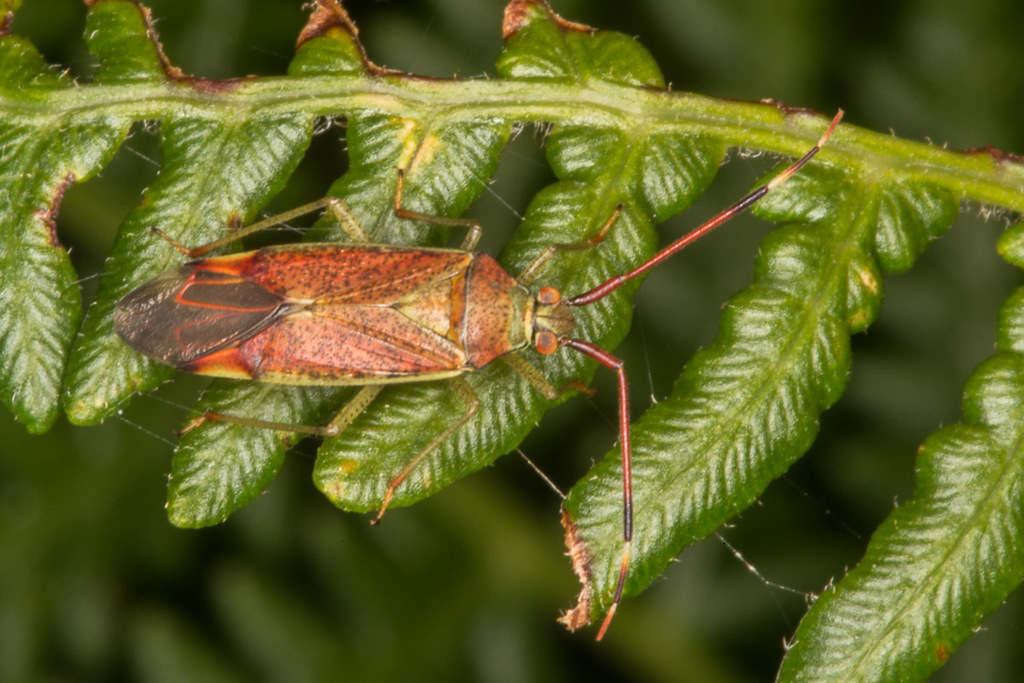
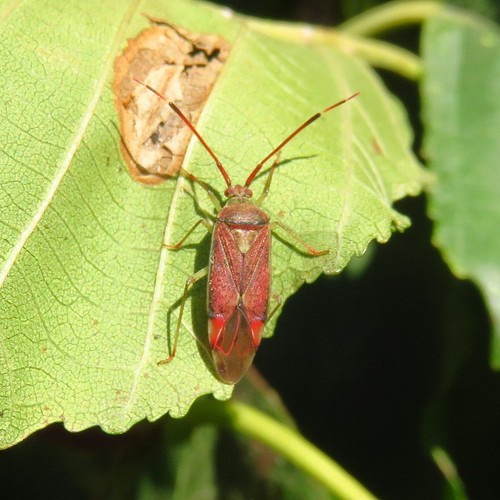
Adult hazel bugs have a brown back, green legs and short antennae. They appear in September and are usually found on the lower branches of hazel trees where they feed.
Source: Wikipedia
How to recognize it
Adults show a brown pronotum, green legs and antennae that are shorter than the body.
Source: Wikipedia
Where it lives
They occur across most of Europe, the Baltic states, Scandinavia (except the far north), the Faroe Islands, the United Kingdom, Italy, the former Yugoslavia, the Netherlands, and extend through the Palearctic to Siberia and northern China.
Source: Wikipedia
What it eats
They feed on hazel, usually staying on the lowest branches of the plant.
Source: Wikipedia
When you see it
Adults are not seen until September.
Source: Wikipedia
Where it comes from
Their native range matches the listed European and Palearctic regions.
Source: Wikipedia
Lookalikes
Pantilius tunicatus, the hazel plant bug, belongs to the true bug family Miridae.
Source: Wikipedia
More photos
Questions people ask
What do hazel bugs eat?
They feed on hazel, staying on the lower branches of the tree.
Source: Wikipedia
Where can I find hazel bugs?
They are found throughout most of Europe and the Palearctic region, including the Baltic states, Scandinavia (except the far north), and extending to Siberia and northern China.
Source: Wikipedia
Same family (Miridae)
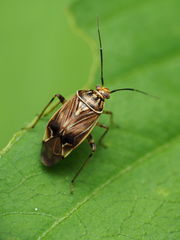 North American Tarnished Plant BugLygus lineolarisDamages trees, gardens or crops
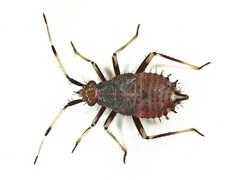 Red-spotted Plant BugDeraeocoris ruber
 Alfalfa Plant BugAdelphocoris lineolatusDamages trees, gardens or crops
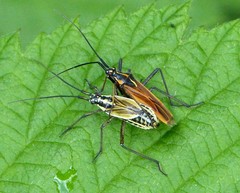 Meadow Plant BugLeptopterna dolabrataDamages trees, gardens or crops
 Four-lined Plant BugPoecilocapsus lineatusDamages trees, gardens or crops
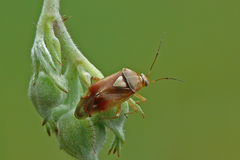 Lygus pratensisLygus pratensisDamages trees, gardens or crops
Sources
- Wikipedia: https://en.wikipedia.org/wiki/Pantilius_tunicatus
Look it up elsewhere: GBIF · iNaturalist · BugGuide · Wikipedia
Text written 2026-10-23 from the sources above and checked sentence by sentence against them. Data fetched 2026-10-22.