 Bug FAQ
Hawthorn Fly
Bibio marci · Order: Diptera · Family: Bibionidae
Also called: Saint Mark's Fly, St Mark's Fly, St Marks Fly
Source: Wikipedia
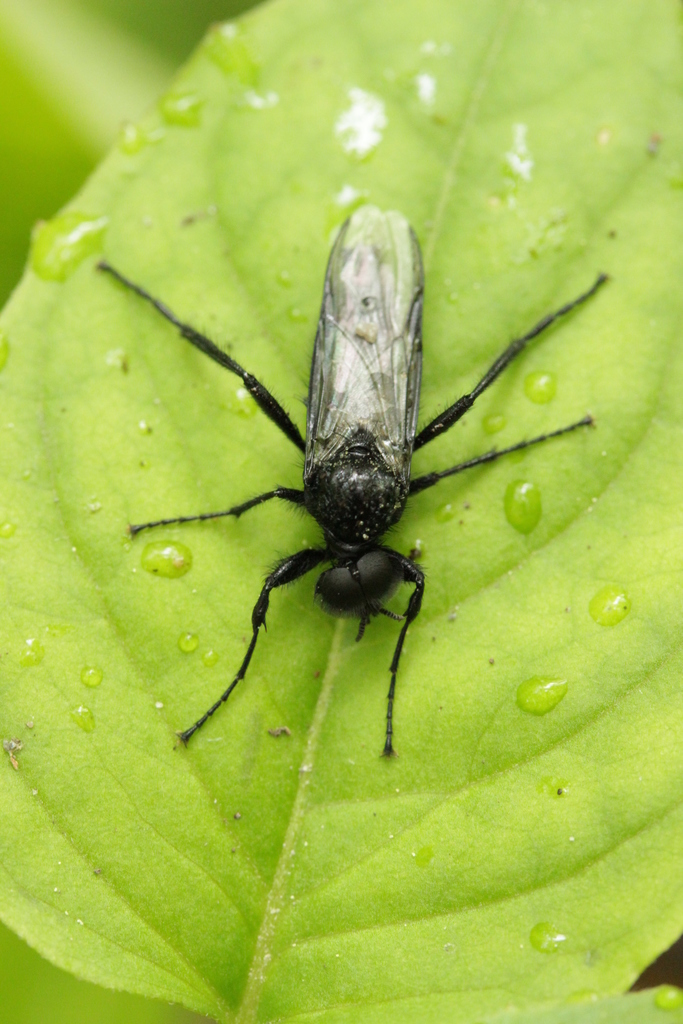
Adults are 12-14 mm long, shiny black with dark hairs and milky-white wings marked by dark veins. Larvae feed on roots and dead vegetation, damaging a wide range of garden and crop plants.
Source: Wikipedia
Size
Adults measure about 12-14 mm in length.
Source: Wikipedia
Is it a pest in the house?
They also feed on many other plant species that are not of commercial importance.
Source: Wikipedia
Where it lives
Larvae develop in grassy areas, feeding on dead vegetation or plant roots.
Source: Wikipedia
What it eats
Adults pollinate and feed on nectar and pollen from fruit-tree blossoms such as apples, pears and hawthorn. Larvae are herbivores and scavengers that eat dead vegetation and living plant roots.
Source: Wikipedia
Where it comes from
The species occurs across much of Europe.
Source: Wikipedia
Questions people ask
Do they bite or sting people?
No, they cannot bite or sting and they do not carry human pathogens.
Source: Wikipedia
Are they a problem for my garden?
Yes, the larvae can damage the roots of many garden plants such as celery, asparagus, roses and lawn grass.
Source: Wikipedia
When do they appear?
Adults emerge around 25 April and are most common in late April and May.
Source: Wikipedia
Same family (Bibionidae)



Sources
- Wikipedia: https://en.wikipedia.org/wiki/Bibio_marci
Look it up elsewhere: GBIF · iNaturalist · BugGuide · Wikipedia
Text written 2026-10-23 from the sources above and checked sentence by sentence against them. Data fetched 2026-10-22.