 Bug FAQ
Common Lovebug
Plecia nearctica · Order: Diptera · Family: Bibionidae
Also called: Double-headed Bug, March fly

Their bodies are slightly acidic, which can cause minor irritation if they are crushed on skin or eyes.
Source: Wikipedia
How to recognize it
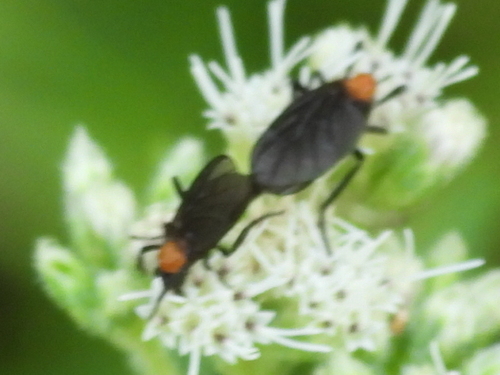
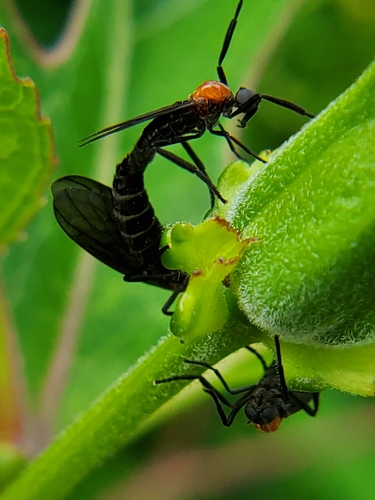
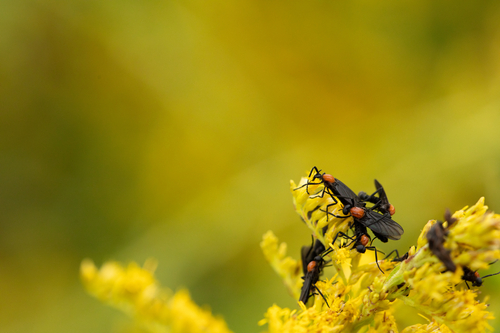
Mated pairs stay together, often flying tail-to-tail for several days.
Source: Wikipedia
Is it a pest in the house?
They are a nuisance because large numbers die on car windshields, hoods, and radiators, and their slightly acidic bodies can cause minor irritation.
Source: Wikipedia
How to get rid of it
Natural controls include parasitic fungi and dry weather, which increase mortality of immature stages. When they first spread along the Gulf Coast, their numbers caused public concern.
Source: Wikipedia
Where it lives
Larvae live in decaying plant material and help break it down, while adults are drawn to light surfaces and various environmental cues.
Source: Wikipedia
What it eats
Larvae feed on partially decayed vegetation, and adults sip nectar from plants such as sweet clover, goldenrod, and Brazilian pepper.
Source: Wikipedia
Life cycle
Two major adult flights occur each year to one in late April-May and another in late August-September.
Source: Wikipedia
When you see it
In South Florida a smaller third flight can happen in December.
Source: Wikipedia
Lookalikes
They are also called honeymoon flies or double-headed bugs.
Source: Wikipedia
Where it is found in the US
Recorded in 16 of 51 states and DC. Most records: Florida, Texas, Louisiana, Alabama, Georgia, Mississippi, South Carolina, Arkansas.
Darker = more records. Counts are museum and citizen-science records, not population size.
Source: GBIF
Status: native in North America; native in United States. Source: iNaturalist
Months it is reported in the US
Source: GBIF
More photos

Questions people ask
Why do lovebugs stick to my car?
Large swarms travel along highways and die on windshields and other surfaces; their acidic bodies can cause minor irritation if crushed.
Source: Wikipedia
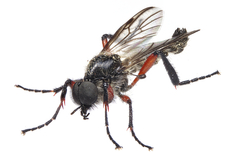
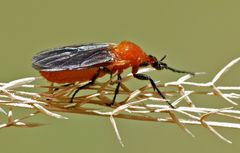
Same family (Bibionidae)



Sources
- Wikipedia: https://en.wikipedia.org/wiki/Lovebug
Look it up elsewhere: GBIF · iNaturalist · BugGuide · ITIS · Wikipedia
Text written 2026-10-22 from the sources above and checked sentence by sentence against them. Data fetched 2026-10-22.