 Bug FAQ
Blossom Fly
Dilophus nigrostigma · Order: Diptera · Family: Bibionidae
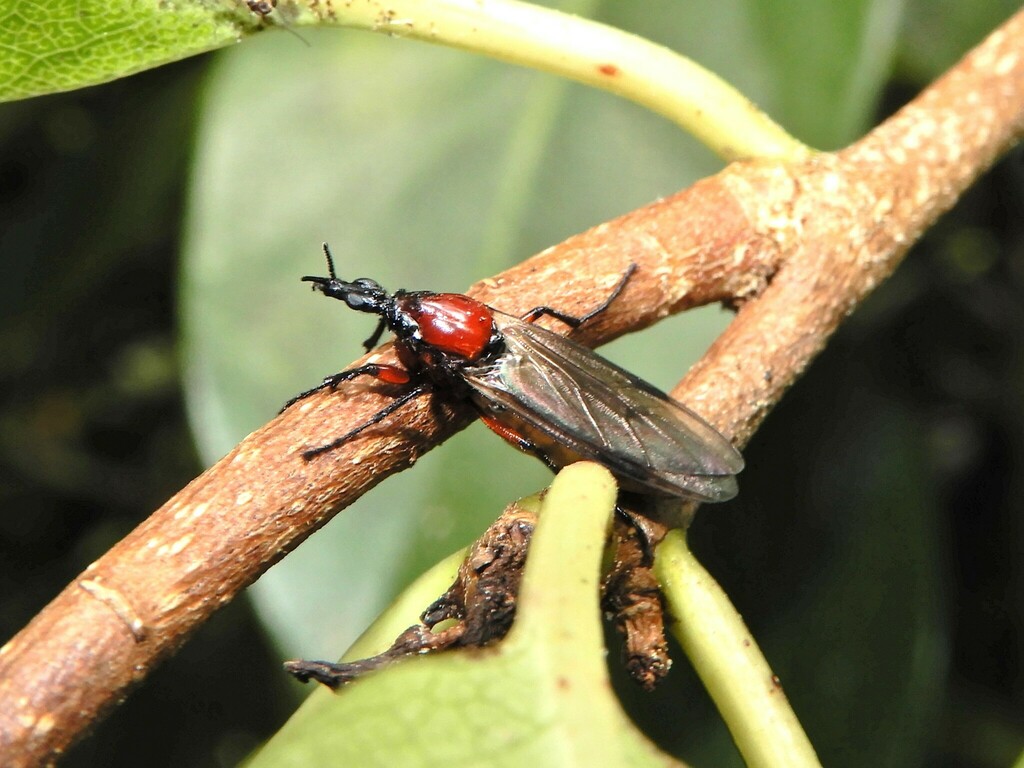
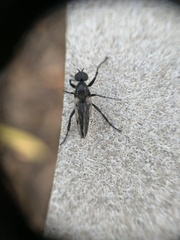
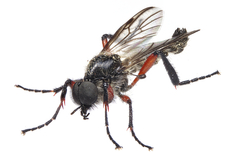
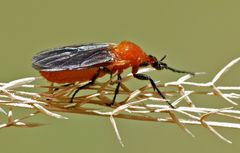
The blossom fly is relatively large for New Zealand Dilophus, about 7 to 8 mm long. Males are black while females are light brown to reddish.
Source: Wikipedia
How to recognize it
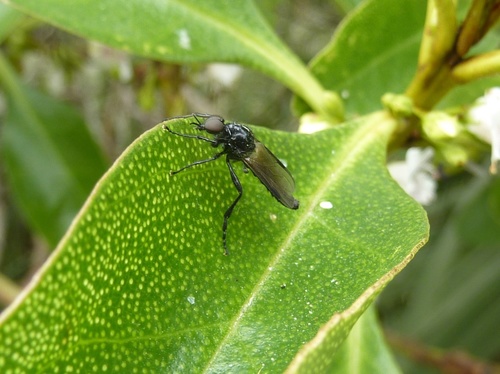
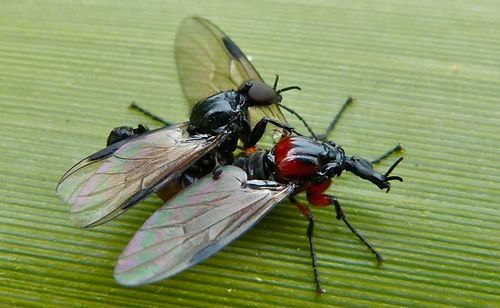
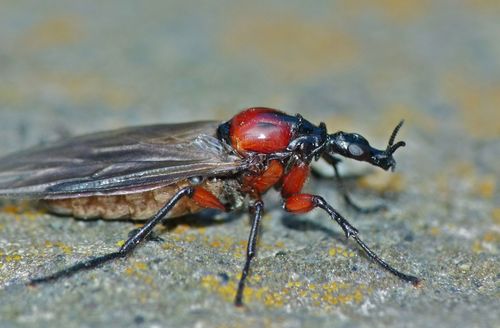
Males are black, whereas females are light brown to reddish in colour.
Source: Wikipedia
Size
Adults measure roughly 7 to 8 mm in length, making them large compared with other endemic Dilophus species.
Source: Wikipedia
Where it lives
The species occurs on Stewart Island and the Chatham Islands.
Source: Wikipedia
Life cycle
Adults can be found from April to July, with the highest numbers between November and February.
Source: Wikipedia
When you see it
The peak season for adults is November to February, though they are present from April onward.
Source: Wikipedia
Where it comes from
It is restricted to New Zealand.
Source: Wikipedia
More photos

Questions people ask
When are blossom flies most common?
They are most common from November to February, though they can be seen from April to July.
Source: Wikipedia
What do blossom flies look like?
Males are black and females are light brown to reddish, and they are about 7 to 8 mm long.
Source: Wikipedia
Where can I find blossom flies in New Zealand?
They occur on Stewart Island and the Chatham Islands.
Source: Wikipedia
Same family (Bibionidae)



Sources
- Wikipedia: https://en.wikipedia.org/wiki/Dilophus_nigrostigma
Look it up elsewhere: GBIF · iNaturalist · BugGuide · Wikipedia
Text written 2026-10-23 from the sources above and checked sentence by sentence against them. Data fetched 2026-10-23.