 Bug FAQ
Lovebug
Bibio femoratus · Order: Diptera · Family: Bibionidae
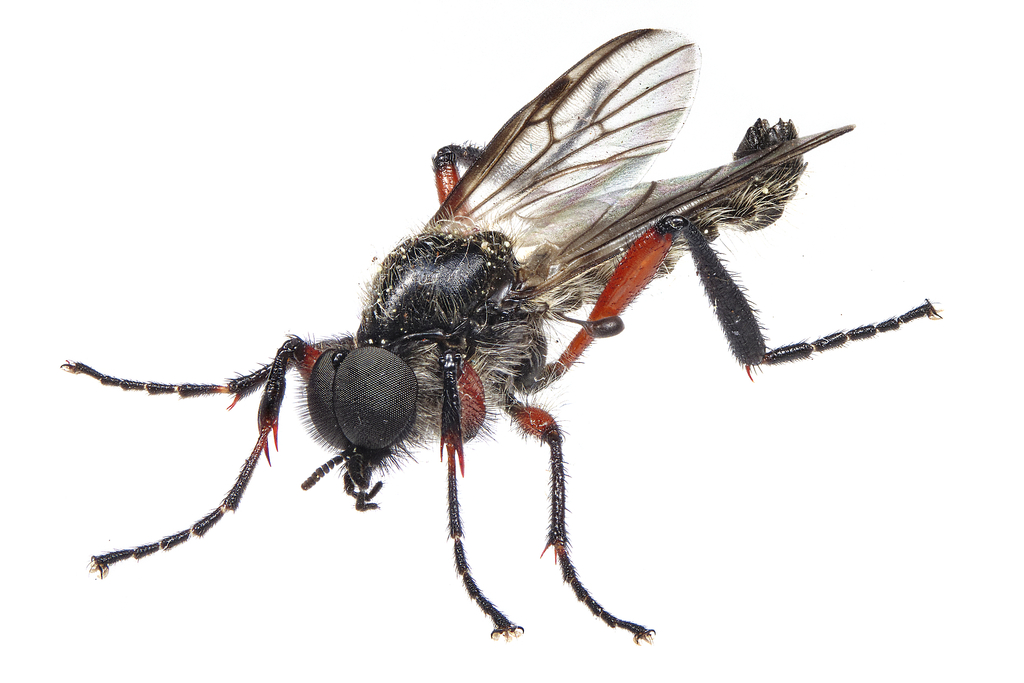
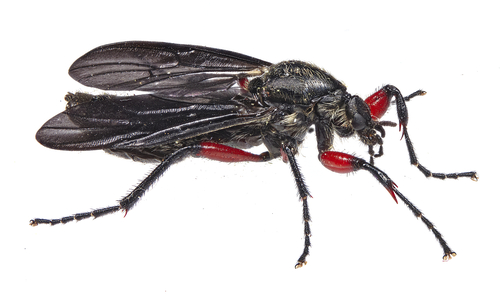
Lovebugs are medium-sized flies with a dark abdomen and bright red or orange thorax and legs. Adults emerge together in early spring, form large swarms, and feed on liquids like water or nectar while the larvae live in decaying plant material during fall and winter.
Source: Wikipedia
How to recognize it
They have a dark brown to black long abdomen and red or orange thorax and legs. A dark spot appears on the leading edge of the first wing about two-thirds of the way from the body.
Source: Wikipedia
Size
Body length ranges from about three-eighths to one and a quarter inches.
Source: Wikipedia
Is it a pest in the house?
They are named for their bright red femurs and tend to ignore human movement.
Source: Wikipedia
Where it lives
Adults are usually seen a few feet above the ground. Larvae feed on decaying plant matter, sometimes including grass roots.
Source: Wikipedia
What it eats
Adults sip liquids such as water or nectar. Larvae consume decaying organic material.
Source: Wikipedia
Life cycle
Larvae develop in fall and winter, feeding on decaying organic matter. Adults emerge synchronously and form large mating swarms.
Source: Wikipedia
When you see it
Adults are most abundant in early spring after a synchronized emergence.
Source: Wikipedia
Where it comes from
They occur throughout the United States and Canada.
Source: Wikipedia
Lookalikes
Lovebugs belong to a group of over 90 March fly species and are also called March flies.
Source: Wikipedia
Where it is found in the US
Recorded in 33 of 51 states and DC. Most records: Massachusetts, New York, Virginia, Pennsylvania, Maryland, North Carolina, Michigan, Connecticut.
Darker = more records. Counts are museum and citizen-science records, not population size.
Source: GBIF
Status: native in North America; native in Canada; native in United States. Source: iNaturalist
Months it is reported in the US
Source: GBIF
More photos
Questions people ask
When do lovebugs appear?
Adults appear in early spring after a synchronized emergence and can be seen in large swarms.
Source: Wikipedia
What do lovebug larvae eat?
The larvae feed on decaying plant matter, sometimes including grass roots.
Source: Wikipedia
Same family (Bibionidae)




Sources
- Wikipedia: https://en.wikipedia.org/wiki/Bibio_femoratus
Look it up elsewhere: GBIF · iNaturalist · BugGuide · ITIS · Wikipedia
Text written 2026-10-23 from the sources above and checked sentence by sentence against them. Data fetched 2026-10-22.