 Bug FAQ
Harlequin Cockroach
Neostylopyga rhombifolia · Order: Blattodea · Family: Blattidae
Also called: Harlequin Roach
Source: Wikipedia
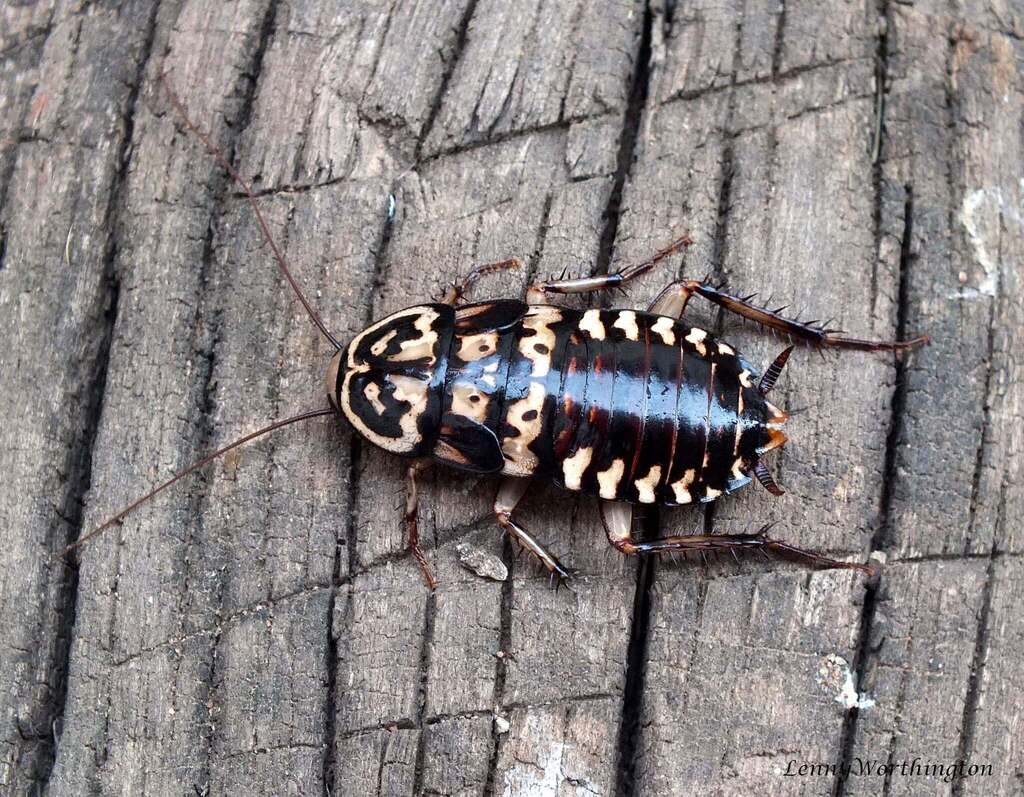
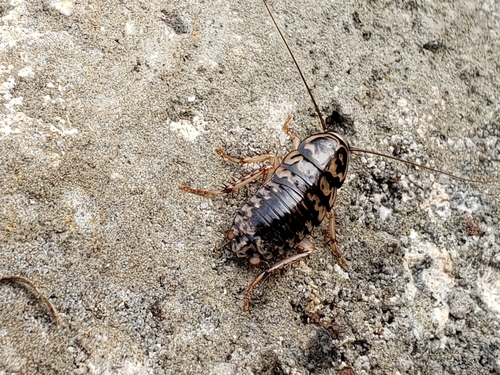
Adult harlequin cockroaches are 20 to 27 mm long and have striking black-and-yellow patterns. They live in houses worldwide because they have spread with trade and are synanthropic.
Source: Wikipedia
How to recognize it
They are easily recognized by their distinctive black and yellow coloration.
Source: Wikipedia
Is it a pest in the house?
They are often found in homes and are usually regarded as a pest.
Source: Wikipedia
Where it lives
They are a synanthropic species that commonly occurs inside houses. Global trade has introduced them to many tropical and subtropical regions.
Source: Wikipedia
Where it comes from
Their original native range is unknown but is thought to be somewhere in tropical Asia.
Source: Wikipedia
Where it is found in the US
Recorded in 6 of 51 states and DC. Most records: Hawaii, Utah, New Mexico, Iowa, Texas, California.
Darker = more records. Counts are museum and citizen-science records, not population size.
Source: GBIF
Status: introduced in Canada; introduced in United States. Source: iNaturalist
Months it is reported in the US
Source: GBIF
More photos
Questions people ask
Why are harlequin cockroaches in my house?
They are synanthropic and spread worldwide with trade, so they readily enter homes.
Source: Wikipedia
How can I identify a harlequin cockroach?
Look for a 20 to 27 mm roach with bold black and yellow markings.
Source: Wikipedia
Same family (Blattidae)
 American CockroachPeriplaneta americanaCan spread germs or disease
 Oriental CockroachBlatta orientalisCan spread germs or disease
 Smokybrown CockroachPeriplaneta fuliginosaNuisance, not dangerous
 Australian CockroachPeriplaneta australasiaeNuisance, not dangerous
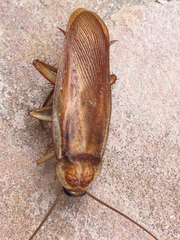 Turkestan CockroachPeriplaneta lateralis
 Florida Woods CockroachEurycotis floridana
Sources
- Wikipedia: https://en.wikipedia.org/wiki/Neostylopyga_rhombifolia
Look it up elsewhere: GBIF · iNaturalist · BugGuide · ITIS · Wikipedia
Text written 2026-10-23 from the sources above and checked sentence by sentence against them. Data fetched 2026-10-23.