 Bug FAQ
Turkestan Cockroach
Periplaneta lateralis · Order: Blattodea · Family: Blattidae
Also called: Red Runner Cockroach
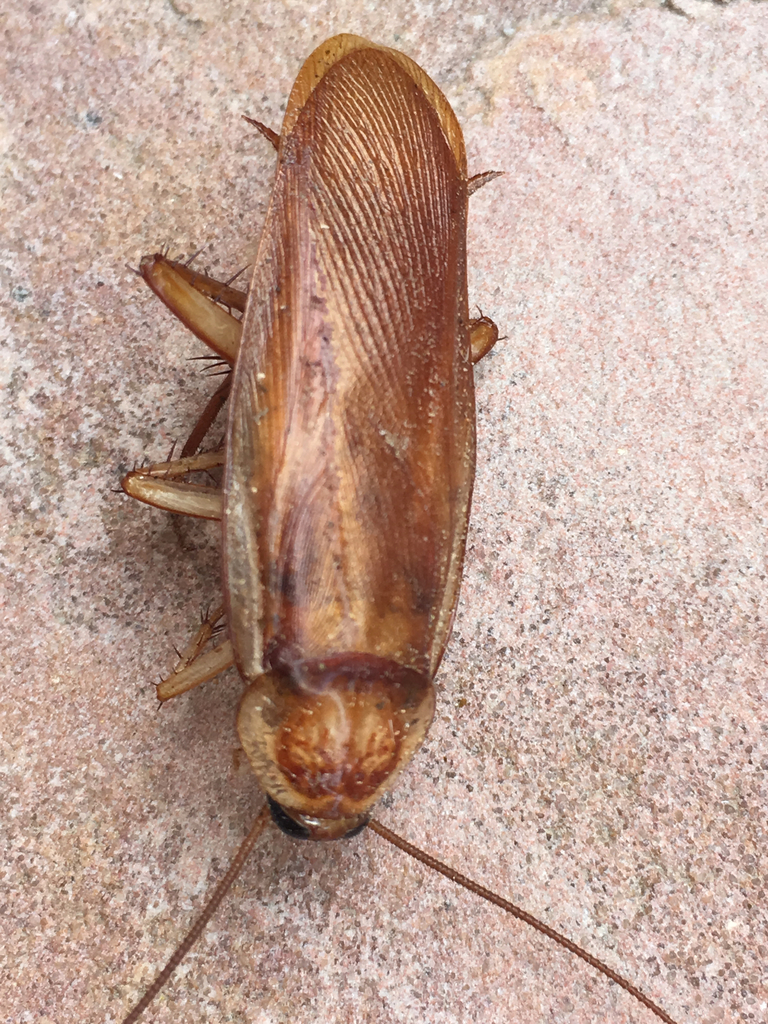
Adult Turkestan cockroaches are about 3 cm long; males are brown-orange with long yellowish wings, while females are darker with short vestigial wings. They live outdoors in places like water meters, irrigation boxes, concrete lifts, cracks, and hollow-block walls, often near dwellings but not usually inside homes. They feed at night on organic material, are sometimes kept as feeder insects for reptiles, and their eggs hatch in about four months.
Source: Wikipedia
How to recognize it
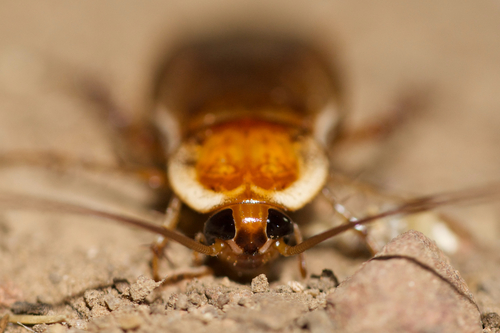
Males are slender, brown-orange or red with long yellowish wings used for attracting females and gliding. Females are broader, dark brown to black, have cream markings on the shield and wing edges, and possess short vestigial wings.
Source: Wikipedia
Size
Adults measure roughly 3 cm (1.2 in) in length.
Source: Wikipedia
Is it a pest in the house?
Generally an outdoor insect, it is not a major indoor pest, though in some tropical locales it can become a noticeable indoor problem.
Source: Wikipedia
Where it lives
Primarily an outdoor species, it is not considered an aggressive indoor pest but may occupy shelters around homes. Commonly found in in-ground containers such as water meters, irrigation and electrical boxes, raised concrete, cracks, crevices, and hollow-block walls.
Source: Wikipedia
What it eats
In desert regions it lives under stones in damp hollows, farms, and wadis, feeding mainly at night. It is sometimes reared to feed pet reptiles and other insectivores.
Source: Wikipedia
Life cycle
The egg case (ootheca) is 9 to 12 mm long and hatches in about 118 to 137 days. Nymphs are wingless, brown in the front and black in the rear.
Source: Wikipedia
Where it is found in the US
Recorded in 23 of 51 states and DC. Most records: California, Arizona, Texas, New Mexico, Nevada, Utah, Oklahoma, Tennessee.
Darker = more records. Counts are museum and citizen-science records, not population size.
Source: GBIF
Status: introduced in North America; introduced in United States. Source: iNaturalist
Months it is reported in the US
Source: GBIF
More photos
Questions people ask
Can they damage my home or food stores?
They are not known as an aggressive indoor pest and no source reports damage to structures or stored food.
Source: Wikipedia
Why might I see them near my house?
They often occupy outdoor shelters such as water meters, irrigation boxes, concrete lifts, cracks, and hollow-block walls near dwellings.
Source: Wikipedia
Same family (Blattidae)
 American CockroachPeriplaneta americanaCan spread germs or disease
 Oriental CockroachBlatta orientalisCan spread germs or disease
 Smokybrown CockroachPeriplaneta fuliginosaNuisance, not dangerous
 Australian CockroachPeriplaneta australasiaeNuisance, not dangerous
 Florida Woods CockroachEurycotis floridana
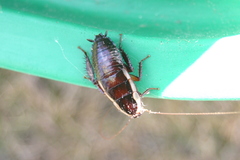 Gisborne CockroachDrymaplaneta semivittaHarmless
Sources
- Wikipedia: https://en.wikipedia.org/wiki/Turkestan_cockroach
Look it up elsewhere: GBIF · iNaturalist · BugGuide · Wikipedia
Text written 2026-10-22 from the sources above and checked sentence by sentence against them. Data fetched 2026-10-22.