 Bug FAQ
Half-black Bumble Bee
Bombus vagans · Order: Hymenoptera · Family: Apidae
Also called: Half-black Bumblebee
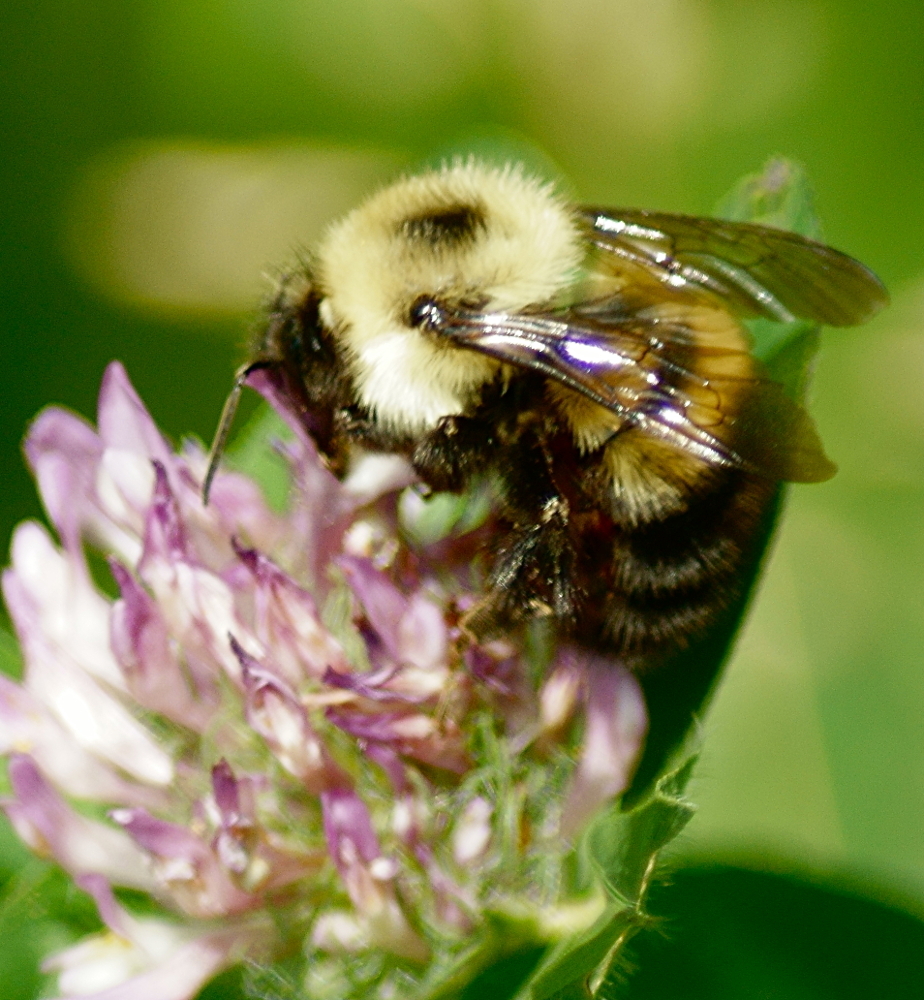
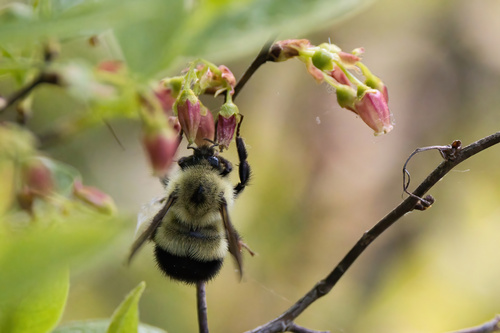
The half-black bumble bee has a yellow head, thorax and the first two abdominal segments, with the rest of the abdomen black and a mix of yellow and black facial hair. It lives in shady forest areas, nests on the ground or in underground holes, and colonies reach about seventy workers. Queens emerge in early May, workers fly from June to August, and the species ranges from Ontario to Nova Scotia down to Georgia.
Source: Wikipedia
How to recognize it
The bee’s head, thorax and first two abdominal segments are yellow; the rest of the abdomen is black.
Source: Wikipedia
Where it lives
It prefers shady forest habitats, unlike many other regional bumblebees.
Source: Wikipedia
What it eats
Queens favor apple and plum blossoms; workers visit red clover, penstemon, milkweed, thistle, meadowsweet and related plants.
Source: Wikipedia
Life cycle
Queens emerge from hibernation in early May, and workers are active from June through August. Nests are on the ground or underground, with colonies reaching about seventy workers.
Source: Wikipedia
When you see it
Queens appear in early May; workers are on the wing June to August.
Source: Wikipedia
Where it comes from
Its range extends from Ontario to Nova Scotia and south to Georgia.
Source: Wikipedia
Lookalikes
It can be confused with Bombus sandersoni, Bombus perplexus, Bombus impatiens and Bombus affinis.
Source: Wikipedia
Where it is found in the US
Recorded in 43 of 51 states and DC. Most records: Pennsylvania, Vermont, Minnesota, Michigan, Wisconsin, Massachusetts, Illinois, Ohio.
Darker = more records. Counts are museum and citizen-science records, not population size.
Source: GBIF
Months it is reported in the US
Source: GBIF
More photos
Questions people ask
Where can I find this bee?
Look for it in shady forest areas; nests are on the ground or in underground holes.
Source: Wikipedia
Same family (Apidae)





Sources
- Wikipedia: https://en.wikipedia.org/wiki/Bombus_vagans
Look it up elsewhere: GBIF · iNaturalist · BugGuide · ITIS · Wikipedia
Text written 2026-10-22 from the sources above and checked sentence by sentence against them. Data fetched 2026-10-22.