 Bug FAQ
Green Oak Tortrix
Tortrix viridana · Order: Lepidoptera · Family: Tortricidae
Also called: European oak leafroller, green oak moth
Source: Wikipedia
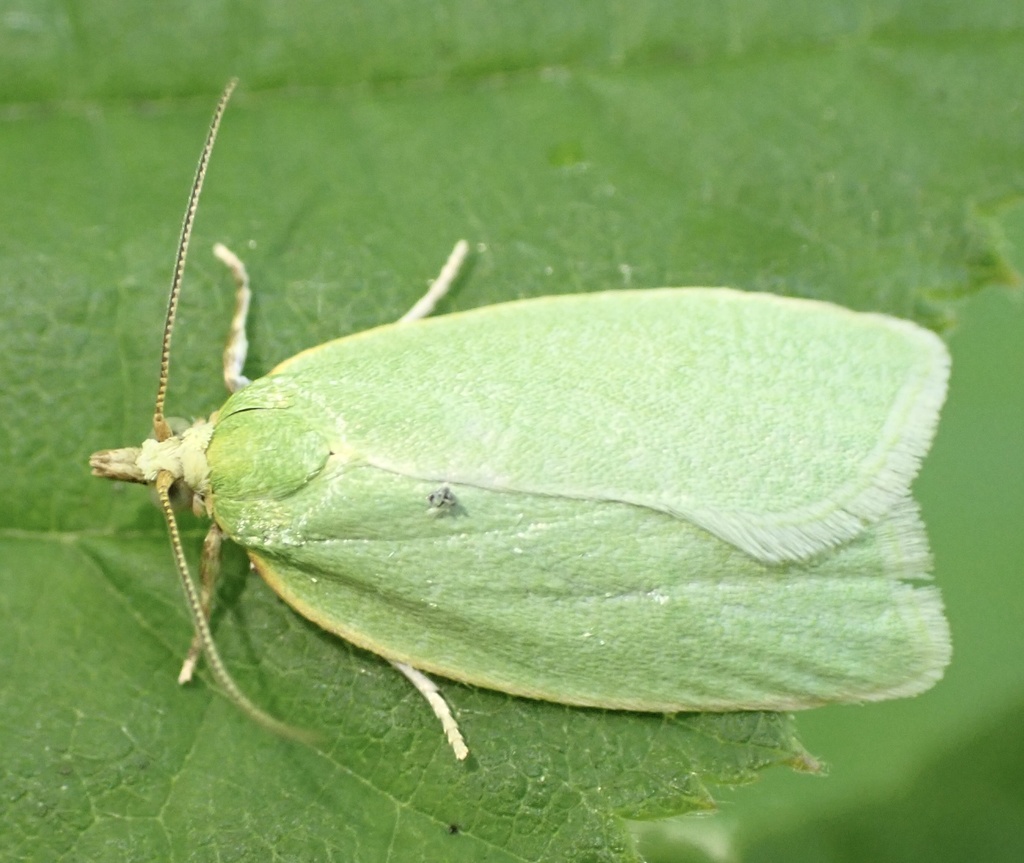
The green oak tortrix is a small green moth with a wingspan of about 18-24 mm and greyish hindwings. Adults fly in June and July, while the larvae are present from April to June and roll leaves to pupate.
Source: Wikipedia
How to recognize it
Its head, front body and forewings are green, and the hindwings are a light grey.
Source: Wikipedia
Size
The wingspan ranges from 18 to 24 mm.
Source: Wikipedia
Is it a pest in the house?
Heavy larval infestations can strip the leaves off oak trees.
Source: Wikipedia
How to get rid of it
The ichneumon wasp Dirophanes invisor parasitises the larvae and helps control their numbers.
Source: Wikipedia
Where it lives
It is commonly found throughout many parts of Britain.
Source: Wikipedia
What it eats
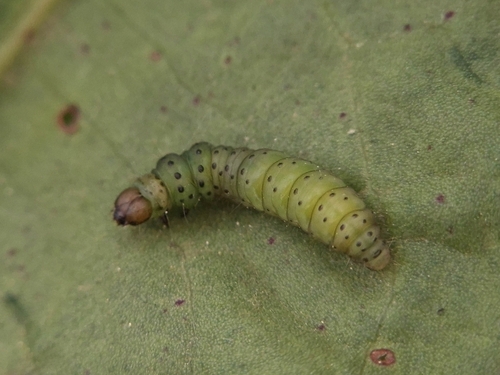
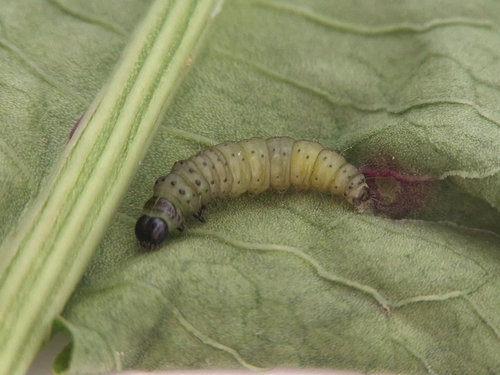
The larvae feed on oak leaves and other tree foliage.
Source: Wikipedia
Life cycle
Larvae appear from April to June, then roll a leaf around themselves to pupate. Adults emerge and are on the wing in June and July.
Source: Wikipedia
When you see it
You can see larvae in spring (April-June) and adults in early summer (June-July).
Source: Wikipedia
Lookalikes
It is a distinctive green moth, often called the European oak leafroller.
Source: Wikipedia
More photos

Questions people ask
How can I control green oak tortrix larvae?
A natural enemy is the ichneumon wasp Dirophanes invisor, which parasitises the larvae.
Source: Wikipedia
Same family (Tortricidae)
 Oblique-banded Leafroller MothChoristoneura rosaceanaDamages trees, gardens or crops
 Garden TortrixClepsis peritanaDamages trees, gardens or crops
 Common MarbleSyricoris lacunanaDamages trees, gardens or crops
 Red-banded Leafroller MothArgyrotaenia velutinanaDamages trees, gardens or crops
 Light Brown Apple MothEpiphyas postvittanaDamages trees, gardens or crops
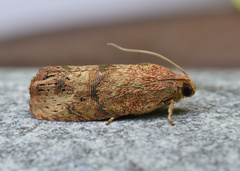 Filbertworm MothCydia latiferreanaDamages trees, gardens or crops
Sources
- Wikipedia: https://en.wikipedia.org/wiki/Tortrix_viridana
Look it up elsewhere: GBIF · iNaturalist · BugGuide · Wikipedia
Text written 2026-10-22 from the sources above and checked sentence by sentence against them. Data fetched 2026-10-22.