 Bug FAQ
Green mirid
Creontiades dilutus · Order: Hemiptera · Family: Miridae
Source: Wikipedia


The green mirid feeds on more than 100 plant species, mainly in the Fabaceae family, and damages crops such as soybean, green beans, stone fruits and grapes.
Source: Wikipedia
How to recognize it
It is a generalist herbivore that feeds on over 100 plant species and is a major economic pest on several crops.
Source: Wikipedia
How to get rid of it
Pesticide use has increased because Bt cotton does not affect mirids, making them the main target of sprays in cotton fields. Growing lucerne next to cotton has been suggested as a trap crop to draw mirids away from the main crop.
Source: Wikipedia
Where it lives
The green mirid is native to Australia and occurs across the continent, including Tasmania.
Source: Wikipedia
What it eats
It is highly polyphagous, recorded from over 100 host plants, especially legumes. It damages many agricultural crops such as soybean, green beans, stone fruits and grapes.
Source: Wikipedia
When you see it
In eastern cropping regions winter is too cold for growth, so only very low numbers survive the season.
Source: Wikipedia
More photos


Questions people ask
How damaging is the green mirid to crops?
It feeds on more than 100 plant species and causes damage to crops such as soybean, green beans, stone fruits, grapes and especially cotton.
Source: Wikipedia
What crops are most affected by the green mirid?
Cotton is the most affected, where it is the primary target of pesticide applications, but it also harms soybean, green beans, stone fruits and grapes.
Source: Wikipedia
Can planting lucerne help control green mirids?
Yes, lucerne can be used as a trap crop next to cotton to attract mirids away from the main crop.
Source: Wikipedia
Why are pesticides used more for mirids in cotton?
Because Bt cotton does not affect mirids, they have become the main target of pesticide sprays in cotton fields.
Source: Wikipedia
Same family (Miridae)
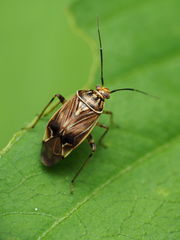 North American Tarnished Plant BugLygus lineolarisDamages trees, gardens or crops
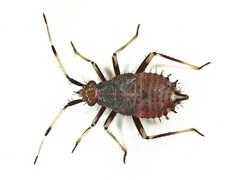 Red-spotted Plant BugDeraeocoris ruber
 Alfalfa Plant BugAdelphocoris lineolatusDamages trees, gardens or crops
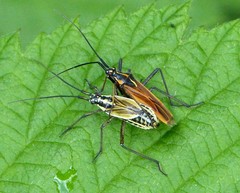 Meadow Plant BugLeptopterna dolabrataDamages trees, gardens or crops
 Four-lined Plant BugPoecilocapsus lineatusDamages trees, gardens or crops
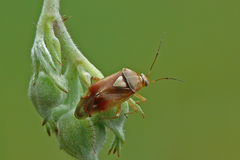 Lygus pratensisLygus pratensisDamages trees, gardens or crops
Sources
- Wikipedia: https://en.wikipedia.org/wiki/Creontiades_dilutus
Look it up elsewhere: GBIF · iNaturalist · BugGuide · Wikipedia
Text written 2026-10-23 from the sources above and checked sentence by sentence against them. Data fetched 2026-10-23.