 Bug FAQ
Greater Night-stalking Tiger Beetle
Omus dejeanii · Order: Coleoptera · Family: Carabidae
Also called: Dejean's Flightless Tiger Beetle
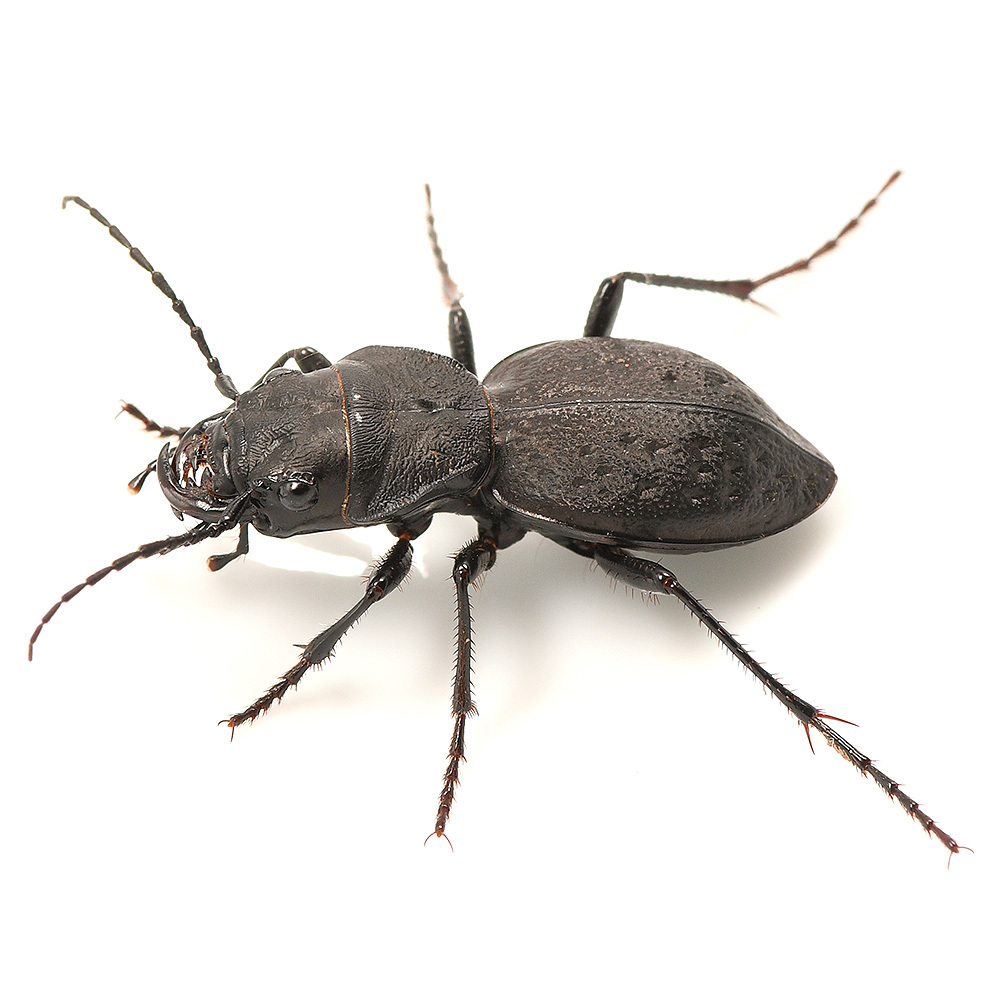
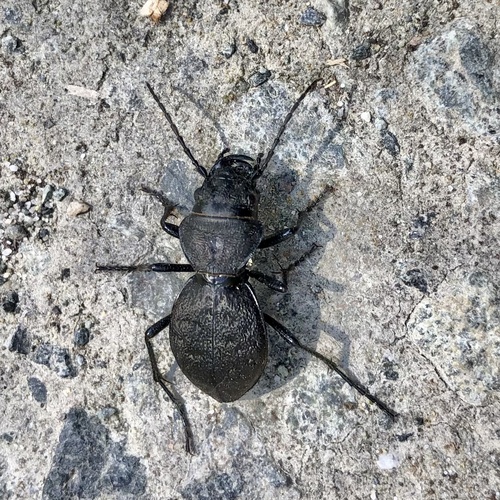
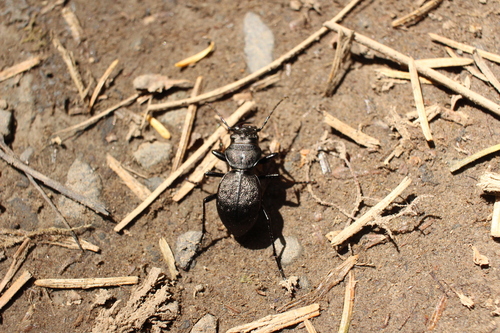
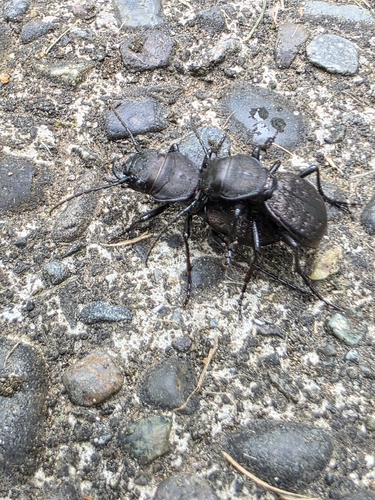
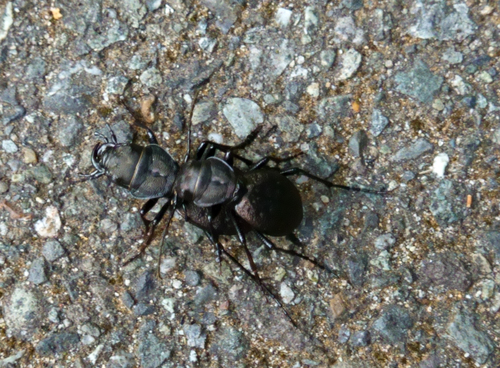
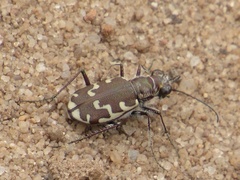
The Greater night-stalking tiger beetle is the largest Omus species, measuring about 15 to 20 mm. It lives in dense, coastal old-growth forests from British Columbia down to northern California, especially in duff habitats. Adults are most often found in spring, walking on trails at night or on cloudy days, and are commonly caught with pitfall traps.
Source: Wikipedia
How to recognize it
Night-stalking tiger beetles belong to the carabid subfamily Cicindelinae, the tiger beetles.
Source: Wikipedia
Size
Adults are between 15 and 20 mm long, making them the largest in their genus.
Source: Wikipedia
How to get rid of it
Habitat loss from fragmentation, logging, wildfires, and development threatens their populations.
Source: Wikipedia
Where it lives
They are common in suitable habitats during spring. They occur in old-growth forest duff on the West Coast of North America.
Source: Wikipedia
What it eats
Ants have been observed excavating and feeding on their larvae. Birds such as flickers, other beetles, and parasitoid wasps prey on their pupae. Shrews, moles, and other small nocturnal mammals also hunt and eat them.
Source: Wikipedia
Life cycle
Both shrews and moles are known to consume adult beetles and larvae.
Source: Wikipedia
When you see it
They are most frequently encountered in spring. They are usually collected with pitfall traps but can also be seen walking on trails at night or on overcast days.
Source: Wikipedia
Where it comes from
They are native to the Pacific coast of North America, from British Columbia to northern California. Their range is fragmented, occurring in coastal temperate forests of British Columbia, Oregon, and California.
Source: Wikipedia
Lookalikes
Omus is grouped with the North American genus Amblycheila and the African genus Platychile in the tribe Omini.
Source: Wikipedia
Where it is found in the US
Recorded in 3 of 51 states and DC. Most records: Washington, Oregon, California.
Darker = more records. Counts are museum and citizen-science records, not population size.
Source: GBIF
Status: native in North America; native in Canada. Source: iNaturalist
Months it is reported in the US
Source: GBIF
More photos
Questions people ask
What size is the Greater night-stalking tiger beetle?
Adults are about 15 to 20 mm long.
Source: Wikipedia
Where can I find this beetle?
It lives in dense coastal forests from British Columbia to northern California, especially in forest duff.
Source: Wikipedia
When are they most active?
They are most commonly seen in spring, walking on trails at night or on cloudy days, and are often caught with pitfall traps.
Source: Wikipedia
What eats the Greater night-stalking tiger beetle?
Ants, flicker birds, other beetles, parasitoid wasps, shrews, and moles are known predators.
Source: Wikipedia
Same family (Carabidae)


Sources
- Wikipedia: https://en.wikipedia.org/wiki/Omus_dejeani
Look it up elsewhere: GBIF · iNaturalist · BugGuide · ITIS · Wikipedia
Text written 2026-10-23 from the sources above and checked sentence by sentence against them. Data fetched 2026-10-23.