 Bug FAQ
Great Purple Hairstreak
Atlides halesus · Order: Lepidoptera · Family: Lycaenidae
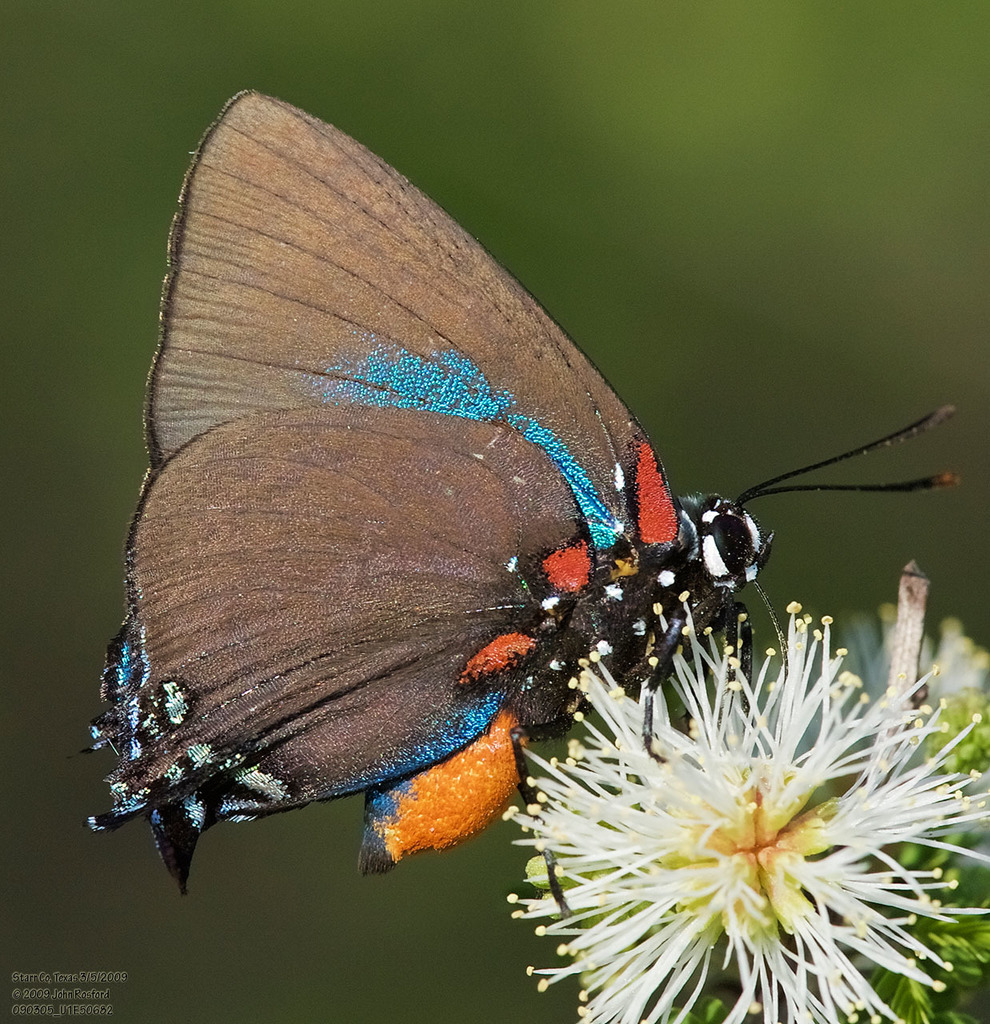
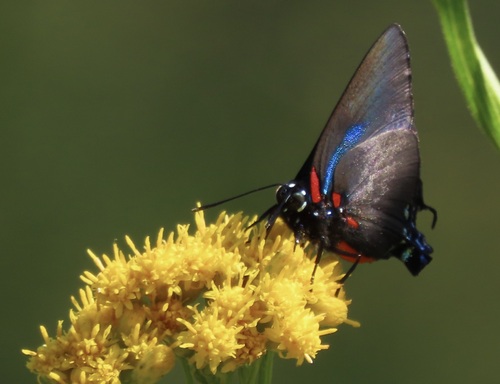
The great purple hairstreak has a wingspan of about 1.25 to 1.5 inches and its upper wings are iridescent blue with a black border; males show brighter and more extensive blue than females, and despite its name it lacks purple coloration. It is a Neotropical butterfly whose North American range reaches the warm-temperate and subtropical parts of the United States and extends southward almost to the Isthmus of Panama, and its caterpillars feed exclusively on mistletoe of the genus Phoradendron.
Source: Wikipedia
Where it lives
Caterpillars feed on mistletoe plants of the genus Phoradendron. Natural enemies include parasitoid wasps of the genus Apanteles and the fly Metadontia amoena.
Source: Wikipedia
What it eats
Larvae eat the leaves and male flowers of mistletoe (Phoradendron) without first consuming their eggshells.
Source: Wikipedia
Life cycle
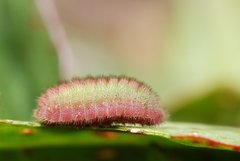
Caterpillars feed on host leaves for about 20 days before pupating.
Source: Wikipedia
When you see it
Adults fly from spring to early summer and again from early fall to winter; females lay eggs on isolated mistletoe stems with smaller diameters.
Source: Wikipedia
Where it comes from
It is a Neotropical species; in North America it occurs in the warm-temperate and subtropical regions of the United States and reaches southward nearly to the Isthmus of Panama.
Source: Wikipedia
Where it is found in the US
Recorded in 25 of 51 states and DC. Most records: Texas, California, Florida, Arizona, Georgia, North Carolina, South Carolina, New Mexico.
Darker = more records. Counts are museum and citizen-science records, not population size.
Source: GBIF
Status: native in North America; native in United States. Source: iNaturalist
Months it is reported in the US
Source: GBIF
More photos
Same family (Lycaenidae)





Sources
- Wikipedia: https://en.wikipedia.org/wiki/Great_purple_hairstreak
Look it up elsewhere: GBIF · iNaturalist · BugGuide · ITIS · Wikipedia
Text written 2026-10-23 from the sources above and checked sentence by sentence against them. Data fetched 2026-10-23.