 Bug FAQ
Great Eggfly
Hypolimnas bolina · Order: Lepidoptera · Family: Nymphalidae
Also called: Common Eggfly, Varied Eggfly

The Great Eggfly has a wingspan of roughly 70 to 85 mm (about 3 inches). Its upper wings are black with three white spots that shine with a blue-violet ultraviolet sheen. It lives in many tropical and subtropical areas, from rainforests to suburban gardens.
Source: Wikipedia
Size
Adults measure about 70 to 85 mm across the wings.
Source: Wikipedia
Where it lives
It is common in wet and dry woodlands, rainforests, shrublands, and even suburban backyards.
Source: Wikipedia
What it eats
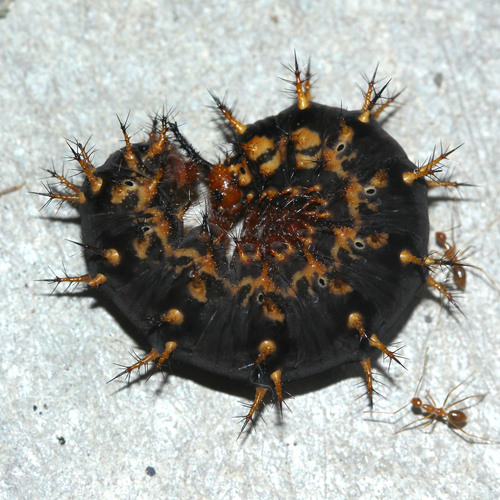
Caterpillars feed on a variety of plants such as Sida, Portulaca, Laportea, Triumfetta, Asystasia, and others, while adults in New Zealand sip nectar from Lantana, Grevillea, Hebe, and similar flowers.
Source: Wikipedia
When you see it
In tropical Australia it is especially common along tracks, streambeds, and forest-cane corridors.
Source: Wikipedia
Where it comes from
Its range stretches from Madagascar across South and Southeast Asia to many Pacific islands, parts of Australia, Japan, Taiwan, and New Zealand.
Source: Wikipedia
More photos
Questions people ask
Are they a garden pest?
They feed on many garden plants as caterpillars, but no source says they cause serious damage.
Source: Wikipedia
Same family (Nymphalidae)






Sources
- Wikipedia: https://en.wikipedia.org/wiki/Hypolimnas_bolina
Look it up elsewhere: GBIF · iNaturalist · BugGuide · Wikipedia
Text written 2026-10-22 from the sources above and checked sentence by sentence against them. Data fetched 2026-10-22.